The Parking Lot Where It Happens
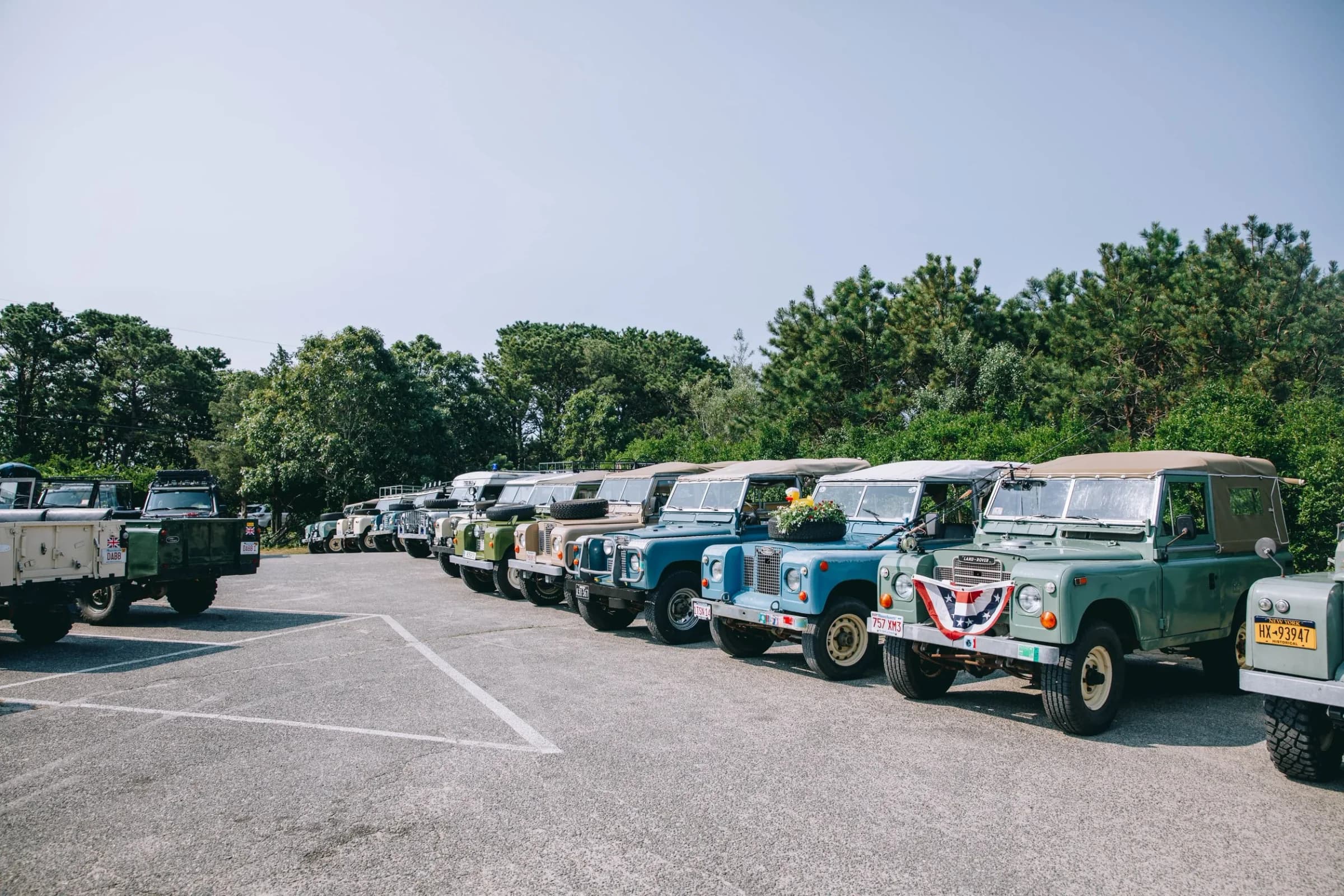
Seventy-five Land Rovers crammed into a single restaurant parking lot in Oak Bluffs, Massachusetts. Forty-three of them Defenders. Bonnets popped, oil leaks on full display, owners swapping stories about cylinder head gaskets and broken half shafts like old war wounds. That was the inaugural Vineyard Series event in August 2021: this is what this community has always been about. Not polished showroom floors. Not velvet ropes. A parking lot, a shared obsession, and the faint smell of Castrol.
The classic Defender community is unlike anything else in the automotive world. It's not really a "car scene" in the way you'd describe Porsche 356 owners or Ferrari collectors. It's rougher than that. More personal. The bond between Defender owners isn't built on wealth or status (though plenty of both are represented). It's built on shared mechanical frustration, shared trail memories, and a shared belief that no vehicle on earth looks quite right unless it is got an aluminum body and a face only its mother could love.
The Camel Trophy: Where It All Started
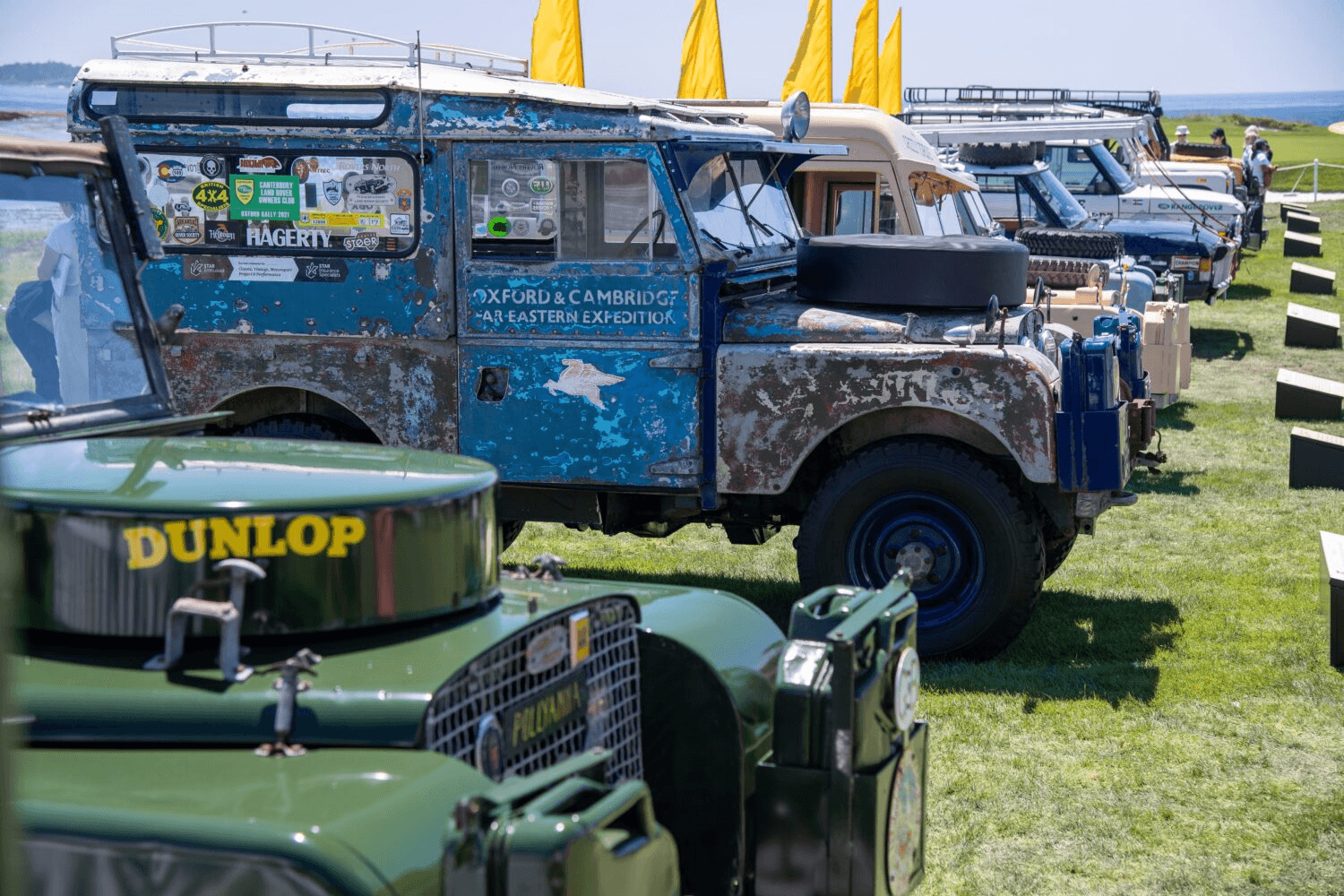
You can't talk about Defender culture without going back to the event that forged it. The Camel Trophy ran from 1980 to 2000, and for 18 of those years, Land Rover supplied every competition vehicle[3]. Range Rovers, Series IIIs, Ninetys, One Tens, Discoverys, even Freelanders at the very end. All painted in that unmistakable Sandglow yellow. All beaten within an inch of their lives across jungles, deserts, and frozen tundra.
The competition started as a small marketing stunt with three German teams in Jeeps trekking along the Amazon[10]. By 1982, it had gone international. By the late '80s, it was the "Olympics of 4x4"[3], and it made Land Rover synonymous with off-road capability in a way no advertising budget ever could.
Here's what people forget. Those Camel Trophy vehicles were mostly stock. Some suspension tweaks, fluid coolers, winches. But the chassis, the drivetrain, the bones? Factory. That was the whole point. Land Rover wanted to prove what their trucks could do out of the box. And prove it they did, from the jungles of Borneo to the Siberian taiga to the Atacama Desert.
The competition died in stages. The 1996 Borneo event is widely considered the last true, traditional Camel Trophy[3]. Land Rover pulled out after 1998. The final event in 2000 was boat-based. Something essential had been lost.
But the legacy? That's still very much alive. In November 2025, Land Rover Classic hosted the Camel Trophy Club's 45th Anniversary at Eastnor Castle, where 38 past participants and over 200 enthusiasts gathered to see original competition vehicles roll through the estate alongside the new Defender Trophy Edition[5]. Genuine ex-Camel Trophy Land Rovers are now prized collectibles, with some considered, frankly, priceless.
The Grassroots: Winter Romp and the Soul of Club Life
The big corporate events get the press coverage. But the soul of the Defender community lives in the grassroots gatherings. And none captures that spirit better than the Maine Winter Romp.
Running every President's Day weekend since 1996[2], Winter Romp is the kind of event that could only exist in the Land Rover world. There is no registration fee. No tech inspection. No insurance requirement. No schedule. Bruce Fowler, the man who started it all, has one rule: "No Whining."
That's it. Show up at his property in Benton, Maine, in the middle of February, and go wheeling.
The event draws over 130 Land Rovers and 270 enthusiasts, with attendees from as far as California and Great Britain[2]. The trail network spans 207 acres of land purchased through pooled donations from the enthusiast community and held in trust as the Sebasticook Millennium Green[2]. Think about that for a second. These people loved this event so much that they bought the land.
Trail names tell their own stories. The Pit of Despair. Screaming Eagle. The Bypass. I've had builds come back from Winter Romp with stories that are, let me be honest, sometimes hard to believe. A 1960s Series IIA leading a brand-new Defender 110 down the same trail. A 1983 Range Rover nicknamed "The Beast" fired up at 13 below zero. That kind of thing.
Monarch Tip: If you're bringing a restomod to Winter Romp, make sure your cooling system is up to the task. Proper LT1/LS3 swaps run beautifully in sub-zero temperatures, but only when the thermostat and heater core setup are dialed in properly. Skipping the proper coolant flush before a winter event is asking for trouble.
The community aspect is what makes it. Bruce Fowler has turned what started as a few friends in the woods into one of North America's largest Land Rover events[2], and he's done it without charging a dime.
ANARC and the Club Network
Behind many of these events sits the Association of North American Rover Clubs, or ANARC. It is a nonprofit coalition of 24 Land Rover clubs across the US and Canada[4], run entirely by volunteers[8]. No one gets paid. No one profits. The whole thing runs on passion and, presumably, caffeine.
ANARC organized the Diamond Jubilee event at Greek Peak Ski Resort in Cortland, New York, in June 2023 to celebrate Land Rover's 75th anniversary. Over a thousand enthusiasts showed up[11]. Every type of Land Rover from early Series Is to the newest Defenders was represented.
For 2026, ANARC is expanding its Stewards Off Road Recovery and Leadership Training to three full days[4] and partnering with the Solihull Society in Colorado for their annual National Rally. The organization has also formalized a relationship with the UK-based Association of Land Rover Clubs (ALRC), standardizing competition rules for RTV (Road, Track, and Visibility) events worldwide[4].
What I find remarkable is the range. The Ottawa Valley Land Rover Club just celebrated its 41st anniversary. The Rover Owners of Virginia marked 50 years as a club[4]. These are not flash-in-the-pan enthusiast groups. They are institutions.
The New Guard: Cooper Murray and The Vineyard Series
And then there's the other end of the spectrum.
Cooper Murray created The Vineyard Series in August 2021 while still an undergraduate at the University of Richmond[1]. Since that first Martha's Vineyard gathering, the series has brought together over 700 different classic Land Rovers at events across the country[6], from Nantucket to Palm Beach to Santa Barbara.
The format is different from the traditional off-road rally. These are social events, cars-and-coffee style, held in upscale locations. Registration for the Santa Barbara Series runs $150 and includes a swag bag, cocktail party invite, and "loads of priceless camaraderie"[7]. Events are limited to pre-2005 vehicles.
Cooper's approach is deliberate. He wants to lower the barrier to entry. As he told Rovers Magazine, "The long-standing club events can seem intimidating, with their off-roading, multiple days of attendance and membership requirements"[1]. His events target a younger demographic and newer owners who might not yet know the community exists.
Is it the same as crawling through frozen mud in Maine? No. But that's the point. The community needs both. It needs the Romp and the Vineyard. It needs the guy who's rebuilt his 200Tdi three times and the guy who just inherited his father's NAS 90 and doesn't know where to start. That range is what keeps the whole thing alive.
NAS Defenders: The Heartbeat of American Enthusiast Culture
Speaking of NAS 90s. If there is a single vehicle that anchors the American Defender community, it is the North American Specification Defender.
Land Rover brought the Defender to the US in 1993, starting with 525 white Defender 110s (including 25 for Canada)[12]. The Defender 90 followed in 1994, and between 1994 and 1997, just over 6,500 NAS Defender 90s were produced[9]. That is it. The total US-market run was roughly 7,059 trucks[9]. For context, Toyota sells more Tacomas in a single month.
The NAS trucks were extensively modified for American regulations: a 3.9-liter V8 (later a 4.0), Safety Devices roll cages, round taillights from Rubbolite (originally designed for trailers, mind you), and forward-facing rear seats[9]. The 1997 models were the first to get an automatic transmission, and the final run of 300 Limited Edition Station Wagons in Willow Green remains one of the most collectible Defenders ever built.
These trucks are now the stars of events like the NAS Defender gathering at Fort Walton Beach, Florida, which specifically honors 1993-97 NAS models[1]. The highest recorded auction sale for a 1997 NAS Defender 90 hit $212,800 in November 2025[13]. That's for a vehicle that originally stickered around $30,000.
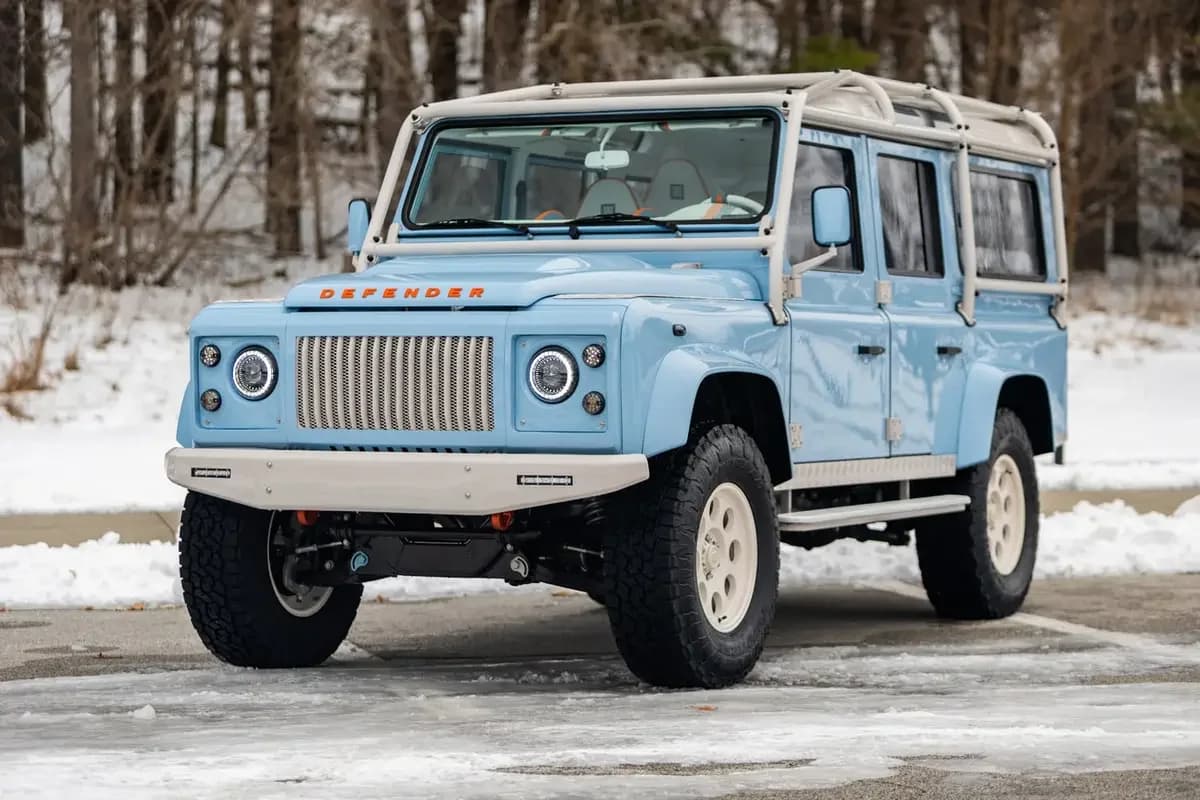
The Monarch Perspective: At Monarch, every classic Defender we build starts as a donor from the 1983 to 2016 classic production era. But we understand why the NAS trucks hold such an emotional grip on American collectors. They were most people's first encounter with what a Defender could be. We build with the GM LS3 (about 430 hp), LT1 (about 460 hp) or supercharged LT4 (650 hp), and we also offer EV builds. When we install one of those V8s in a new Defender chassis, we are, in a real sense, fulfilling the promise those original V8-powered NAS trucks made but couldn't quite deliver on, given the technology of the 1990s.
The Defender Trophy: Heritage Meets the Future
Land Rover is clearly paying attention to the community energy around its classic vehicles. The new Defender Trophy competition, announced in late 2025, is the brand's return to global challenge events for the first time since the G4 Challenge ended in 2008[5].
More than 10,000 people worldwide have applied to participate[5]. The global final will be held in Africa in October 2026, partnering with conservation charity Tusk. It's a far cry from the Camel Trophy's tobacco sponsorship, but the DNA is the same: put people and vehicles in difficult terrain and see what happens.
The modern Defender Trophy uses the new L663, not the classic. But the spirit traces a direct line back to those Sandglow-painted 110s slogging through Papua New Guinea in 1982. And that connection matters. It's why builders and owners of classic Defenders follow these announcements closely. Every time Land Rover acknowledges its heritage, it reinforces the value, both emotional and financial, of the vehicles that built that heritage in the first place.
Where to Find Your People
If you own a classic Defender, or you're commissioning one, the community is waiting for you. Here are the events and organizations worth knowing about:
- Maine Winter Romp – President's Day weekend, Benton, Maine. Free. Bring chains and layers. No whining.
- The Vineyard Series – Multiple locations throughout the year, from Martha's Vineyard to Santa Barbara. Pre-2005 vehicles. Social and accessible.
- ANARC Member Club Events – 24 clubs across North America, each hosting their own rallies, trials, and socials. Check anarc.club for the full calendar.
- Overland Expo – Multiple US locations. Heavy Defender presence, particularly among the overlanding crowd.
- Goodwood Revival – If you're in the UK, Land Rover Classic often debuts its latest Works Bespoke creations here.
Insider Advice: Show up. Seriously. The Land Rover community is one of the most welcoming in the automotive world, but it rewards presence. You will learn more about your Defender in one weekend at Winter Romp than in a year of reading forums. And if your truck breaks on the trail? That's not a failure. That is an initiation.
Commencing Your Commission
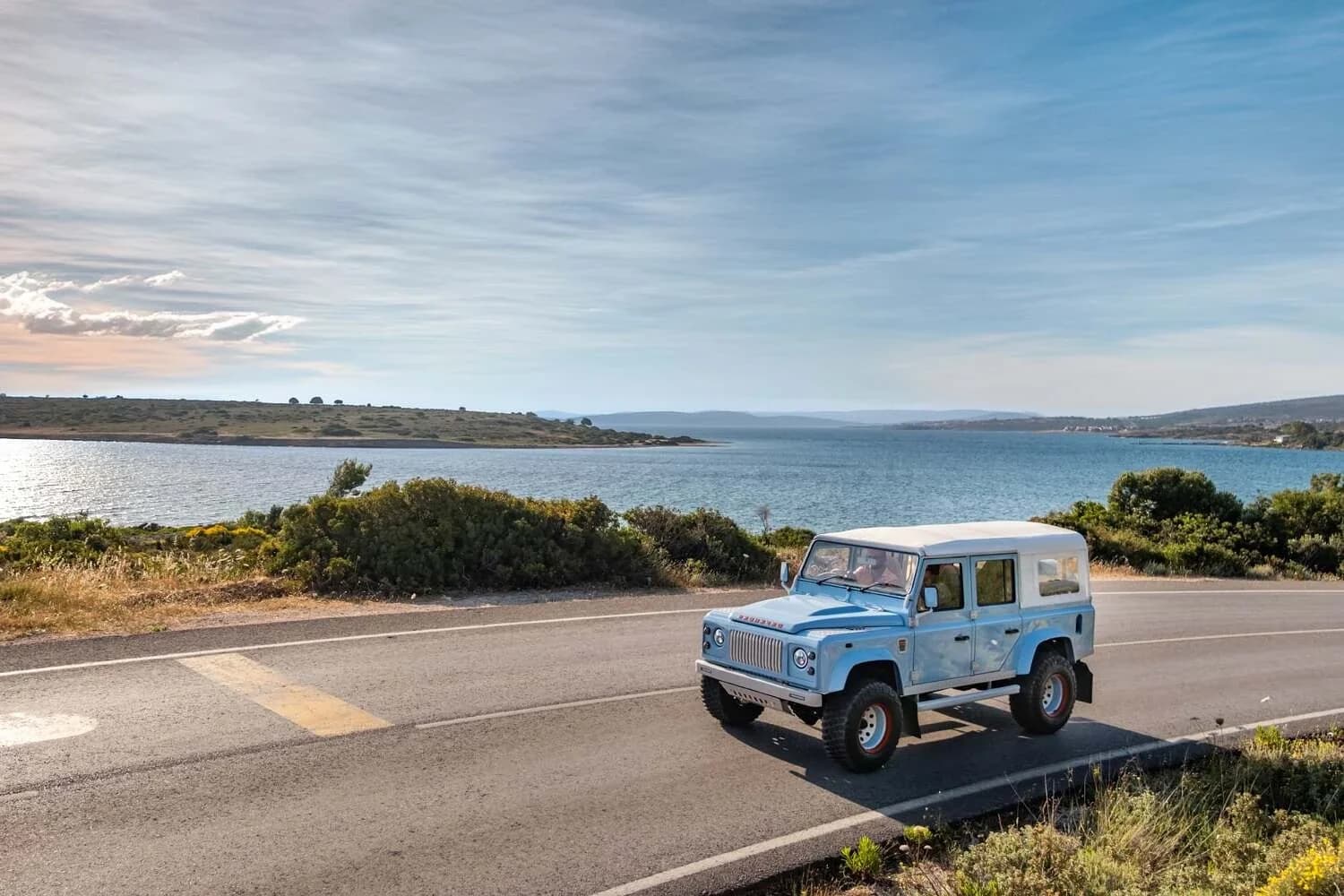
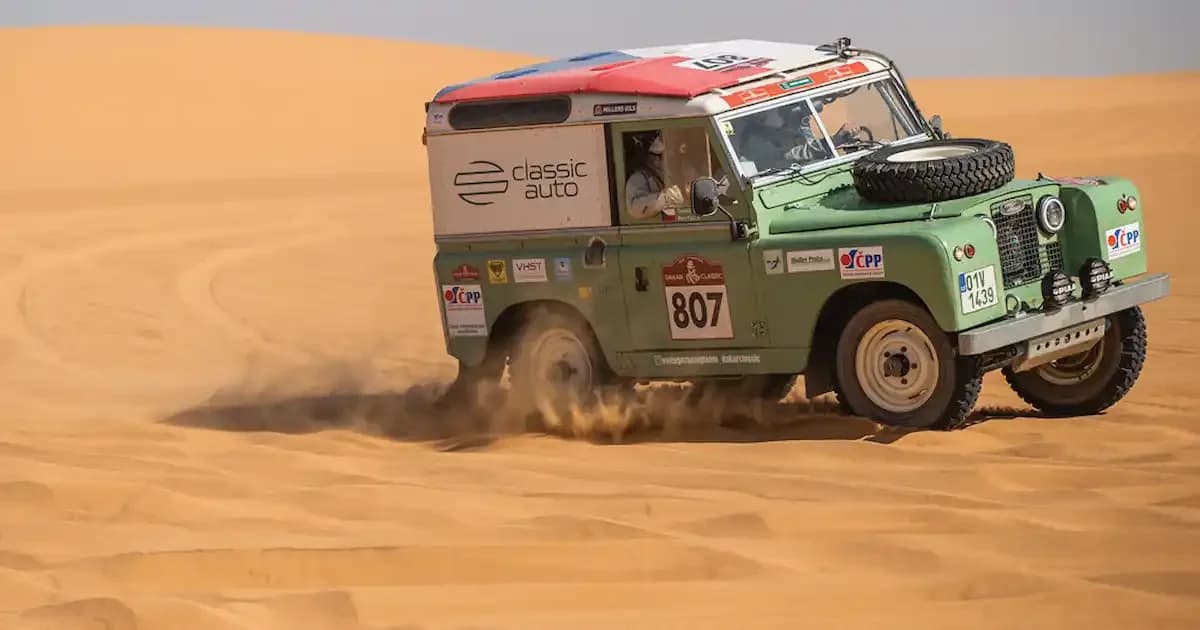
A Monarch is built to be driven. Not trailered to shows. Not parked behind glass. Driven hard, shown proudly, and brought to events where it will be surrounded by the trucks that inspired it. Our 12-stage ground-up build process produces a vehicle that honors the classic Defender's heritage while delivering the kind of power and refinement that makes a cross-country drive to your next rally something you actually look forward to. Start your commission today and talk to our team about building a Defender worthy of the community it belongs to.