TL;DR: At Monarch Motor Company, we've found that integrating a $250k+ classic Defender into a high-net-worth portfolio means prioritizing ground-up manufacturing and LS3/LT1 reliability over original factory constraints. The ultimate collector's build is not a mere restoration, but a 12-stage reinvention of the 1983-2016 platform.
You want to know the real problem with an original, un-restored 1993 North American Specification (NAS) Defender 110? It's not the iconic white paint or the factory external roll cage. It's the 182 horsepower. Try merging onto a Texas interstate with a 3.9-liter Rover V8 gasping for air against a 4,000-pound aerodynamic brick. It is a terrifying experience. I have overseen more than 150 ground-up classic Defender builds at Monarch, and I still flinch thinking about those factory performance numbers.
The Illusion of the Factory Original
Collector romanticism frequently obscures the harsh reality of driving a factory-original classic Defender. The original 1983-2016 components were engineered for British farm tracks rather than modern American highways. Upgrading to a bespoke custom build completely eliminates the crippling performance deficits inherent to the original Land Rover platform.
Land Rover built exactly 2,016,933 Series and Defender vehicles before production ended in January 2016.[1] Same basic silhouette. Same flat windshield. Same uncompromising utilitarian soul. And yet, the collector market has a strange habit of viewing these trucks through rose-tinted glasses. They remember the Camel Trophy footage. They forget the reality of a 2.5NA diesel engine trying to push a loaded 110 up a mountain pass with exactly 68 horsepower. You literally have to turn off the air conditioning (assuming your model year even had it) just to crest the hill.
We do not worship at the altar of factory originality. We respect the heritage. We fix the engineering.
When Land Rover finally brought the NAS Defender to the United States in 1993, they shipped exactly 500 white Defender 110s. Hagerty valuation data confirms that clean, un-restored examples of these rare 1990s models still command anywhere from $60,000 to over $100,000 at auction.[2] Which sounds generous until you actually drive one and realize the gearbox feels like churning a bucket of rocks.[3] The factory NVH (noise, vibration, harshness) levels will leave your ears ringing after a two-hour highway stint.
This is why we refuse to restore client-provided vehicles. You cannot take a fatigued, thirty-year-old chassis that has been twisted on farm trails, patch the rust, and expect it to handle modern V8 power. It is an engineering dead end. We start fresh.
The 13-Stage Reinvention Process
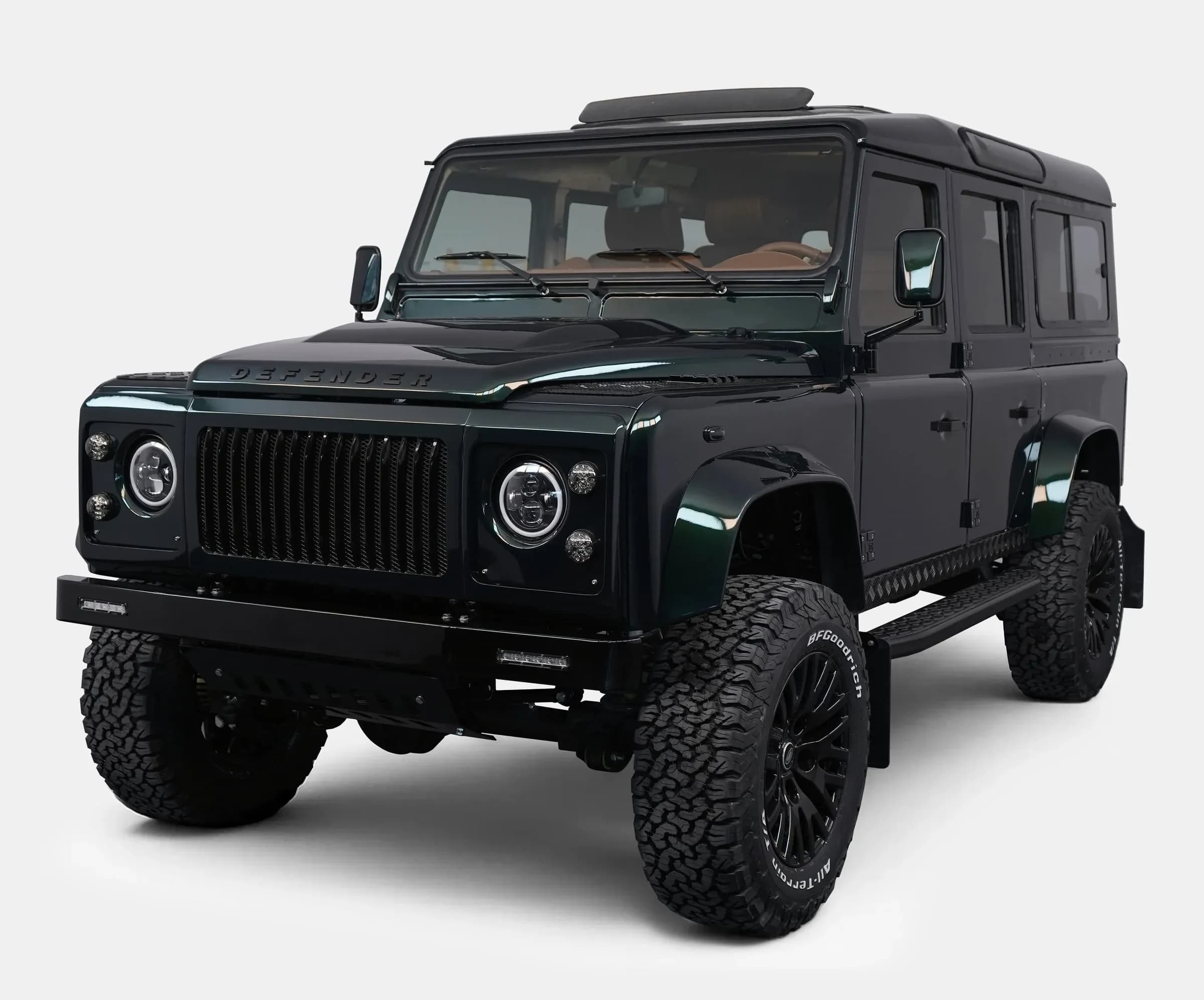
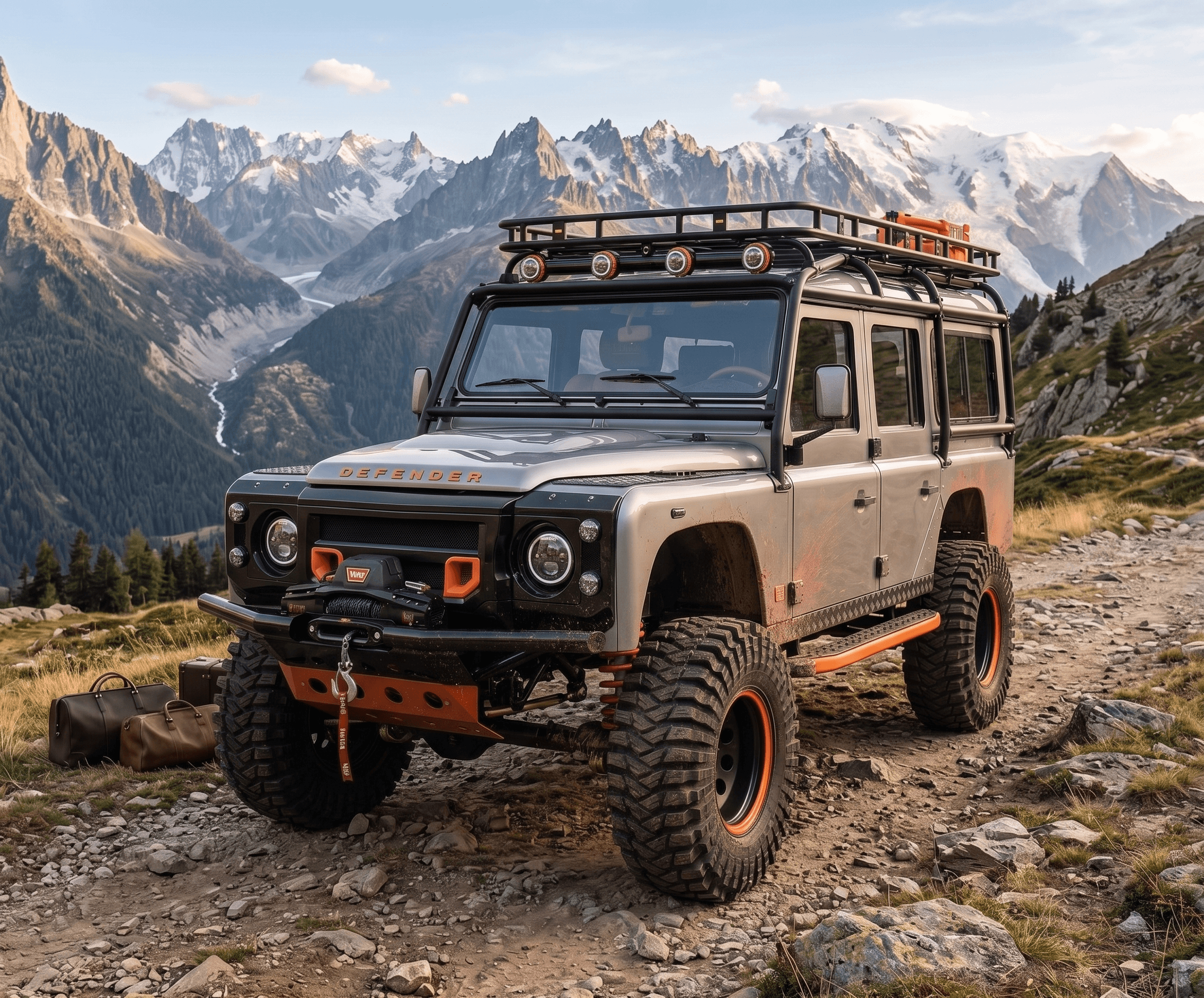
A Monarch commission is not a restoration, but rather a complete remanufacturing of the classic Defender. Our 12-stage process begins with a brand-new, hot-dip galvanized chassis and ends with a concours-level bespoke vehicle. We engineer out the factory flaws while preserving the iconic 1983-2016 aesthetic.
Let me walk you through what a $250,000+ commission actually buys. It buys certainty.
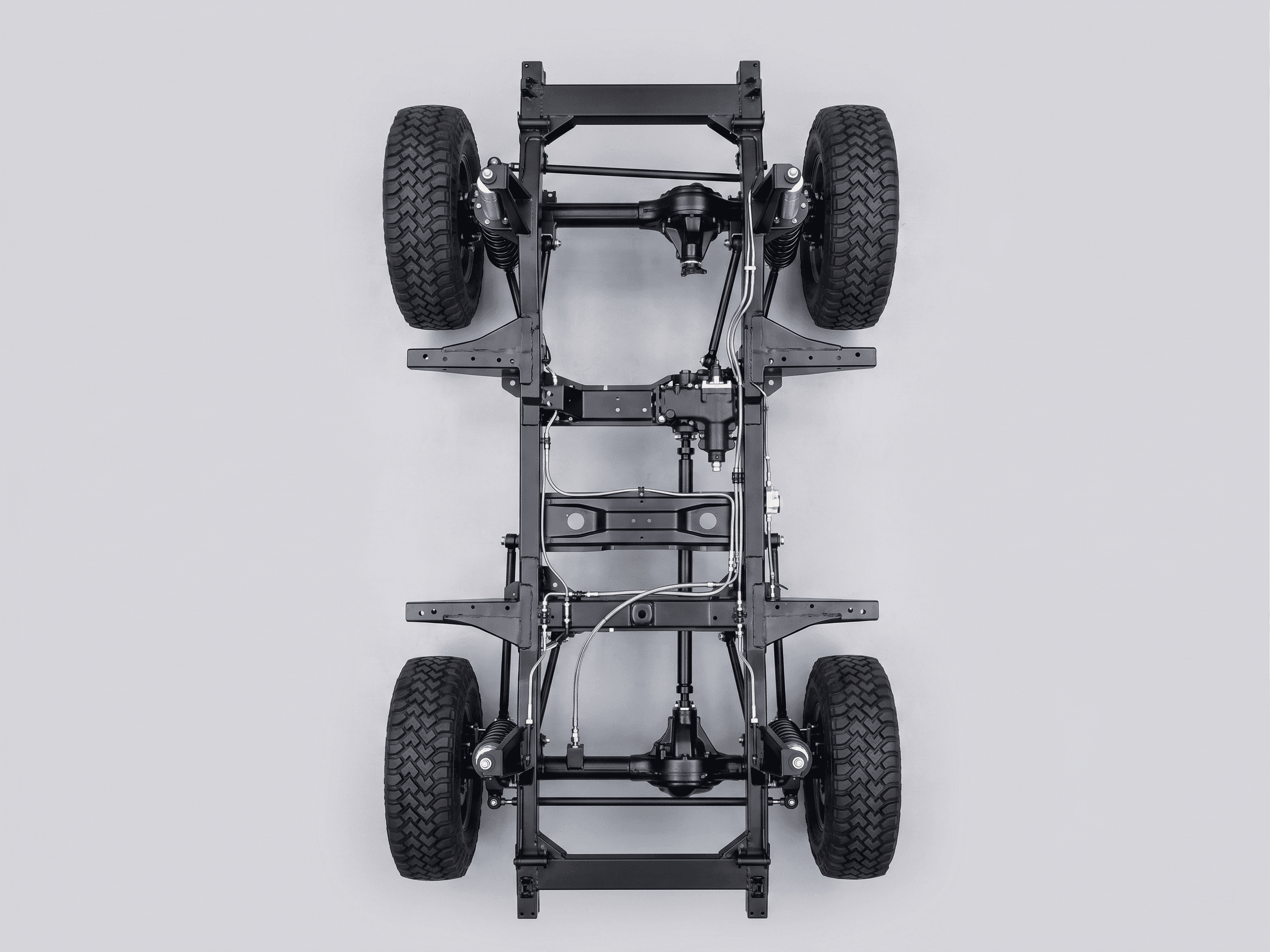
Every build in our projects portfolio begins with a bare, hot-dip galvanized chassis. We do not blast and paint old frames. We start with new steel, structurally reinforced to handle triple the original horsepower, and chemically dipped to ensure that the aggressive Midwest road salt or the humid coastal air of Nantucket will never compromise the foundation. The difference between a fresh, heavy-duty KTL-coated frame and a patched factory unit is night and day.
The suspension geometry on a classic Defender 90 or 110 is brilliant in the mud. On the pavement, it wallows. We completely re-engineer the damping. We install heavy-duty, modern shock absorbers, upgraded sway bars, and recalibrated coil springs. The result is a truck that sits confidently on 18-inch wheels, completely ignoring the body roll that plagued the original Solihull configurations. You can throw it into a corner at 45 mph, and the chassis just bites and holds.
Let me be precise. The production run for the Td5 engine started in late 1998 for the 1999 model year. Land Rover famously struggled with the exhaust manifolds warping on those engines, a problem they quietly tried to solve by 2007 with heavier webbing. We avoid that entire headache. We throw away the original Lucas wiring harnesses, which are legendary for leaving drivers stranded in the rain. We run an entirely modern, custom-loomed wiring use that handles the heavy electrical loads of high-output air conditioning, premium audio, and modern lighting.
Modern Drivetrain Integration: The V8 Mandate
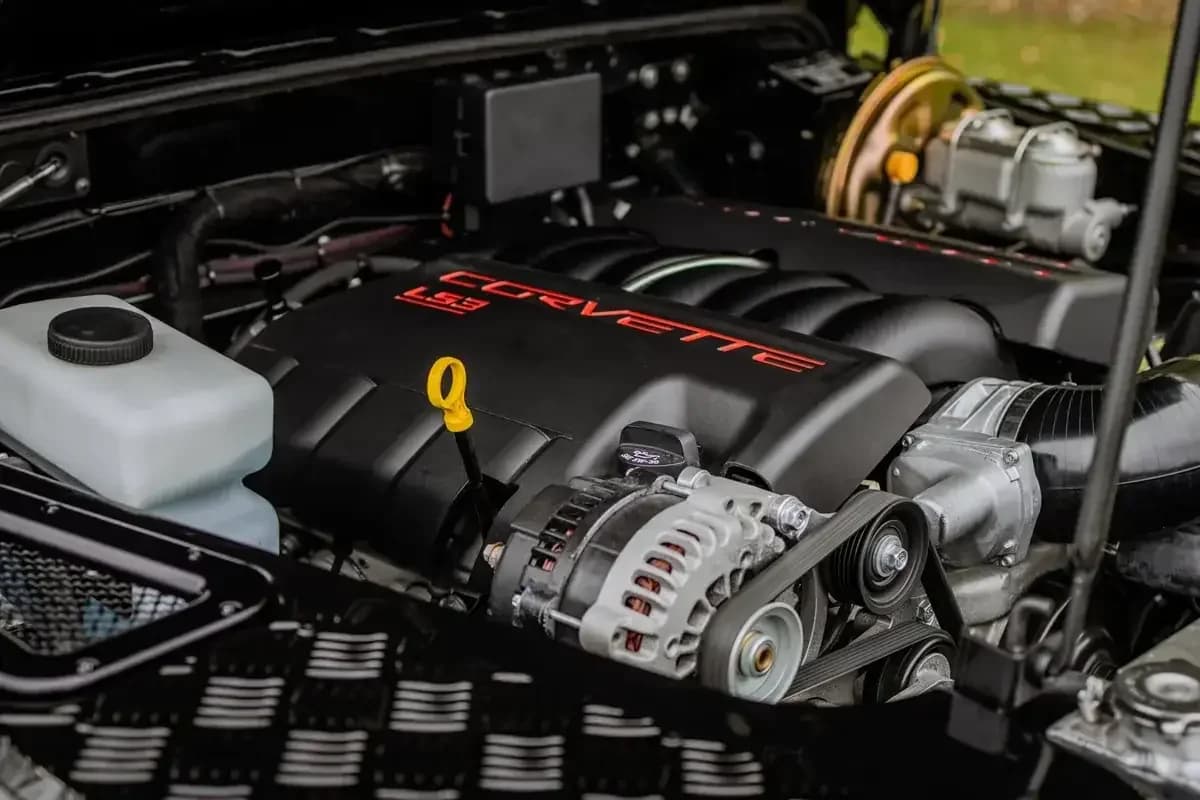
The heart of a high-end bespoke Defender is a modern American V8. We exclusively use the 430-horsepower GM LS3 or the 460-horsepower LT1 paired with a 6-speed automatic transmission. This provides the massive torque and highway reliability required for effortless cruising.
The 2007 Td5 made 122 horsepower. Which sounds generous until you've driven one up a grade with four adults and camping gear, the engine screams at 3,800 RPM and you're doing 38 mph. This is exactly why we drop a 430-horse LS3 into every build.
We offer two powertrains. The GM LS3 6.2L V8 producing 430 horsepower and 424 lb-ft of torque, or the GM LT1 6.2L V8 pushing 460 horsepower and 465 lb-ft of torque. Both are mated to a heavy-duty 6-speed automatic transmission, usually the 6L80E.[4] This specific combination is the absolute best drivetrain for the classic Defender platform. Full stop.
When you pair the LS3's aluminum block and high-flowing rectangular-port heads with a classic Defender 110, the physics of the vehicle completely change. The torque delivery is violent if you want it to be. But the real magic is the way the LS3 pulls from 2,000 RPM in third gear on a gravel road. It is completely effortless. You are no longer fighting the momentum of the truck. You are commanding it.
Bring a Trailer auction data routinely shows LS-swapped Defenders fetching well over $150,000, with top-tier bespoke builds pushing significantly higher. The market has spoken. Buyers want the classic 1983-2016 British aesthetic wrapped around bulletproof American muscle. You get the curb appeal of a classic Land Rover without the anxiety of a vintage cooling system boiling over in traffic.[4]
Interior Craftsmanship: Beyond the Solihull Standard
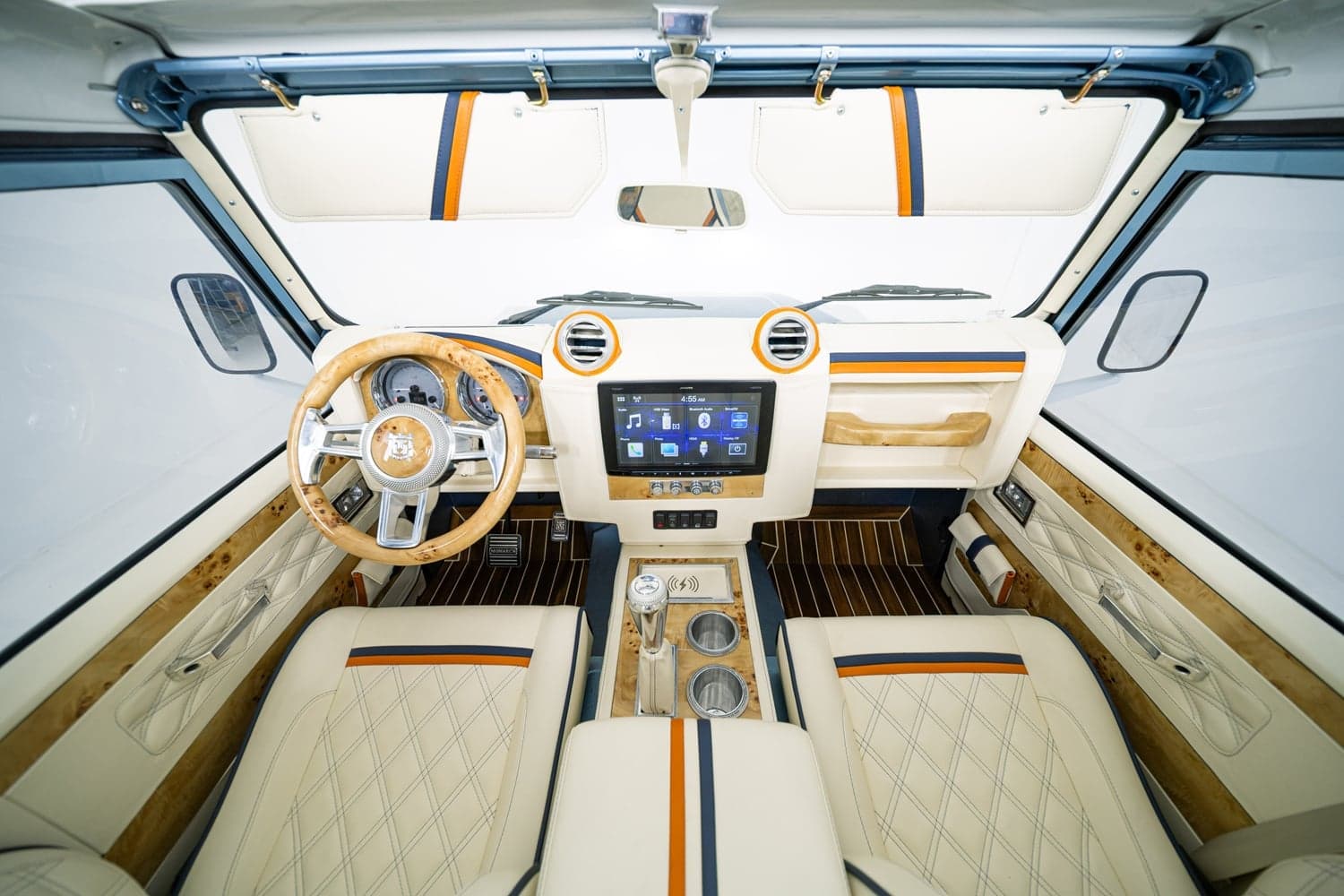
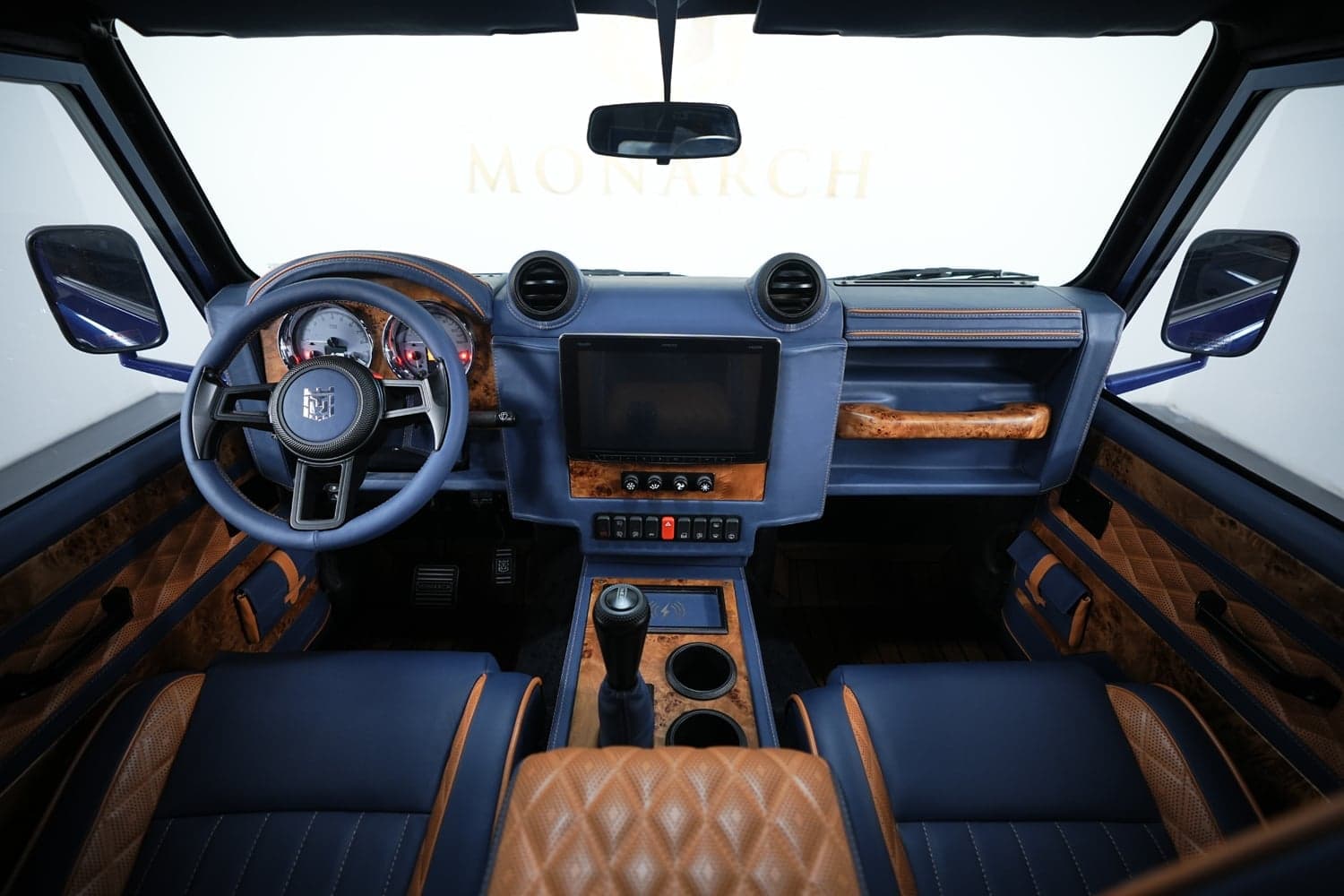
A six-figure custom Defender demands an interior that rivals modern European luxury SUVs. We use hand-stitched Italian leather, acoustic sound deadening, and highly functional cabin configurations. Every surface is custom-mixed and tailored to the client's exact specification.
The original interior of a 1995 Defender 90 felt like the inside of a post office box. Hard plastics. Bare painted metal. A heater that worked as an abstract concept rather than a functional climate control system.
If you are writing a check for a custom Defender, you expect Concours-level fit and finish. Our upholstery shop essentially throws the factory blueprints in the trash. We use hand-stitched Italian leather across the dash, the door cards, and the custom center consoles. We completely line the interior tub with modern acoustic damping materials. We take a vehicle that originally sounded like a tin can rolling down a gravel hill and turn it into a quiet, insulated cabin where you can actually hear the passenger talking to you at 75 mph.
This level of customization means we can match the exact shade of leather to the saddle you use at your ranch in Wyoming. It means we can configure a Defender 130 with custom storage for your fly-fishing gear. We do not stock generic parts. We build to the client's life.
If you browse our inventory of available builds, you will notice that no two interiors are alike. The only constant is the execution. The stitching is perfectly straight. The panels do not gap. The air conditioning blows cold enough to frost the glass in August.
Asset Allocation: The Defender in a Collector's Garage
High-net-worth collectors view bespoke Defenders not just as vehicles, but as highly functional, liquid assets. In a garage filled with fragile European exotics, the LS-powered Defender serves as the reliable, go-anywhere centerpiece that actually gets driven every weekend.
You walk into the garage of a typical Monarch client, and you will see a familiar lineup. A Porsche 911 GT3 for the track. A Mercedes G-Wagon for the daily commute. A vintage Ferrari that sits on a battery tender 360 days a year. And right next to them sits the Defender 110.
The Defender is the one that gets driven.
It is the vehicle they take to the ski lodge. It is the truck they leave at the summer house. Because an LS3-powered Defender with a brand-new wiring use and a galvanized chassis does not require a specialist mechanic to look at it every three months. Any certified GM technician in the country can plug into the OBD2 port and read the engine data. It is a high-end asset with blue-collar serviceability.
Car and Driver journalists have spent decades trying to quantify the "rugged charm" of the classic Defender. But charm wears off when you are stranded on the side of the highway. True luxury is having the classic aesthetic with zero mechanical anxiety. The classic Land Rover market has fragmented into two distinct camps: the purists who spend their weekends adjusting dual carburetors, and the discerning owners who commission ground-up builds because their time is their most valuable asset.
The L663 Contrast: Why Classic Era Matters
The modern 2020+ Land Rover Defender is an entirely different vehicle built on an aluminum monocoque platform. True collectors recognize that the classic 1983-2016 era represents the last authentic body-on-frame Defender. We exclusively build classic models to preserve this mechanical heritage.
People often ask why we exclusively build the 1983-2016 generation. Why do we ignore the modern L663 Defender that debuted in 2020?
The L663 is a brilliant computer. It has independent air suspension and enough microchips to land a small aircraft. But it is not a classic Defender.[1] You cannot unbolt the roof. You cannot hose out the footwells. It lacks the visceral, mechanical honesty of a live-axle, body-on-frame truck. When Land Rover closed the Solihull line in January 2016, they ended an era of automotive manufacturing that will never return.
We are not competing with the modern dealership. We are preserving an icon by ripping out its weaknesses and injecting it with 430 horsepower. Read our about page, and you will understand that this isn't just a business for us. It is an absolute obsession with perfecting a flawed masterpiece.
If you are tired of driving luxury SUVs that depreciate the moment you sign the paperwork, it is time to consider a bespoke commission. We handle the entire 12-stage manufacturing process at our Midwest facility, shipping completed masterworks worldwide.
Ready to define your own build? Visit our contact page to start the conversation and secure your spot in our production schedule. We will construct the exact custom Defender you have always wanted. And this time, it will actually start in the morning.