Introduction
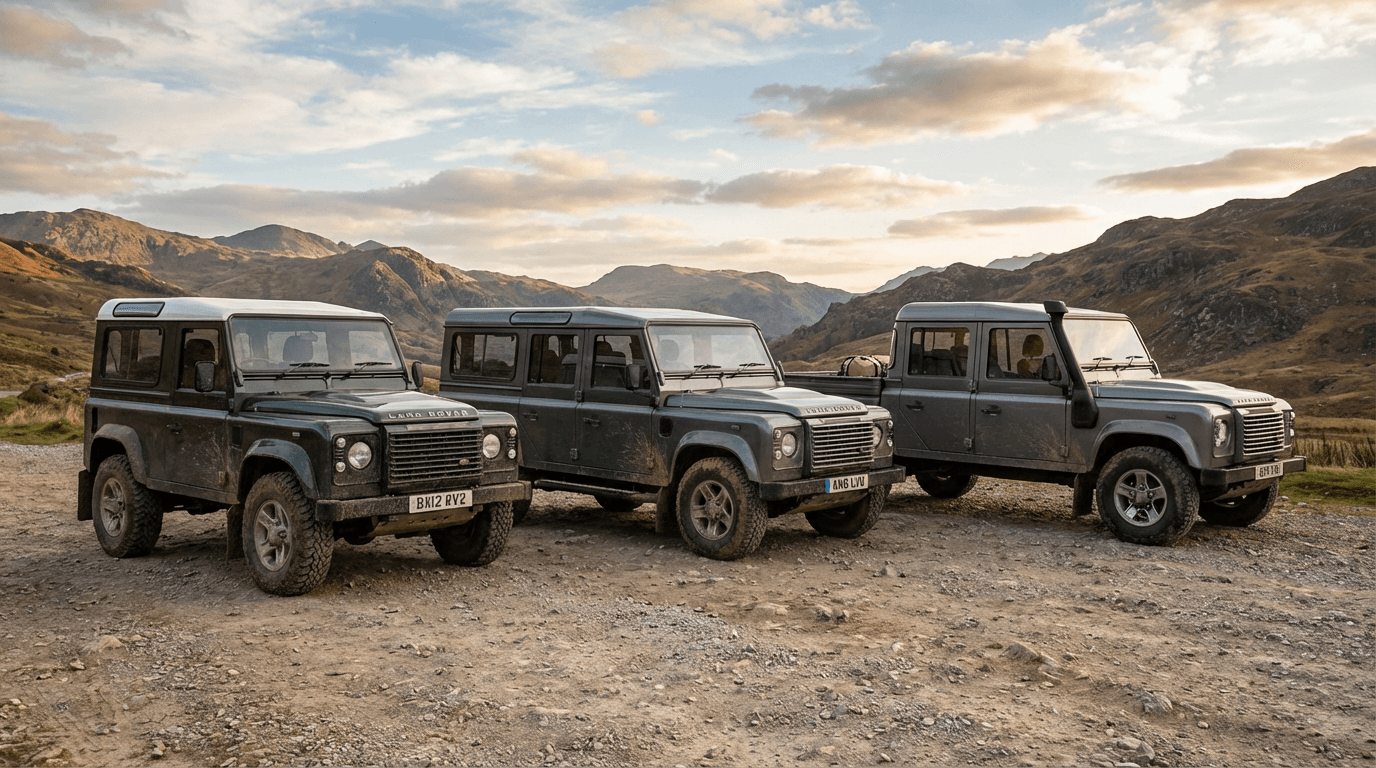
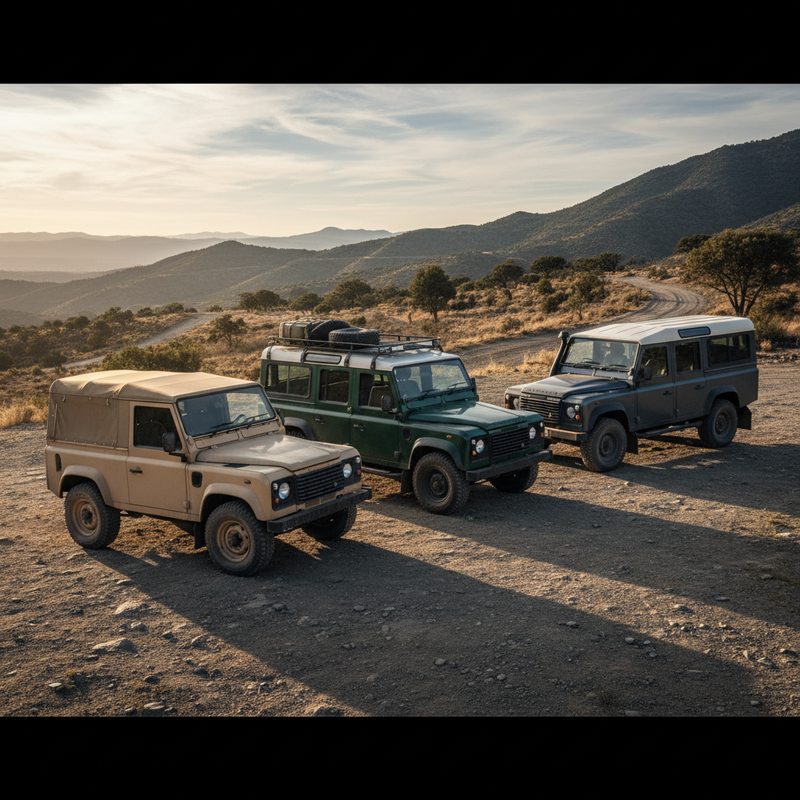
Choosing between the Defender 90, 110, and 130 represents one of the most crucial decisions in any Land Rover restoration project. Each platform offers distinct advantages, from the 90's nimble maneuverability to the 130's impressive payload capacity.
The wheelbase length fundamentally shapes your Defender's character, influencing everything from off-road capability to daily usability. Whether you're planning a weekend adventure rig or a long-distance expedition vehicle, understanding these differences will guide you toward the perfect foundation for your build.
This comprehensive guide breaks down the technical specifications, practical considerations, and real-world applications of each platform to help you make an informed decision.
Understanding the Platform Differences
Wheelbase Specifications
The fundamental distinction between these platforms lies in their wheelbase measurements, which directly impact vehicle dynamics and interior space.
The Defender 90 features a 92.9-inch wheelbase, making it the most compact and agile option. This shorter wheelbase translates to superior maneuverability on tight trails and urban environments.
The Defender 110 extends to a 110-inch wheelbase, striking the optimal balance between interior space and off-road capability. This platform has become the most popular choice among restoration enthusiasts for good reason.
The Defender 130 stretches to a 127-inch wheelbase, prioritizing cargo capacity and passenger space over tight-quarter maneuverability. This platform excels in applications requiring maximum utility.
Overall Length Impact
Platform length affects more than just parking convenience. The 90 measures approximately 142 inches overall, while the 110 extends to 159 inches, and the 130 reaches 178 inches.
These dimensions influence approach and departure angles, with shorter platforms typically offering better breakover capability on steep terrain.
Expert Tip: Consider your primary use case carefully. A 90 might struggle with family camping gear, while a 130 could prove challenging on narrow mountain trails.
Key Considerations for Platform Selection
Intended Use Analysis
Daily driving favors different platforms depending on your lifestyle. The 90 excels in urban environments with its compact footprint and easier parking. City dwellers often prefer this platform for its everyday practicality.
Family adventures typically benefit from the 110's versatility. This platform provides adequate seating for five adults while maintaining reasonable cargo space for weekend gear.
Commercial applications or large family needs often require the 130's extended capacity. This platform can accommodate up to nine passengers or substantial cargo loads.
Off-Road Performance Characteristics
Approach and departure angles vary significantly between platforms. The 90 typically achieves the best angles at approximately 47 degrees approach and 35 degrees departure.
The 110 maintains respectable angles while offering improved stability on uneven terrain. Its longer wheelbase provides better weight distribution and reduced likelihood of high-centering.
The 130 sacrifices some extreme capability for improved on-road stability and cargo capacity. However, skilled drivers can still tackle challenging terrain with proper technique.
Restoration Complexity Factors
Parts availability remains excellent across all platforms, though some 130-specific components may require additional sourcing time. The restoration process complexity stays relatively consistent between platforms.
Customization options expand with platform length. Longer wheelbases provide more space for auxiliary fuel tanks, water systems, and expedition equipment integration.
Cost considerations vary primarily with the scope of intended modifications rather than the base platform itself.
Technical Deep Dive
Structural Engineering
The chassis design remains fundamentally similar across platforms, with galvanized steel construction providing exceptional durability. However, the longer platforms include additional cross-members for structural integrity.
Load distribution characteristics change with wheelbase length. The 110 and 130 platforms can handle heavier rear loads without significantly affecting front axle weight distribution.
Suspension geometry adaptations accommodate the different wheelbases while maintaining Land Rover's proven coil-spring or leaf-spring setups depending on the model year.
Engine and Transmission Compatibility
All three platforms share engine mounting configurations, allowing for consistent powerplant options during restoration. Popular choices include the 300TDI, TD5, and various petrol engines.
Transmission compatibility remains consistent, though longer platforms may benefit from different final drive ratios to optimize performance with their increased weight.
Cooling system requirements may vary slightly with platform length, particularly in expedition-configured vehicles with additional accessories.
Weight and Capacity Analysis
| Platform | Curb Weight | Payload Capacity | Towing Capacity |
|---|---|---|---|
| 90 | ~3,500 lbs | ~1,500 lbs | ~7,700 lbs |
| 110 | ~3,800 lbs | ~1,400 lbs | ~7,700 lbs |
| 130 | ~4,100 lbs | ~2,900 lbs | ~7,700 lbs |
The 130's significantly higher payload capacity makes it ideal for commercial applications or heavy expedition builds requiring substantial gear.
Technical Note: These figures represent typical specifications and may vary based on model year, engine choice, and specific configuration options.
Platform-Specific Advantages
Defender 90 Benefits
Urban maneuverability stands out as the 90's primary strength. Tight parking spaces, narrow streets, and city traffic become manageable challenges rather than obstacles.
Fuel economy typically improves with the reduced weight and aerodynamic profile. Long-distance touring becomes more economical without sacrificing the essential Defender character.
Extreme off-roading capabilities shine on technical trails where every inch of wheelbase matters. Rock crawling and tight switchbacks favor the compact dimensions.
Defender 110 Advantages
Versatility defines the 110 platform better than any single characteristic. This wheelbase handles family duties, weekend adventures, and moderate commercial tasks with equal competence.
Resale value traditionally remains strong for well-executed 110 restorations. The broad appeal translates to market stability and investment security.
Parts availability reaches its peak with 110 components due to the platform's popularity during the production years.
Defender 130 Applications
Commercial viability makes the 130 platform attractive for businesses requiring dependable utility vehicles. Safari operations, construction sites, and agricultural applications benefit from the extended capacity.
Large family transportation becomes practical with proper seating configurations. Nine-passenger capability addresses needs that smaller platforms cannot accommodate.
Expedition preparation allows for comprehensive systems integration. Water storage, auxiliary power, and extended-range fuel systems fit more easily within the generous dimensions.
Planning Consideration: Factor in your local infrastructure limitations. Some parking garages and ferry restrictions may impact daily usability of longer platforms.
Making Your Decision
Assessment Framework
Document your requirements honestly before falling in love with any particular platform. Consider passengers, cargo, typical routes, and intended modifications.
Budget implications extend beyond the initial purchase. Longer platforms may require more expensive tires, increased fuel consumption, and potentially higher insurance costs.
Future flexibility deserves consideration. Will your needs change over the ownership period? The 110 platform often provides the best long-term adaptability.
Professional Consultation Value
Expert guidance can prevent costly mistakes and ensure your platform choice aligns with your vision. Professional restoration shops see the long-term implications of platform decisions.
Custom modification planning benefits enormously from experienced input. Certain modifications work better with specific wheelbases, and this knowledge comes from hands-on experience.
Realistic timeline expectations vary with platform complexity and intended modifications. Professional consultation helps establish achievable project schedules.
Ready to Choose Your Perfect Defender Platform?
Selecting between the Defender 90, 110, and 130 represents just the beginning of your restoration journey. Each platform offers unique advantages, and the right choice depends entirely on your specific needs and vision.
At Monarch Defender, we've guided countless enthusiasts through this critical decision, helping them match their platform choice with their long-term goals. Our experience with all three wheelbases ensures you'll receive honest, practical advice based on real-world applications.
Whether you're drawn to the 90's nimble character, the 110's balanced versatility, or the 130's impressive capability, we're here to bring your vision to life with the attention to detail and technical expertise your project deserves.
Contact our team today to discuss your platform preferences and start planning your dream Defender restoration.