A Name Born Out of Necessity
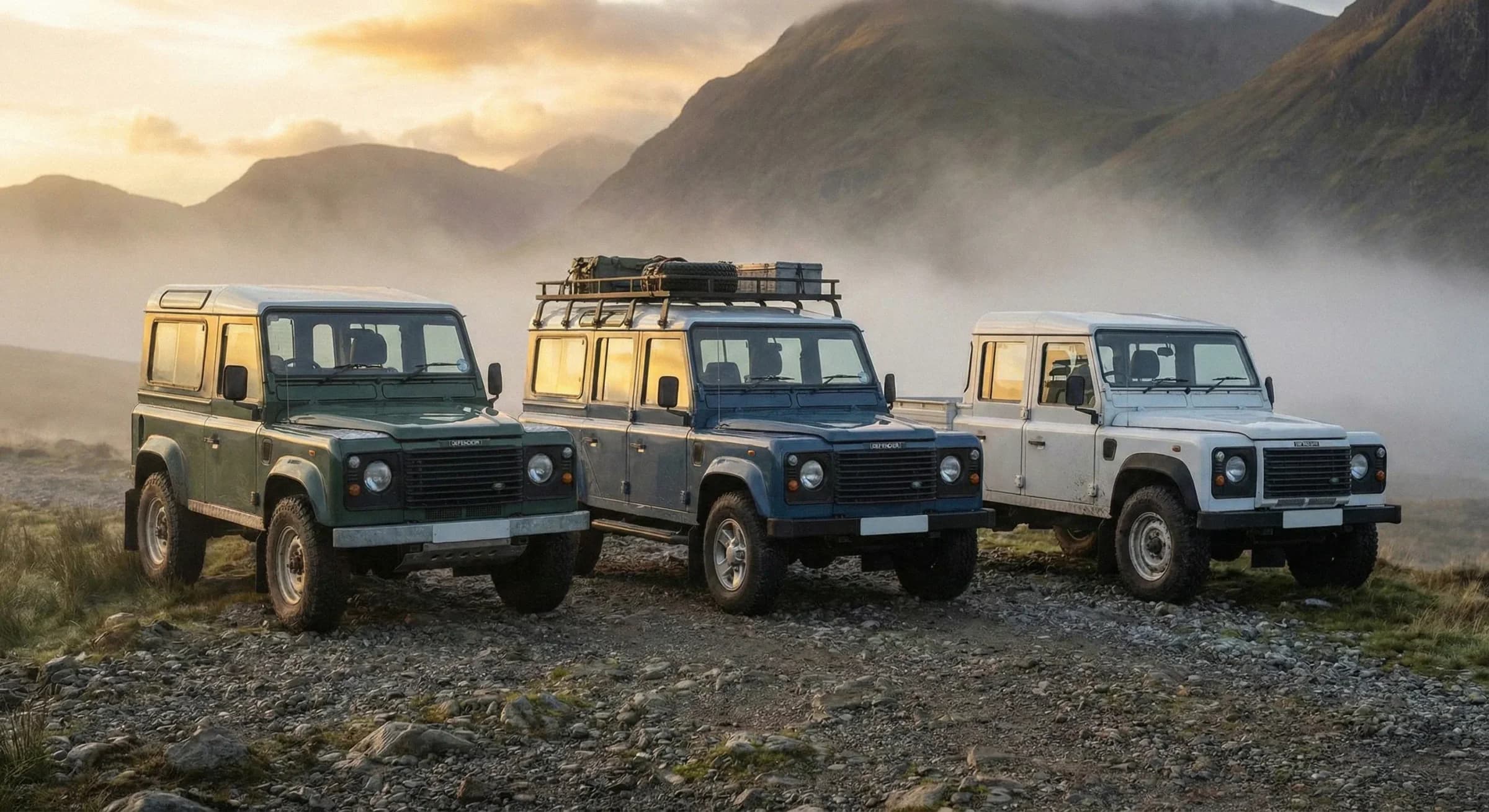
Sometime in late 1990, a badge appeared on the nose of a truck that had gone, until that moment, without a proper name. Not because it didn't deserve one. But because it hadn't needed one. For over four decades, saying "Land Rover" was enough. Everyone knew what you meant.
Then Solihull launched the Discovery in 1989, and suddenly the original workhorse needed an identity of its own.
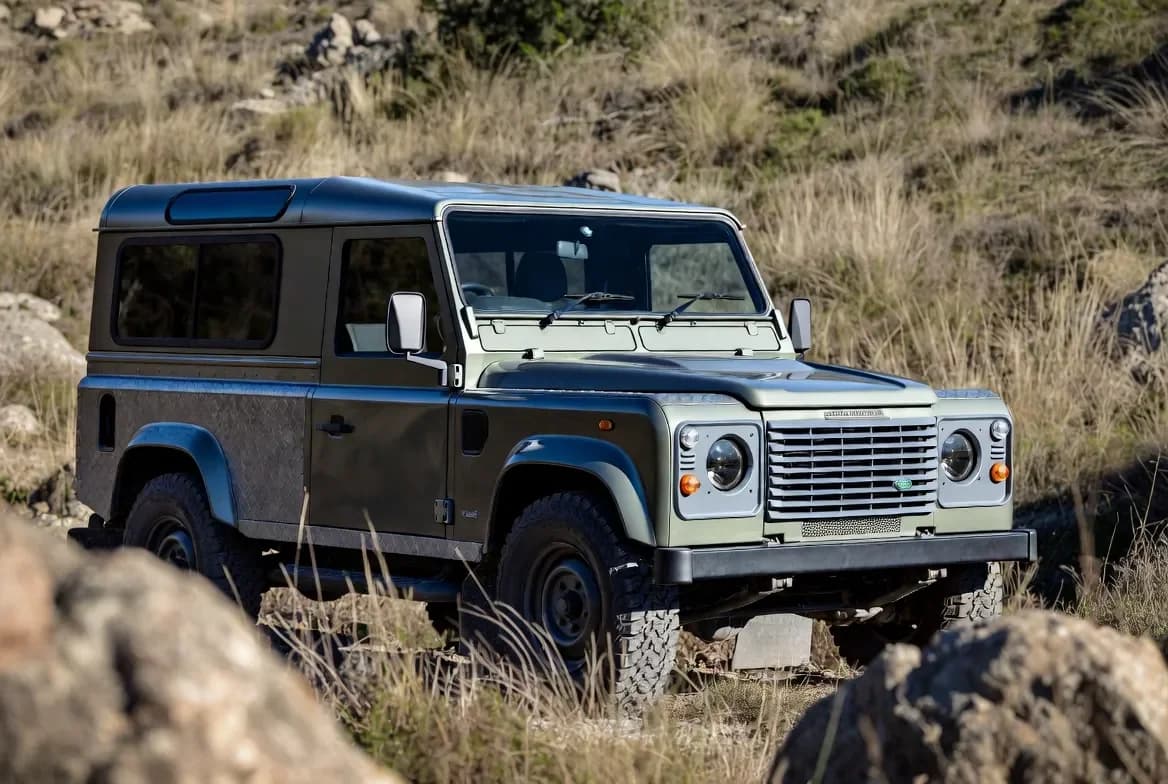
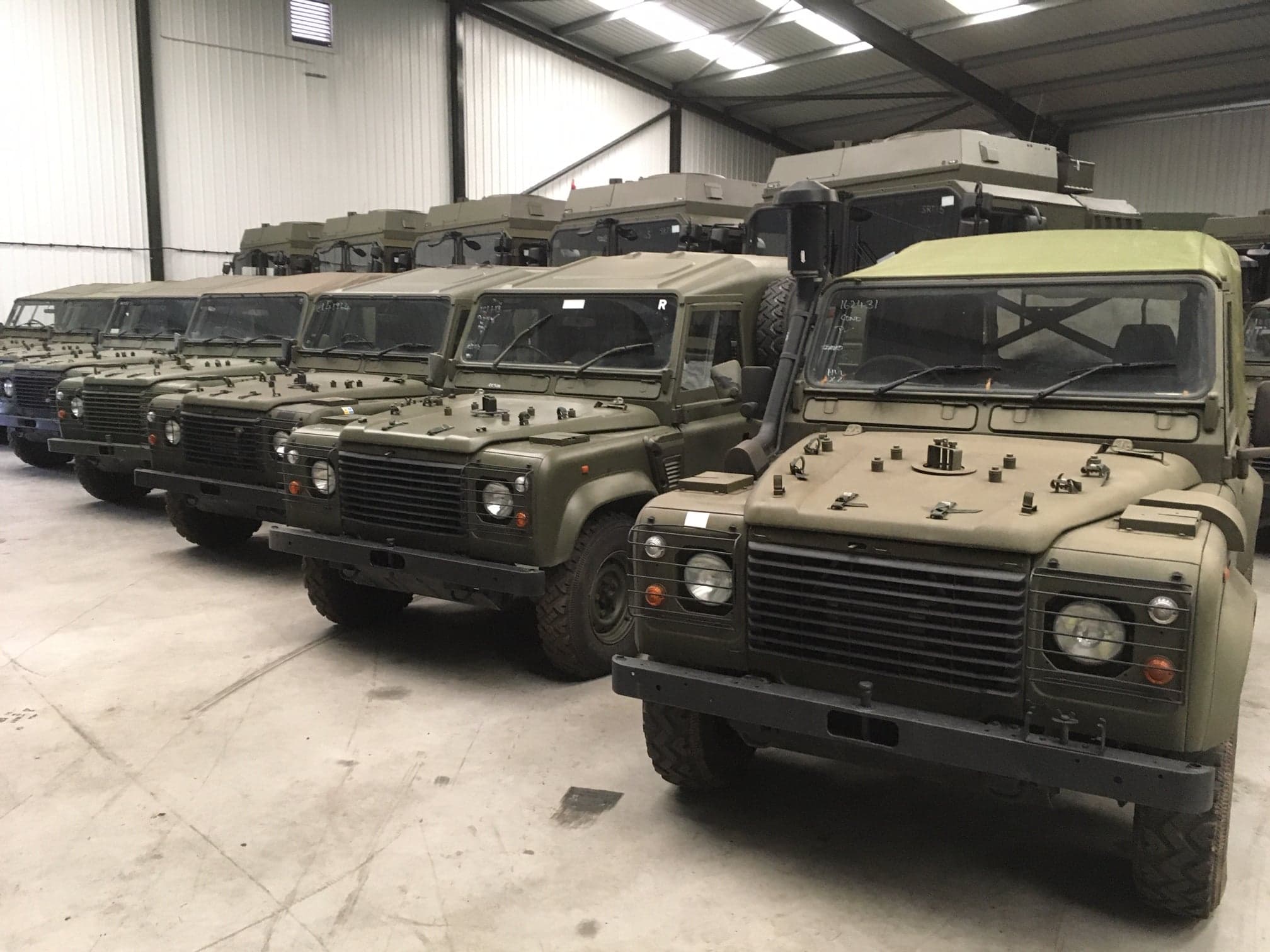
[1] Following the 1989 introduction of the Land Rover Discovery, "Land Rover" became the name of a broader marque, no longer the name of a specific model; thus, in 1990, Land Rover renamed them Defender 90, Defender 110 and Defender 130 respectively. The choice of the word "Defender" was deliberate. It nodded to decades of military service, to the British Army contracts, to the vehicles that had defended borders and forded rivers in over a hundred countries. The name stuck because it was already true.
But the 1990 Land Rover Defender wasn't just a rebrand. It was the beginning of a new mechanical era, and the start of a collector market that, 35 years later, shows zero signs of slowing.
The 200Tdi: An Engine That Actually Mattered
1990 Land Rover Defender 200Tdi Specs
| Feature | Specification |
|---|---|
| Engine Code | 200Tdi (Gemini) |
| Displacement | 2,495 cc (2.5L) |
| Horsepower | 107 bhp @ 3,900 rpm |
| Torque | 195 lb-ft @ 1,800 rpm |
| 0-60 mph | ~18.0 seconds (Stock) |
| Transmission | LT77 5-Speed Manual |
Here's the thing about the Land Rover Defender 1990 that separates it from the models that came before: the 200Tdi.
The previous 2.5-litre turbo diesel was, to put it charitably, adequate. It breathed its own sump oil. It had a head gasket problem that haunted owners. It was slow. And I mean slow in a way that modern drivers simply cannot comprehend. Merging onto a motorway in a pre-Tdi Defender required genuine bravery.
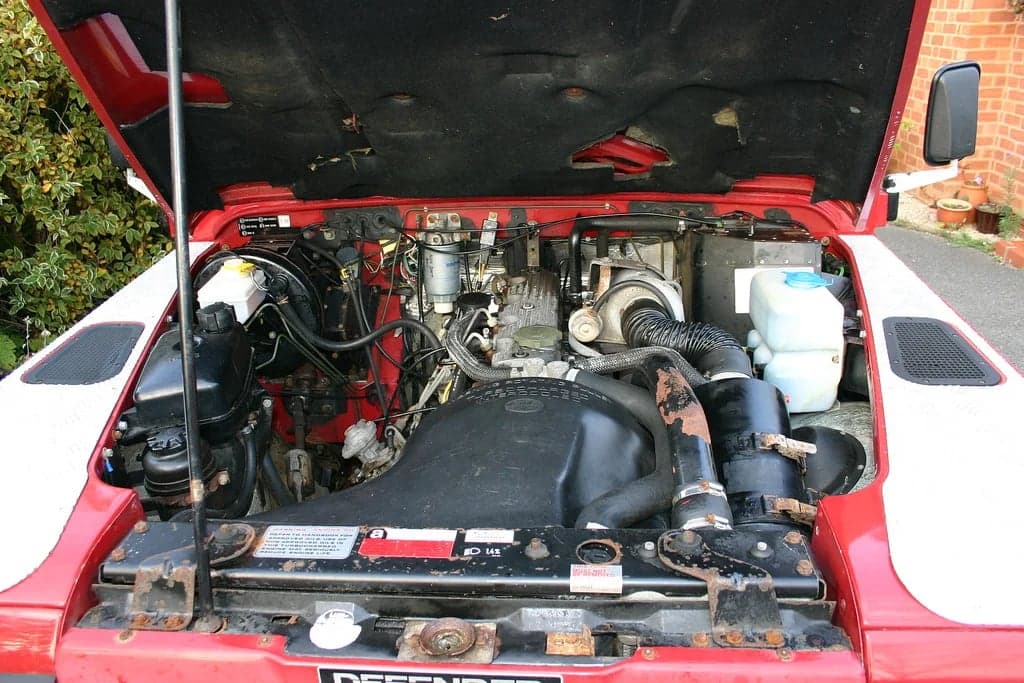
The Discovery also had a new turbodiesel engine, the 200TDi. This was also loosely based on the existing 2.5-litre turbo unit, and was built on the same production line, but had a modern alloy cylinder head, improved turbocharging, intercooling and direct injection.[1] Those weren't incremental changes. A new alloy head, intercooling, and direct injection on a production diesel in 1990? That was a serious step for a company still using aluminum body panels held on with rivets.
The numbers told the story. With 107 bhp and 188 lbs feet of torque, the new engine gave 26 percent more power, 25 percent more torque and 215 percent better fuel economy.[2]
Read that last figure again. 215 percent better fuel economy.
Most obviously the turbocharger was retained in the Diesel Turbo's high mounting position on top of the manifolds in the Defender, rather than being tucked under the manifolds in the original Discovery version. It has established itself as a powerful and long-lived unit that with proper maintenance can exceed 300,000 miles of use.[5] That's not marketing hyperbole. We've pulled 200Tdi blocks out of Defenders with legitimate 250,000+ miles on the clock, and the bores still measured within spec. The thing about these engines is they're simple enough that a competent mechanic can rebuild one in a barn. No ECU to argue with. No variable valve timing to diagnose. Just iron, aluminum, diesel, and compression.
At Monarch, we've found that 200Tdi blocks sourced from later 1992-1993 production tend to have tighter tolerances and fewer casting imperfections than early 1990-1991 units. If you're hunting a donor, that detail matters.
What Made the 1990 Defender Mechanically Distinct
The Land Rover Defender 1990 sat at an interesting crossroads. It had the bones of the Ninety/One Ten platform that Land Rover had been refining since 1983, paired with a genuinely modern (for the era) powerplant. That combination makes it special.
The chassis was the same ladder frame that featured more than 400 separate welds and bolted cross members permitted easier access to engine, gearbox and fuel tank.[2] Coil springs at all four corners, a permanent four-wheel-drive system with a two-speed transfer case, and disc brakes at the front. The gearbox was the LT77 five-speed manual, a unit that, frankly, has earned its reputation for being somewhat fragile under hard use. It works. It just doesn't love being abused.
The 90-inch wheelbase (actually closer to 92.9 inches, but who's counting) gave the Defender 90 a tight turning circle and absurd approach and departure angles. The 110 stretched to 110 inches and offered four doors and actual rear passenger space. The 130, which also received the Defender name in 1990, got its own dedicated chassis for the first time instead of being a cut-and-shut 110[1].
Along with the 200Tdi engine, the One Two Seven's name was changed to the "Land Rover Defender 130". The wheelbase remained the same; the new figure was simply a rounding up. More importantly, 130s were no longer built from "cut-and-shut" 110s, but had dedicated chassis built from scratch.That's a detail most people miss. 1990 didn't just give the Defender its name. It gave the 130 a proper skeleton.
1990 Defender vs. 1993 NAS Defender: What's the Difference?
The 1990 rebrand set the stage for something Land Rover hadn't attempted in years: selling in America.
The Land Rover Defender 90 was launched in the U.S. in 1993 and sold here until 1997, though only about 2,000 were imported each year. It was fitted with the fuel-injected, 182 bhp 3.9-liter version of the old Buick alloy V-8, was good for 0-60 mph in 10.2 seconds, and was limited to a top speed of 86 mph.[2]
Now, these NAS (North American Specification) Defenders didn't use the 200Tdi. U.S. emissions certification for that diesel wasn't worth the cost, so Land Rover dropped in the 3.9-litre Rover V8, the same Buick-derived aluminum block that had been powering Range Rovers for years. Base price was $27,900, but options including air-conditioning and every kind of off-road accessory could easily push it past $35,000.[2]
Adjusted for inflation, that $35,000 optioned NAS Defender would be roughly $75,000 today. And an original, well-preserved 1997 NAS example? Try double that. Or more.
The 1990 model year itself never reached U.S. shores officially. But it was the platform, the engineering decisions, and the brand identity established in that year that made the American venture possible. Without the Defender badge, without the 200Tdi proving the truck could be more than a farm tool, the NAS program probably never happens.
What a 1990 Land Rover Defender Is Worth Today
Let's talk money. Because the 1990 Defender sits in a peculiar spot in the market.
It's the first year of the Defender name, which gives it historical significance. But it's also a pre-NAS, non-U.S.-market truck (in most cases), which means fewer American buyers are bidding on them at auction. The 200Tdi engine is beloved, but it doesn't carry the same premium as the later 300Tdi, which arrived in 1994 and is generally considered the best diesel Land Rover ever produced.
Land Rover Defender cars for sale, including a Used 1990 Land Rover Defender 110 and a Used 1990 Land Rover Defender 90 ranging in price from $38,650 to $75,000.[6] That's a wide spread, and condition explains most of it. A rough, high-mileage 1990 110 with a rotting chassis might trade hands privately for $25,000. A concours-level 90 with documented history, original paint, and low kilometers can command well north of $70,000.
Across the broader classic Defender market, the average price of a Land Rover Defender is $63,957.[4] Soft-top variants carry a premium, with the average price of a Land Rover Defender 90 Soft Top at $75,935[7], and the highest recorded sale for that body style reaching $220,000 for a 1994 example[7].
The supply equation is permanent. Land Rover celebrated 68 years of history today as the last of the current Defenders was produced at its famous Solihull production facility.[3] That was January 29, 2016. No more are coming. And every year, a few more 1990 examples are lost to rust, accidents, or neglect. The math only works in one direction.
Collector's Insight: When evaluating a 1990 Defender, check the chassis outriggers and rear crossmember first. These are the first components to corrode on UK-market trucks, and replacing them properly costs more than most buyers expect.
Why the 1990 Defender Matters for Restomod Builds
At Monarch, we have a particular affection for 1990-era donor vehicles. Not because they're the flashiest. Because they're honest.
The chassis design from this era predates the changes that came with later emissions equipment and electronic complications. The wiring harness is straightforward enough that our technicians can strip it completely and replace it with a modern loom in about three days. Compare that to a 2007-era Puma Defender, where the CAN-bus wiring alone takes a week to trace and remove.
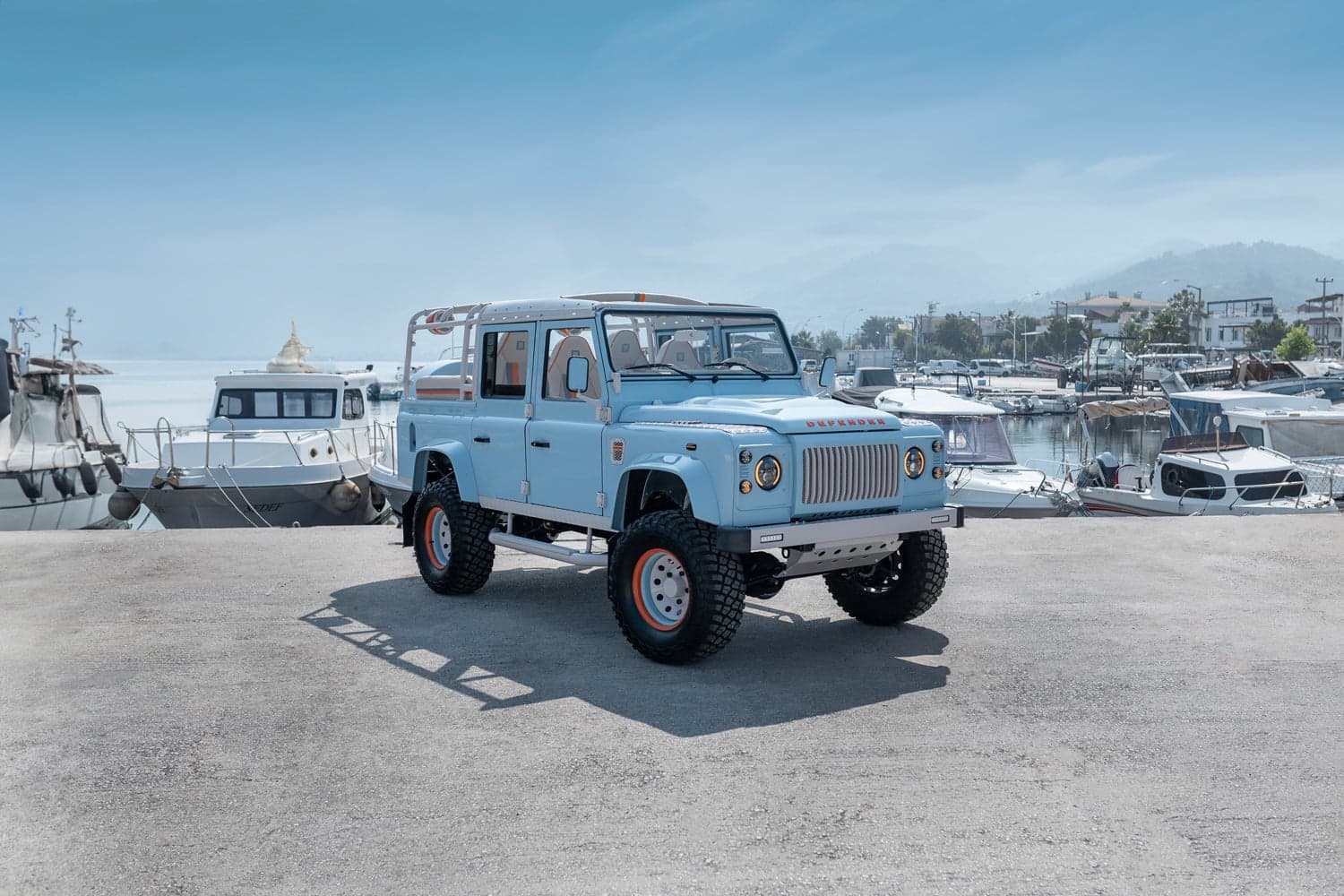
The 200Tdi engine bay, while competent in stock form, is actually the perfect candidate for a modern V8 conversion. We build with the GM LS3 (about 430 hp), LT1 (about 460 hp) or supercharged LT4 (650 hp), and we also offer EV builds. When a V8 goes into the new chassis under one of these trucks, the 200Tdi mounting positions are in almost the exact right place for our custom engine mounts. A coincidence? Probably. But a useful one.
And the body panels. Aluminum doesn't rust. That is the single most important sentence in this entire article. A 1990 Defender body, assuming it hasn't been smashed or hacked up by a previous owner, can be stripped, prepped, and recoated to look showroom-fresh. The steel chassis underneath, mind you, is a different story. That's why our 12-stage build process discards the original frame entirely and starts from a brand-new KTL-coated galvanized chassis. It makes a difference, and it's measured in decades.
1990 Defender Production Numbers & History
The 1990 Defender wasn't just the beginning of a name. It was a waypoint in one of the longest continuous production runs in automotive history.
Sales had reached half a million by 1966, while annual production peaked in 1971 with 56,000 units.[3] By 1990, the pace had settled, but the assembly line at Solihull kept moving. Every Defender was hand-built. Literally. Workers had nicknames for the parts: the door hinges were called "pig's ears," the dashboard was "lamb's chops." Each truck took approximately 56 hours to assemble, compared to 48 hours for a Discovery Sport[3].
From 1948 to the final day, over 2,016,933 Series Land Rovers and Defenders were built at that one factory[3]. The last one wore the registration H166 HUE, a callback to the very first pre-production Land Rover. The line went quiet that Friday morning, and it hasn't started again since.
Two million trucks. One factory. Sixty-eight years. And the 1990 Land Rover Defender was the model that finally got to carry the name.
Common Pitfalls When Buying a 1990 Defender
I've seen enough 1990 Defenders come through our workshop to know where the bodies are buried. Figuratively speaking.
The LT77 gearbox is the weak link. It syncs on third and fourth gear wear out, and a rebuild isn't cheap if you're sourcing genuine parts. The R380, which replaced it in 1994, is a meaningfully better unit. On any restomod build, we swap it out as a matter of course.
The 200Tdi's head gasket, while better than the old Diesel Turbo's, still warrants inspection. Check for mayo under the oil filler cap and look at the coolant header tank for oily residue. If you see both, walk away. Or, actually, negotiate harder and budget for a head job.
Bulkhead corrosion near the footwells. It is inevitable on any UK-market truck that was not garaged. The aluminum skin is fine, but the steel reinforcements behind the dash rot from the inside out. You won't see it until you pull the dashboard, and by then you own the problem.
Monarch Standard: On every 1990-era build we commission, the bulkhead is stripped bare, all steel components are inspected or replaced, and the entire assembly is treated with primer before any panels go back on. It adds days to the build timeline. It prevents two decades of regret.
Commencing Your Commission
The 1990 Land Rover Defender represents a singular moment in automotive history: the year a nameless workhorse became an icon. Whether you're drawn to it for the mechanical purity of the 200Tdi, the investment potential of a first-year Defender, or simply the way that boxy silhouette looks parked in your driveway, the case for this truck has only gotten stronger with time.
A Monarch is built from the ground up through our 12-stage process: modernized chassis, modern GM V8 or EV drivetrain, hand-stitched Italian leather, and the kind of attention that would make the old Solihull hands nod in approval. We source the donor. We execute the build. And we deliver a vehicle that honors 1990's legacy while performing like nothing that left the factory ever could.
Start your commission today and speak with our build team about transforming a 1990-era Defender into something extraordinary.