Land Rover Defender Maintenance Guide: Real Ownership Costs and Care Tips for Restomod Owners in 2026
TL;DR: Owning a classic Land Rover Defender restomod in 2026 demands a specific maintenance philosophy. While a hot-dip galvanized chassis and a GM LS3/LT1 powertrain drastically reduce traditional failure points, strict fluid schedules and yearly preventative care remain non-negotiable for protecting a six-figure investment.
Two months ago, a client called our Midwest headquarters asking about the maintenance schedule on his factory-original 2001 Defender 110. He wanted to know how to keep it running smoothly. The TD5 is the worst engine Land Rover ever put in a Defender. Full stop. I told him to pull the drivetrain entirely. He thought I was joking. I wasn't.
Look. The classic Defender era spanning 1983 to 2016 produced some of the most iconic silhouettes in automotive history. But factory-spec underneath? They were plagued by porous engine blocks, mild steel frames that dissolved in rain, and electronics that seemed to actively hate the driver. If you own a true bespoke restomod, one where the entire architecture has been modernized, your maintenance reality looks entirely different than the poor souls trying to keep a 300Tdi sputtering along.
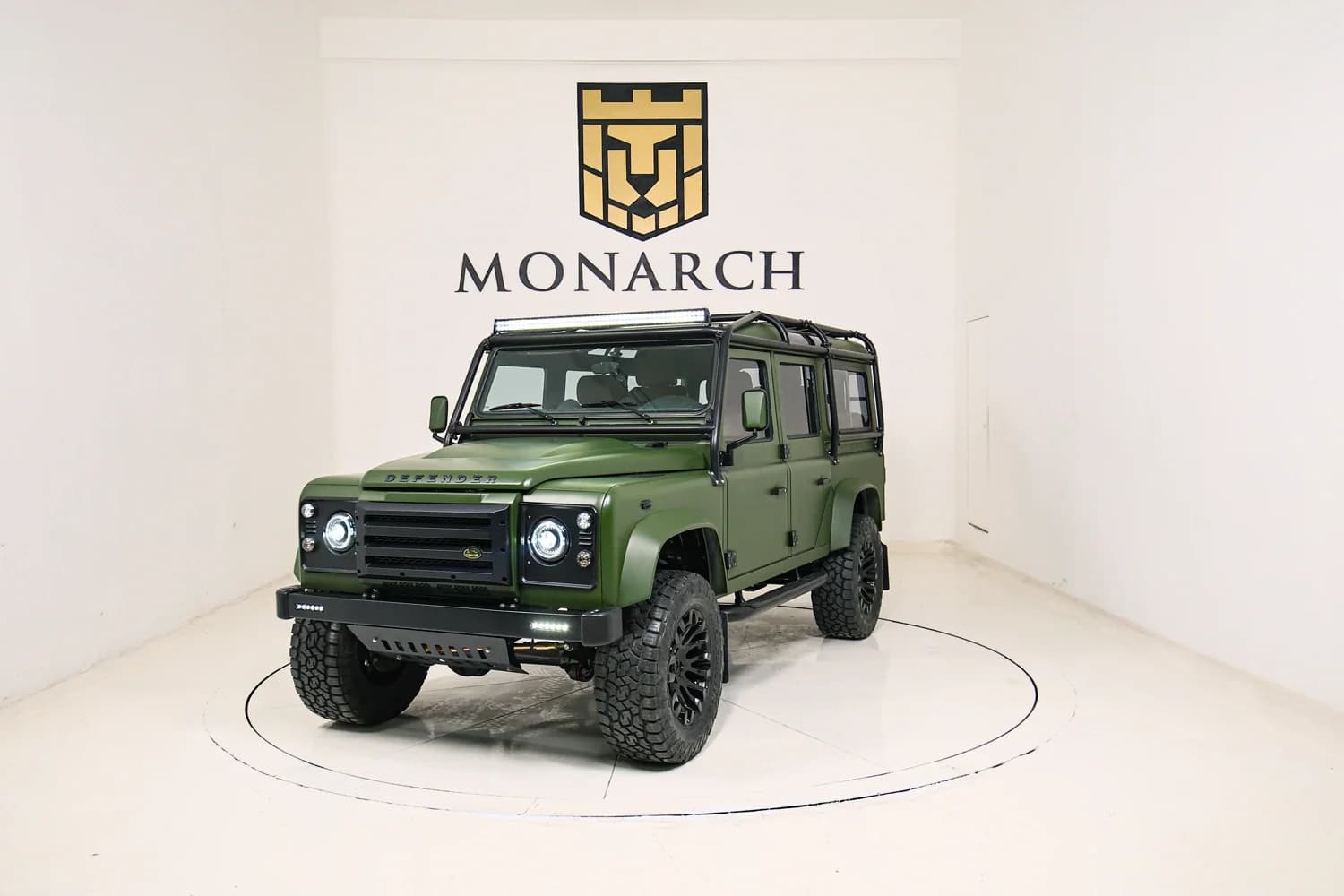
We have personally overseen ground-up builds at Monarch Motor Company since 2016. Our 12-stage manufacturing process exists for one specific reason. To eliminate the ghosts of Solihull's past. We replace the anemic factory setups with the GM LS3 (about 430 hp), LT1 (about 460 hp) or supercharged LT4 (650 hp), and we also offer EV builds. We rip out the rotting steel. We rewire everything.
Here is exactly how you maintain a modernized classic Defender in 2026.
The Reality of Classic Defender Chassis Care
A classic Land Rover Defender chassis requires consistent preventative care. Even if you upgrade to a hot-dip galvanized frame, which coats the steel in a thick layer of protective zinc, you must routinely wash the undercarriage and clear the drainage holes to prevent salt and debris buildup.
Original Defenders rolled off the line with mild steel frames. They had virtually zero paint protection. They were magnets for rust. The rear crossmember usually rots out first, followed quickly by the outriggers.[1]
If you commission a proper build, the original frame goes straight to the scrap heap. Every Monarch is built on a new KTL-coated, galvanized chassis. The donor we source supplies the identity and title, not the frame. The zinc bonds with the steel at a molecular level, creating a barrier that aggressively blocks moisture and corrosive elements.
Does a galvanized frame mean you can ignore it? No.
You still have to wash the undercarriage after heavy use. Salt and mud can trap moisture against the zinc. While the zinc acts as a sacrificial anode, allowing the mud to sit there year after year will eventually compromise the coating. Keep a power washer in your garage. Blast the crossmembers after any off-road excursion. Clear the frame drainage holes.
Aluminum body panels present another unique challenge. Classic Defender doors have a steel frame wrapped in an aluminum skin. When steel and aluminum touch, you get galvanic corrosion. This manifests as bubbling paint on the lower sections of the doors. A proper master builder isolates these metals during assembly. Keep an eye on the bottom edge of your doors. If you see the paint starting to blister, the isolation has failed. Address it immediately.
Powertrain Maintenance: Keeping the LS3 Alive
The GM LS3 6.2L V8 requires synthetic oil changes every 7,500 miles. Still, for collector vehicles driven less frequently, you must change the oil at least annually to prevent internal condensation and acid buildup from degrading the engine block and gaskets.
We drop 6.2L LS3, LT1 or supercharged LT4 V8s into our Defender 90 and Defender 110 builds, and we also offer EV builds. They produce 430 hp (LS3) to 460 hp (LT1), or 650 hp from the supercharged LT4. The LS3 generates 424 lb-ft of torque. They transform a sluggish farm implement into a precision instrument capable of terrifying modern sports cars off the line.
As per our existing article, the LS3 & LT1 engines are engineering masterpieces. They are also exceptionally easy to maintain compared to anything Land Rover built.
Chevrolet dictates a 7,500-mile service interval for the LS3 under normal driving conditions. This includes checking the oil life percentage, rotating tires, and replacing the engine oil and filter.[3] But very few high-net-worth collectors put 7,500 miles a year on a bespoke commission. Most of these trucks split time between climate-controlled garages in Aspen and summer homes in the Hamptons.
If your Defender sits for weeks at a time, you operate on a time-based schedule. Change the synthetic oil annually. Even if you only drove 800 miles. Oil breaks down.[4] Condensation builds up inside the crankcase. If you leave old oil in the pan, it becomes acidic and eats away at the seals. Start the engine every few weeks and bring it fully up to operating temperature. This prevents gaskets from shrinking and drying out.[5]
Your 6-speed automatic transmission, typically the 6L80E, needs attention around the 45,000-mile mark. Drain and fill the fluid. Do the same for your heavy-duty transfer case. If you use your D130 for heavy towing or aggressive off-roading, cut that interval in half. [3]
ALWAYS REMEMBER: Fluids are cheap. Drivetrains are not.
Real Ownership Costs in 2026
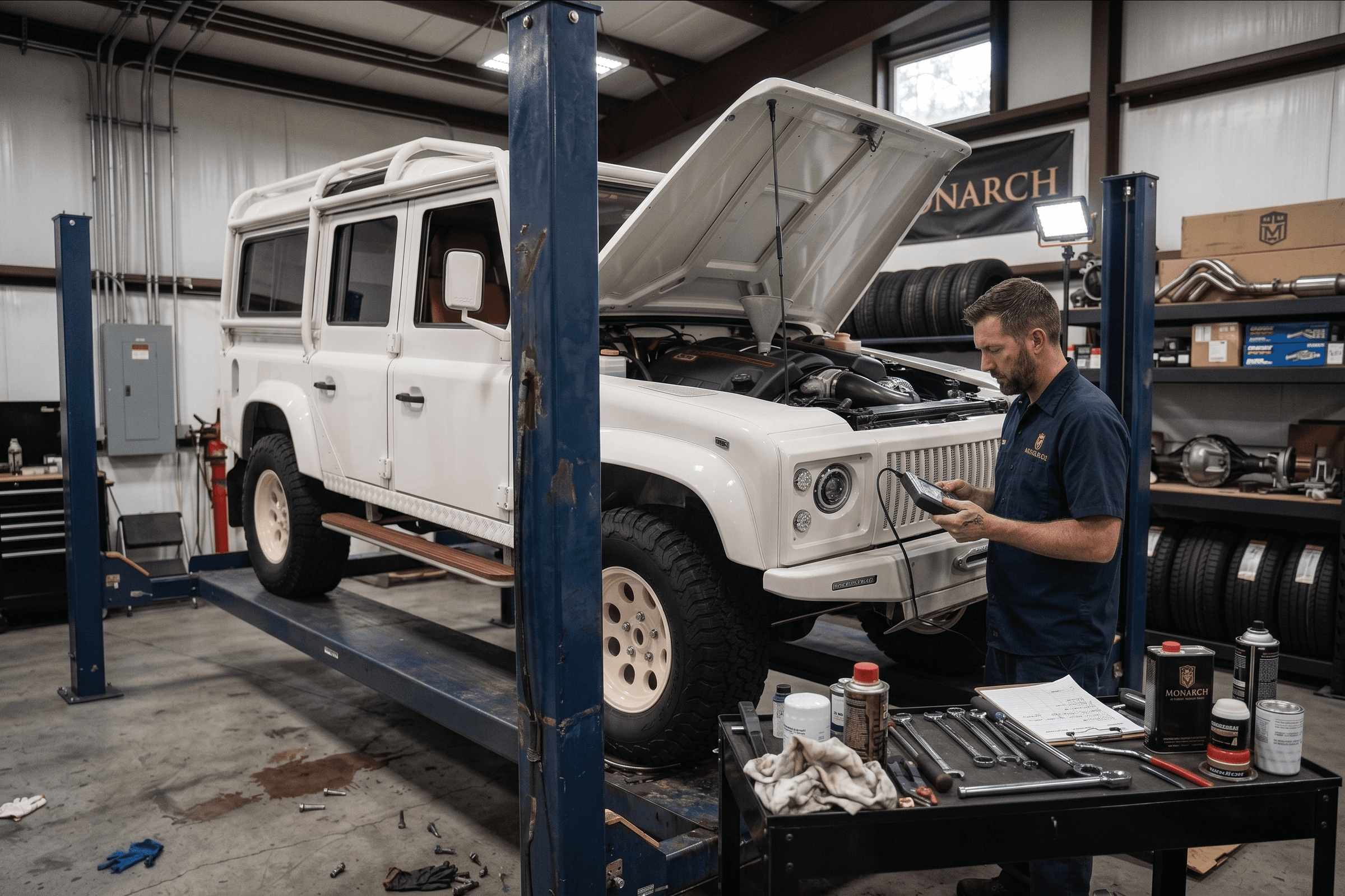
True ownership costs for a classic Land Rover Defender depend entirely on its condition and build pedigree. A properly engineered restomod requires only standard GM powertrain servicing (roughly $500-$1,000 annually), while keeping an original factory spec running often incurs $5,000+ in yearly structural and mechanical repairs.
Let us discuss value. The collector market has recognized the extreme divergence between poorly restored rust-buckets and true ground-up manufacturing.
The Hagerty valuation for a base 1997 Defender 90 is sitting right at $105,000 for a pristine, unmolested factory example. That represents a massive spike over the past decade. [6]
But a Monarch is not a factory example. We do not restore client-provided vehicles. We build one-of-one commissions. Recent Bring a Trailer auction data shows exactly what happens when a classic Defender receives a proper LS3 integration and a galvanized chassis.[7] High-end custom 110s and NAS 90s routinely push deep into the $150,000 to $250,000 range. The original invoice for a heavily customized 1993 Defender 110 NAS from a highly regarded shop recently surfaced at over $210,000, and today that same exact caliber of build would command a minimum of $300,000.
Your annual maintenance costs will reflect the quality of the builder.
If you buy a patched-together 1988 Defender 110 off a questionable internet forum, budget $8,000 a year. You will chase electrical gremlins. You will rebuild leaky swivels. You will weld patches onto a decaying frame.
If you commission a Monarch, budget $800 a year. An oil change. A tire rotation. A fluid check. You are paying for modern reliability wrapped in heritage sheet metal.
Suspension and Heavy-Duty Upgrades
We integrate modernized heavy-duty suspension systems into every build. The original hardware was fine for traversing muddy Welsh sheep paddocks at 12 miles per hour. It becomes a lethal liability when you push 430 horsepower through the drivetrain on an American interstate.
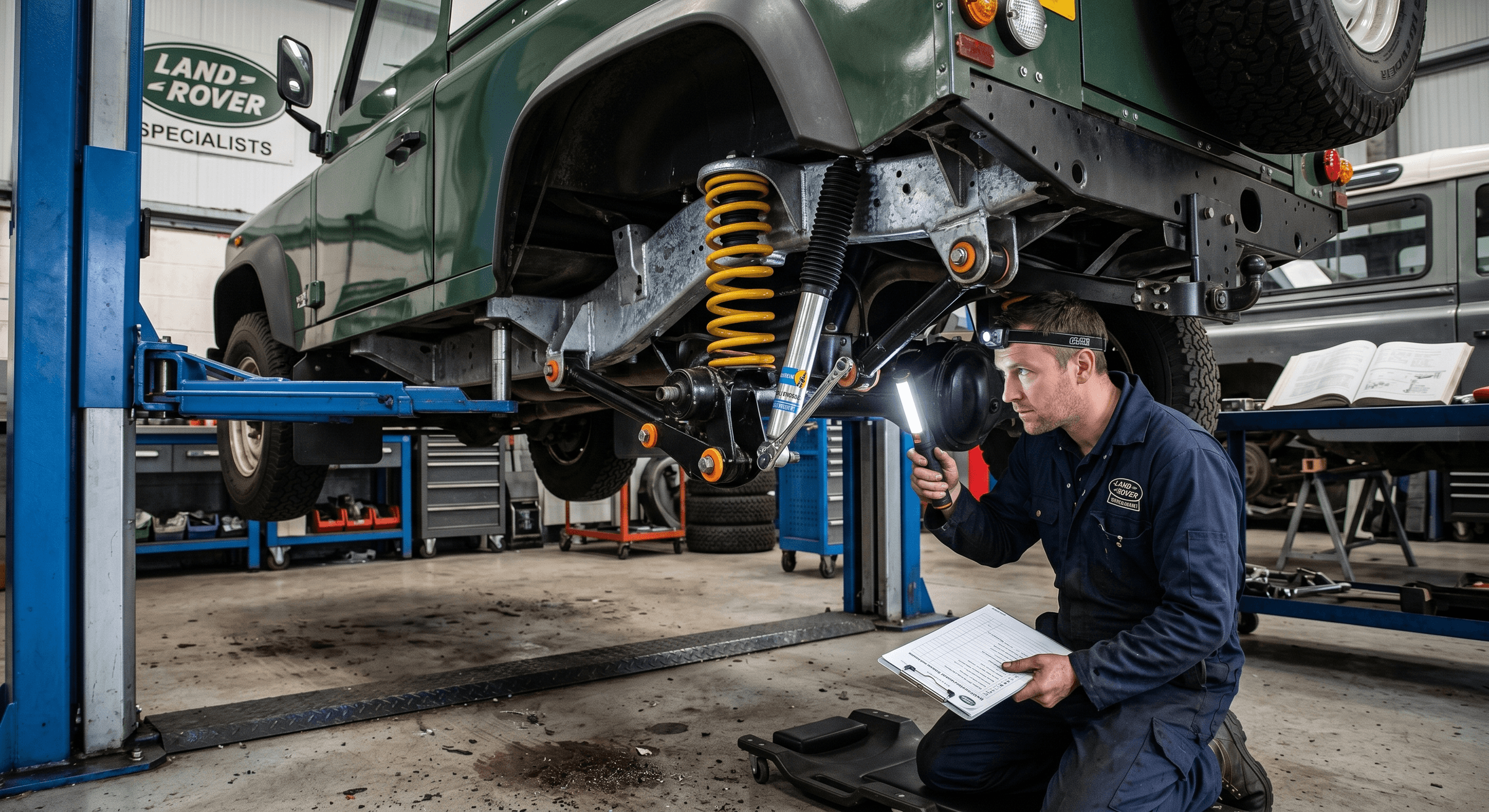
Inspect your suspension components every 10,000 miles. Check the polyurethane bushes for cracking. Look at the trailing arm mounts. If we built your truck, you have premium upgraded shocks and heavy-duty springs designed to handle the exact weight bias of an aluminum-block GM V8. They require virtually zero maintenance beyond visual inspection and keeping them clear of corrosive road salts.
Grease your prop shaft U-joints every 5,000 miles. The torque from an LT1 engine places immense stress on the driveline. A dry U-joint will fail catastrophically. Grab a grease gun. Find the zerk fittings. Pump until you see clean grease pushing past the seals.
Electrical and Interior Preservation
We wire every bespoke build with a custom harness. Lucas electronics, famously nicknamed the "Prince of Darkness", have no place in a reliable vehicle. We install modern climate control. We drop in premium sound systems. We utilize modern blade fuses and weather-sealed connectors.
Electrical maintenance on our builds simply involves keeping the battery charged. If the truck sits in your collection for three months, plug it into a high-quality battery tender. A completely drained battery will shorten its own lifespan and can cause modern head-units to lose their custom tuning presets.
The hand-crafted Italian leather interior requires specific attention. Sun exposure dries out natural hides. Dust acts like an abrasive.
Wipe the seats down with a damp microfiber cloth once a month. Apply a premium leather conditioner every six months. Do not use cheap silicone-based sprays. They leave a greasy film and trap dirt. Use a dedicated hide food. Massage it into the stitching. Our interiors are designed to age beautifully, developing a rich patina over decades of use. You have to feed the leather to achieve that result.
The Monarch Standard
Building 'New-Classics' from the frame up is an obsession. The 12-stage process we execute leaves no bolt unturned.
Every time I walk the floor and see a bare galvanized chassis sitting next to a crate LT1, I feel a rush of genuine excitement. We are taking the world's most recognizable off-road shape and engineering out the flaws. The final product is a machine that commands respect at a concourse event but possesses the brute force to drag a fallen oak tree off a fire road.
Maintenance should be a point of pride. You are stewarding a piece of automotive history. You are protecting a massive financial investment. Ignore the forums arguing about which obscure British gasket sealant works best on a leaking Tdi oil pan. Your reality is much simpler. Keep the frame clean. Keep the LS3 oil fresh. Keep the leather fed.
Drive the truck.
Ready to Commission Yours?
A Monarch is built for one person: you. Our 12-stage ground-up process takes 8-12 months and produces a vehicle that's genuinely unlike anything else on the road. Start your commission and speak with our master builders.