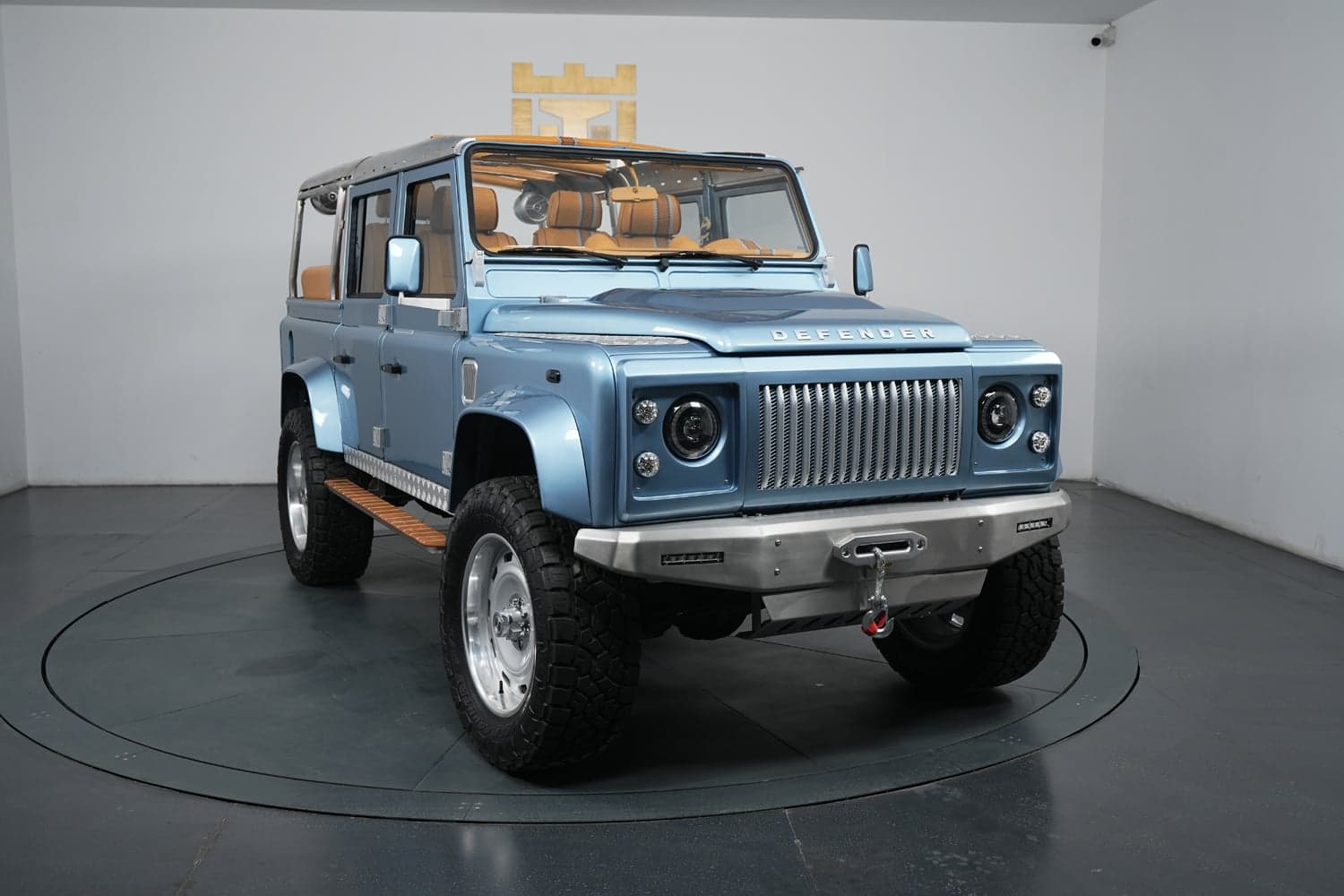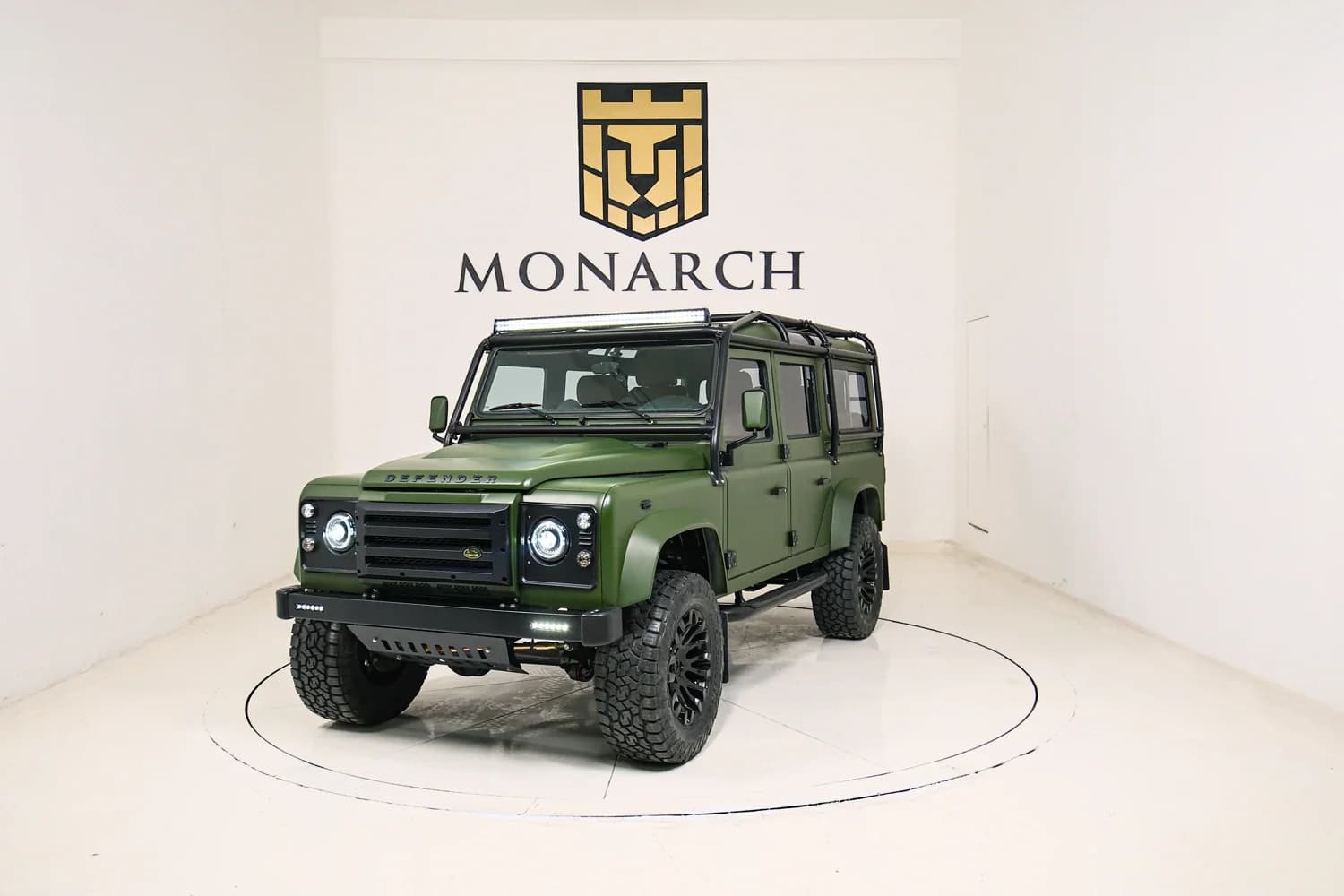
A 1997 NAS Defender 90 with 58,000 miles sold for $155,000 on Bring a Trailer in January 2025[3]. The original window sticker on that same model? $35,825[3]. Let that sink in for a moment. A vehicle with no airbags, no traction control, and leaf springs that would make your dentist wince has appreciated more than most blue-chip stocks over the same period. And it isn't an outlier.
The question of the best Land Rover Defender year doesn't have a single clean answer. It never has. What it has is a set of eras, each with a distinct personality and a different argument in its favor, and the right one for you depends on what you actually want from the truck. I've overseen ground-up Monarch builds since 2016, and I can tell you this: the year matters less than most people think, and more than most builders admit.
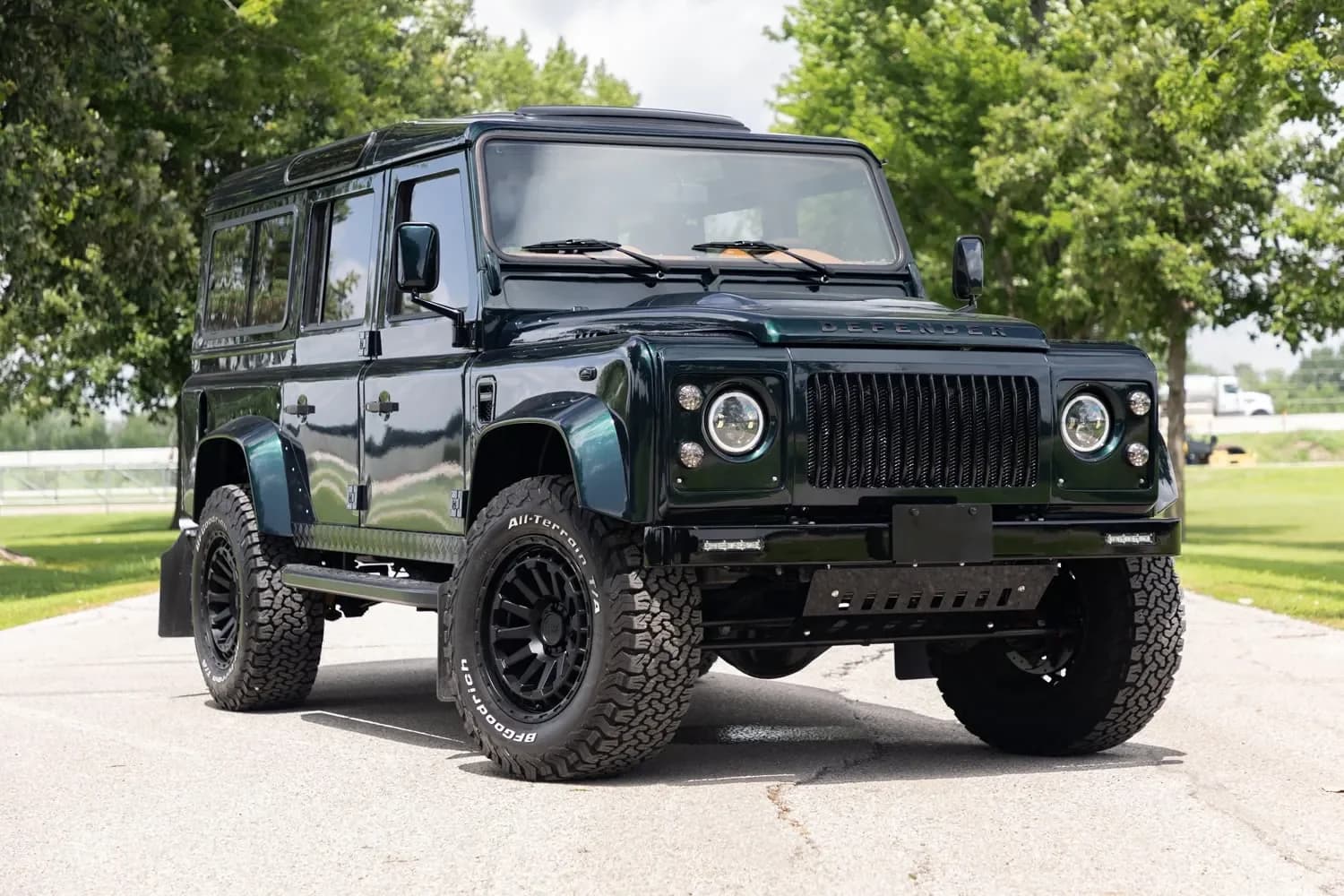
The Pre-Tdi Era (1983–1990): Raw, Honest, and Slow
Production of the model now known as the Defender began in 1983 as the Land Rover One Ten[1]. The Ninety followed in 1984, and the 127 in 1985[1]. These weren't called Defenders yet. They wouldn't be until 1990, when the Discovery arrived and Land Rover needed to distinguish its models[1].
The engines in this period are, frankly, terrible by modern standards. The 2.5-litre naturally aspirated diesel made just 68 bhp in turbocharged form[2]. That's not a typo. Sixty-eight. Highway merging was an act of faith. The 1986–1990 19J Diesel Turbo bumped things up slightly but we're still talking about a truck that treats 60 mph as an aspiration rather than a given.
So why would anyone choose this era?
Purity. These are the most analog Defenders ever made. No electronics. No ECU. Nothing between you and the mechanical reality of the vehicle. For the collector who wants to own a piece of the transition from Series to Defender, these years hold genuine historical weight. They're also the most affordable entry point for a Monarch donor, since the body and identity are what we're after, not the frame or the drivetrain.
Monarch Standard Note: Pre-Tdi donors often become the foundation for our V8 builds, because the older, simpler platforms pair beautifully with modern V8 power. Whatever the donor year, every Monarch rides on a brand-new KTL-coated galvanized chassis, so frame condition never limits the build.
But if you're looking for a stock driver? Walk away from this era. I mean that.
The Golden Era: 200Tdi and 300Tdi (1990–1998)
Here's where the conversation gets interesting.
The 200Tdi arrived in late 1990 and changed everything. It produced 111 bhp and 195 lb-ft of torque[2], which was nearly a 25% improvement over the engine it replaced[1]. Suddenly, the Defender could actually keep up with traffic. The engine, mind you, was slightly detuned in the Defender compared to the Discovery version, and the turbocharger sat in a higher position due to packaging constraints[5]. A quirk that matters if you're ever swapping parts between models.
Then came 1994, and the 300Tdi.
The 300Tdi is the engine that most Land Rover enthusiasts class as the best engine LR ever made[6]. It kept the same 111 bhp and 195 lb-ft figures as the 200Tdi[2], but it was quieter, smoother, and designed from the ground up to fit the Defender, Discovery, and Range Rover without separate tuning[5]. The 300Tdi also introduced the R380 5-speed manual gearbox[6], replacing the sometimes fragile LT77, and that alone makes it the better starting point for any build.
At Monarch, we've torn down a lot of 300Tdi engines. The mechanical simplicity is staggering. No ECU. No electronic injection. The fuel system is entirely mechanical, which means a competent technician can rebuild it on the side of a mountain with hand tools if necessary. The British Army chose the 300Tdi over the more powerful Td5 for exactly this reason, keeping it in military production even after the civilian market had moved on[5].
So is 1994–1998 the best Land Rover Defender year range? For a ground-up restomod build, I'd say yes. Full stop.
The drivetrain is proven beyond any reasonable doubt, and the complete absence of electronic complexity means you have a clean canvas. When we fit a 300Tdi-era donor body to a new chassis, we're working with a platform that was already engineered for durability, with an engine bay designed for an engine roughly the same size. We build with the GM LS3 (about 430 hp), LT1 (about 460 hp) or supercharged LT4 (650 hp), and we also offer EV builds.
Here's an insider detail most articles won't mention: the 300Tdi crossmember uses different mounting holes than pre-Tdi chassis[6]. When converting an older frame to accept a 300Tdi drivetrain, you need to either drill new holes or use a custom adapter. On a 300Tdi-native frame, everything lines up.
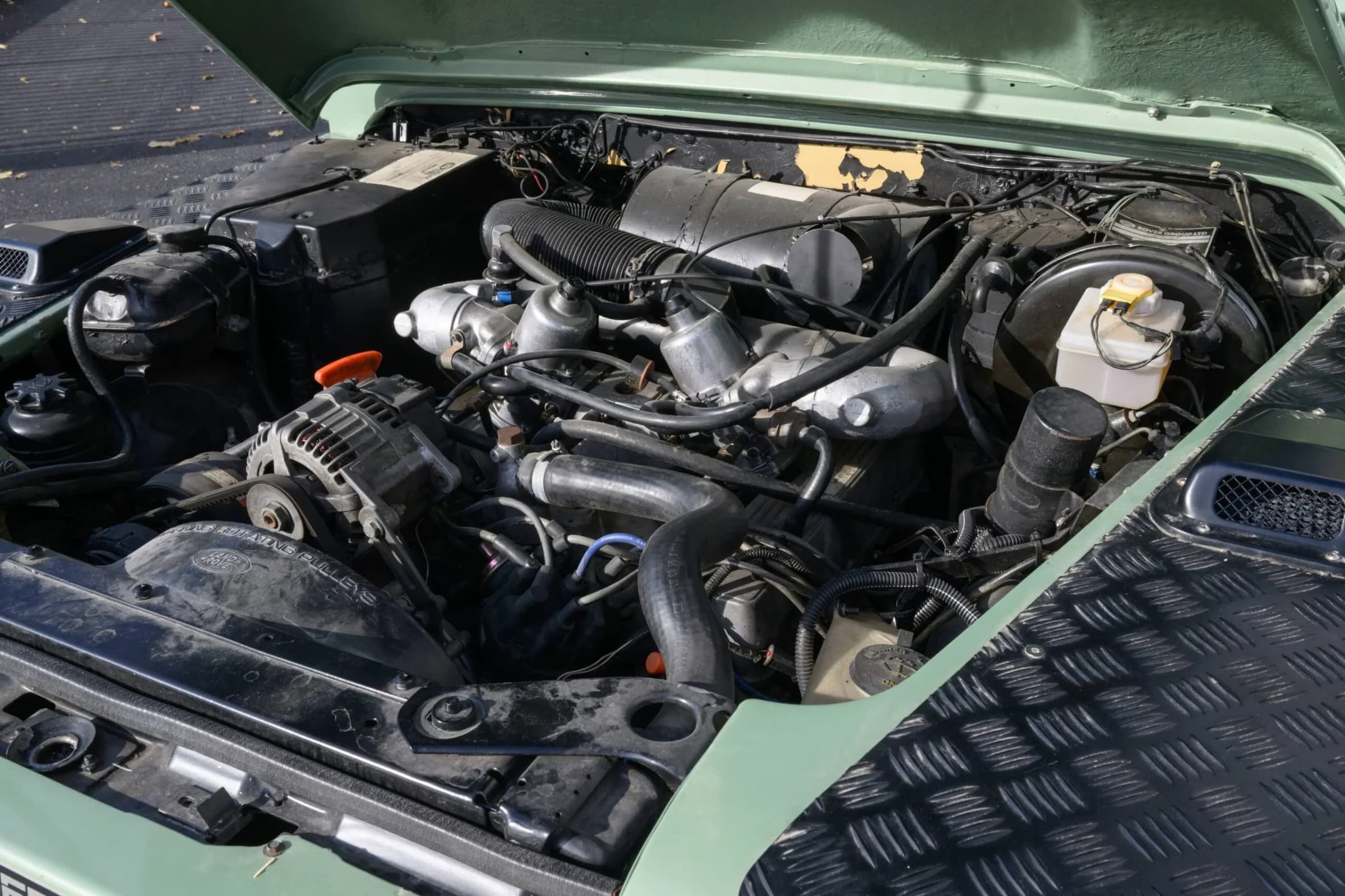
The Td5 Years (1998–2007): More Power, More Debate
The Td5 divides people. Always has.
Introduced in 1998, this 2.5-litre five-cylinder turbodiesel was the last diesel engine Land Rover ever developed in-house at Solihull[2]. It produced 122 bhp and 221 lb-ft of torque[2], a meaningful step up from the 300Tdi. The engine used electronic fuel injection at 22,000 psi[2] and was measurably smoother, quieter, and more refined.
The purists hated it.
Online forums from the early 2000s are filled with complaints about electronic complexity, field repairability, and the fly-by-wire throttle that made low-speed crawling feel different from the purely mechanical Tdi experience. Some of those concerns were legitimate, at least initially. Early Td5 engines suffered from oil pump drive failures and cylinder head shuffle caused by weak retaining studs[5]. Land Rover fixed both issues within two years, and the post-2002 engines with the upgraded 15P head are genuinely reliable units.
Some 310,000 Td5 engines were built between 1998 and 2007[5]. By 2005, roughly 85% of all Defenders sold globally were Td5-equipped. That's not a niche engine. That's the standard.
The Td5 era also brought meaningful improvements to the rest of the truck. Zinc-plated steel doors arrived in 2002, along with electric windows and central locking. Heated front seats showed up. Small things, but they signaled Land Rover's recognition that Defenders were no longer just farm equipment.
For someone who wants to drive a stock classic Defender as a daily vehicle without immediately swapping the engine, a post-2002 Td5 might actually be the best Land Rover Defender year to target. The parts availability is excellent (Discovery 2s are being scrapped due to chassis corrosion, but their Td5 engines are usually still in good health[2]), and the driving experience is noticeably more refined than any Tdi.
Monarch Standard Note: While the Td5 is a strong stock engine, we remove it during our ground-up process. We build with the GM LS3 (about 430 hp), LT1 (about 460 hp) or supercharged LT4 (650 hp), paired with a 6-speed automatic, and we also offer EV builds. The power difference is transformative. The first time I heard a 6.2-litre LS3 turn over in a Defender chassis, I stood there grinning like an idiot.
The Puma Years (2007–2016): Last of the Line
When the Td5 couldn't meet upcoming Euro emissions regulations, Land Rover turned to Ford's Duratorq engine family. The 2.4-litre TDCi arrived in 2007, replaced by a smaller but torquier 2.2-litre version in 2012[2]. That 2.2 made 122 bhp and 265 lb-ft of torque[2], the highest torque figure of any factory Defender diesel.
The Puma era also introduced a six-speed gearbox, which made highway driving significantly less painful. On-road refinement hit its peak. But something was lost, too. The engine was no longer a Land Rover design. It was a Ford unit adapted to fit under a bonnet that had to be physically redesigned to accommodate its taller block[2].
Production ended on January 29, 2016[1]. The last Defender off the Solihull line was a 90 soft top wearing the registration H166 HUE, a nod to HUE 166, the very first pre-production Land Rover[1]. That final truck was the 2,016,933rd Land Rover Series or Defender ever built[1].
Puma-era Defenders trade at a premium because of their recency, their relative comfort, and the "last of the line" narrative. For a stock daily driver in non-US markets, they're the most livable classic Defender. For a collector or a restomod builder? The premium isn't justified. You're paying for an engine you'll likely replace anyway.
The NAS Anomaly: 1993–1997 and the American Premium
We need to talk about NAS Defenders separately, because they exist in their own market universe.
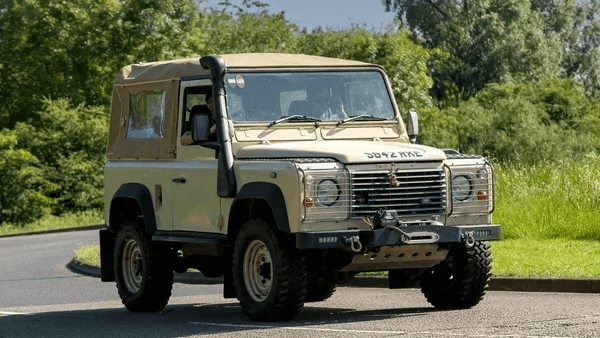
Land Rover launched the Defender in North America in 1993 with an initial batch of 525 Defender 110s, 500 for the US and 25 for Canada[1]. These were all Alpine White, fitted with 3.9-litre V8 petrol engines and LT77 manual transmissions[1]. The Defender 90 followed in 1994, and production continued through 1997, with roughly 7,000 total units built for the North American market[4].
1997 was the final year. That year, the engine was upgraded to a 4.0-litre V8 producing 182 hp[7], and every truck came with a four-speed automatic transmission, the first time a Defender had been offered with an auto box for any market[1]. Land Rover also produced 300 Limited Edition station wagons in Willow Green with diamond plate body protection[1].
Then it was over. The 1998 airbag and side-impact regulations made the Defender uneconomical to certify for the US[1], and Land Rover pulled out.
The values are staggering. The highest recorded sale for a 1997 NAS Defender 90 Hard Top was $212,800 in November 2025[4]. A clean example with 58,000 miles sold for $155,000 on Bring a Trailer earlier that year[3]. Even a project truck with 214,000 miles brought $27,500 at no reserve[7]. Adjusted for original MSRP, that is a return that makes most investment portfolios look anemic.
Are NAS Defenders the best Land Rover Defender year for investment? The data says yes. For driving enjoyment? The 3.9/4.0 V8 is adequate but not thrilling, and the four-speed auto feels lazy by modern standards. That's precisely why NAS donors make strong starting points for a Monarch and its full drivetrain swap.
Monarch Standard Note: A NAS donor with a clean title is one of the most valuable starting points for a ground-up commission. The US-legal provenance, factory roll cage, and four-wheel disc brakes give you a head start that no grey-market import can match.
So What's the Best Land Rover Defender Year?
There isn't one.
There's a best era for investment (NAS, specifically 1997). There's a best era for a stock daily driver (post-2002 Td5 or Puma). There's a best era for a restomod foundation (1994–1998 300Tdi). And there is a best era for raw, historical charm (pre-1990).
But here's what I've learned overseeing ground-up Monarch builds since 2016: the specific year on the chassis plate matters far less than the condition of the frame and the integrity of the bulkhead. I have seen 1995 Defenders with frames so corroded they were unsalvageable and 1987 trucks that were dry-stored in Spain and came to us in beautiful condition. The year tells you what engine was fitted and what gearbox sits behind it. The condition tells you whether the truck is worth building.
And if you're commissioning a Monarch build, the original engine doesn't matter at all. Every Monarch is built on a new KTL-coated, galvanized chassis. The donor we source supplies the identity and title, not the frame. We build with the GM LS3 (about 430 hp), LT1 (about 460 hp) or supercharged LT4 (650 hp) with a modern 6-speed automatic, and we also offer EV builds. What you're buying from us is not a year. It's a platform, reborn.
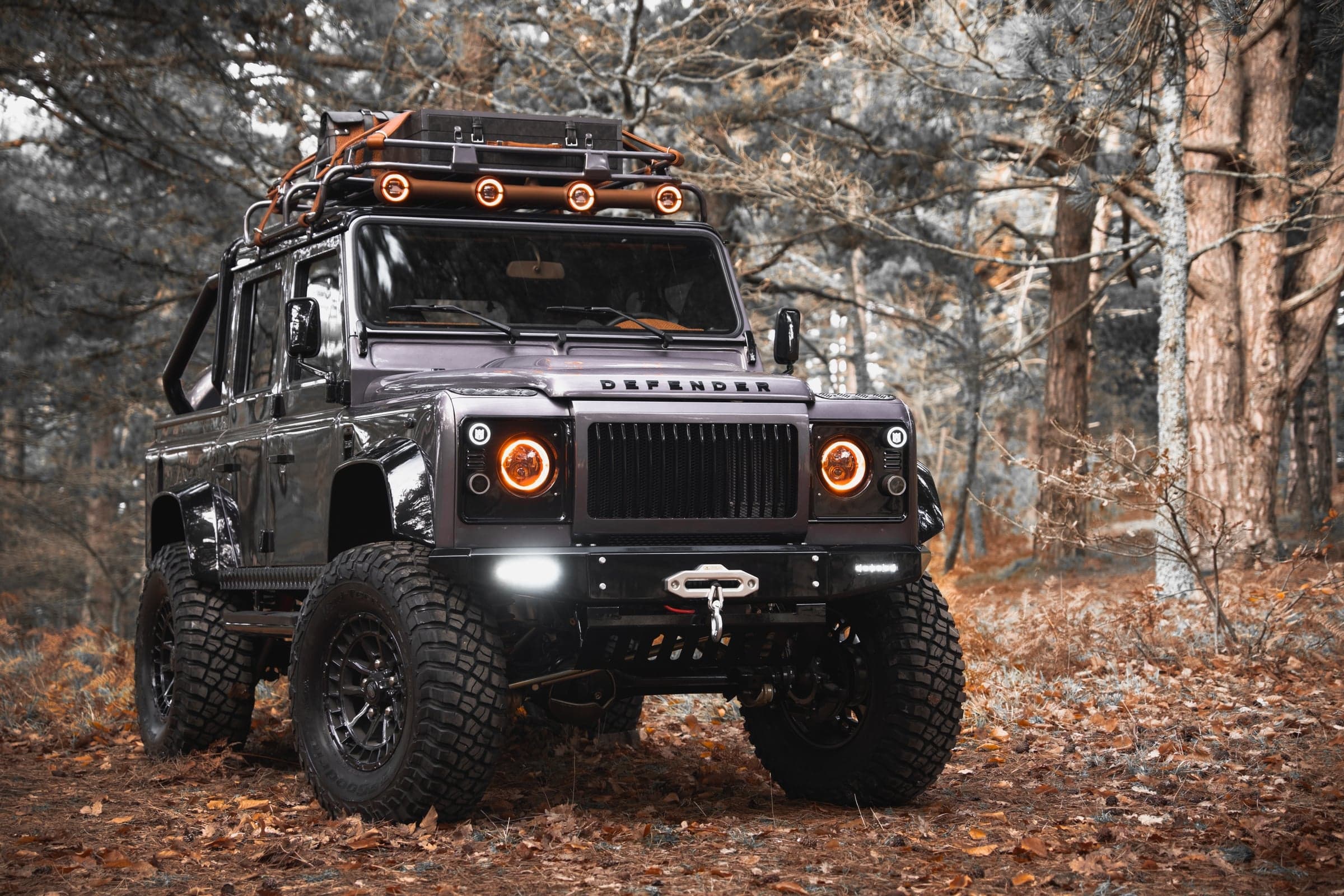
Commencing Your Commission
A Monarch is built from the ground up: 12 stages, hand-crafted Italian leather, a modern V8 heartbeat under a silhouette that hasn't changed in decades. We source the donor. We execute the vision. And we deliver a truck that honors the heritage of every era discussed above while driving like nothing Solihull ever imagined.
Start your commission today and speak directly with our build team about which Defender platform is right for your goals.