A Sand Drawing on an Anglesey Beach
Somewhere around 1946, Maurice Wilks scratched a rough outline in the sand near his home on the Welsh coast. He needed to replace a worn-out Willys Jeep. That sketch, so the story goes, became the first Land Rover. And the vehicle that eventually descended from it, the old Land Rover Defender, has become one of the most fiercely coveted collector trucks on the planet.
I don't use that word lightly. Coveted.
I've overseen ground-up Monarch builds since 2016, and I can tell you that the phone rings more now than it did five years ago. The people calling aren't casual enthusiasts. They're serious collectors, the kind who already own a garage full of interesting metal, and they want a Defender because nothing else scratches the same itch.
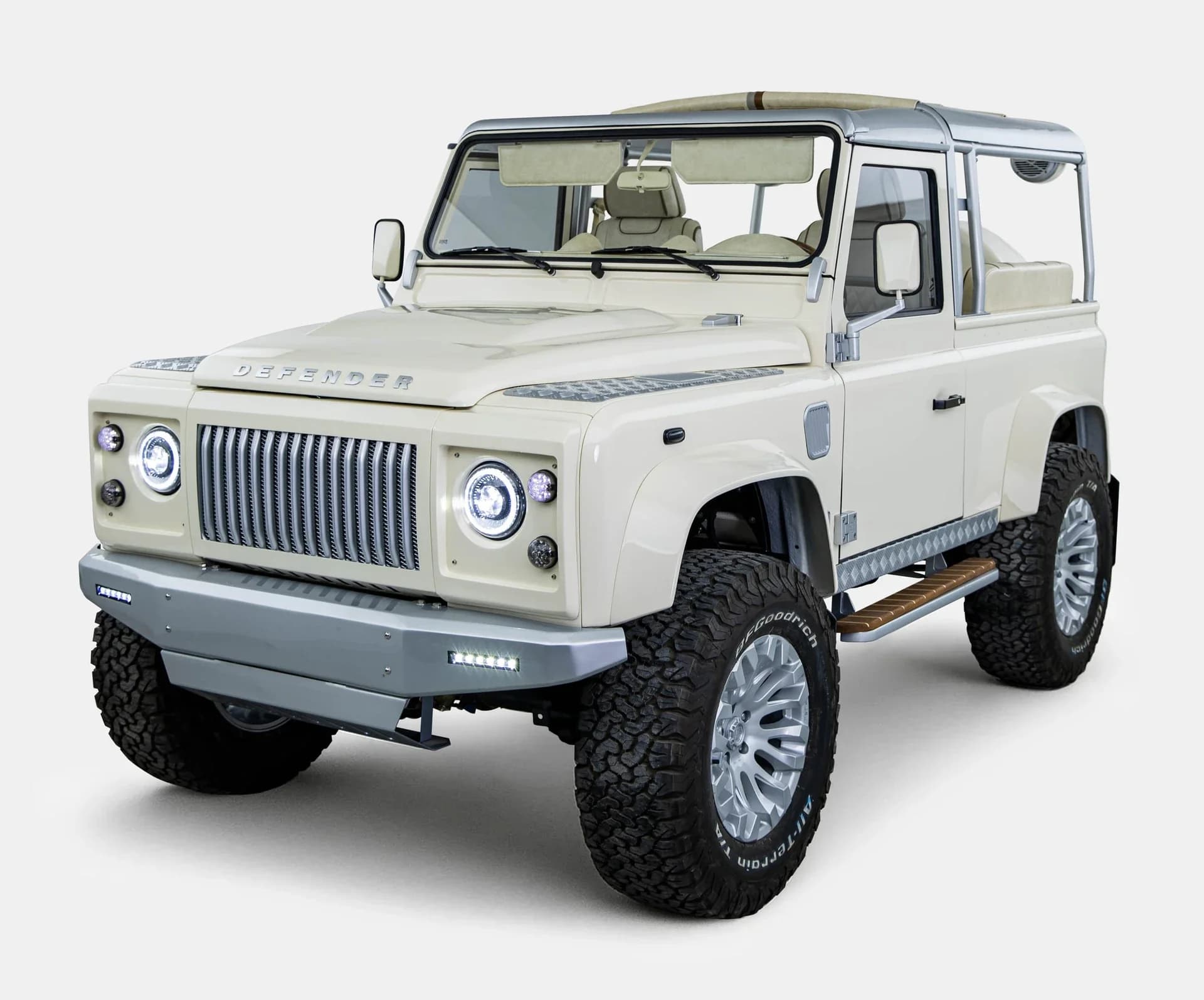
Defining the Vintage Land Rover Defender Era (1983–2016)
Let's get specific, because the naming history is a mess.
Production of the model now known as the Defender began in 1983 as the Land Rover One Ten, a name which reflected the 110-inch length of the wheelbase. The coil-sprung Land Rover was introduced in 1983 as "Land Rover One Ten", and in 1984 the "Land Rover Ninety" was added.But here's the thing: they weren't called "Defenders" until 1990. Although the vehicle we know and love as the Land Rover Defender made its debut in 1983, it wasn't until 1990 that the Defender name was used, to distinguish the existing vehicle from the then-new Land Rover Discovery. Land Rover needed a way to tell its rugged workhorse apart from the more civilized Discovery, so they slapped the Defender badge on the Ninety and One Ten and called it done.
The old Land Rover Defender then ran, largely unchanged in silhouette, from that 1983 debut all the way to January 29, 2016. The last Land Rover Defender rolled off the production line, with the number plate H166 HUE, a reference to the first ever pre-production Land Rover, registration 'HUE 166'. This was the 2,016,933rd Defender to be produced.
Thirty-three years. Over two million trucks. That kind of production run doesn't happen by accident.
The NAS Defenders: America's Brief Affair
If you're shopping for an old Land Rover Defender in the United States, you need to understand the NAS story.
Although most of the world got the Defender in 1983, Americans would have to wait until 1993 for the Defender to make its way across the Atlantic. The Defender's run in the U.S., then, was rather short: it left the American market in 1997 due to advances in safety regulations that outstripped the Defender's design and equipment set.The North American Specification, or NAS, Defenders required extensive modification for DOT compliance. Only about 7,059 NAS Defenders were produced for the U.S., making them extremely rare. The initial run for 1993 was limited to roughly 500 white Defender 110 County Station Wagons. The following year, Land Rover switched to the shorter D90 and opened up the color palette, including that now-iconic AA Yellow.
Power came initially from a 3.9-liter V-8 paired with a five-speed manual gearbox, but by 1997 this had been upgraded to a 4.0-liter distributor-less V-8 and a ZF four-speed automatic transmission. After the 1997 model year, US regulations made selling the Defender in the American market infeasible, and exports ceased.And that's exactly why NAS Defenders command such a premium today. Scarcity. Roughly 7,000 trucks spread across an entire continent is not a lot.
Monarch Insight: At Monarch, we source donor vehicles from around the world and complete every build from the ground up. Our NAS-spec knowledge informs every D90 commission, even when the donor isn't a North American original.
Best Engines for a Vintage Defender Build
This is where people get tripped up. The old Land Rover Defender was offered with so many engine variants over 33 years that it can make your head spin. But the ones that matter for collectors fall into a handful of categories.
The 300Tdi (1994-1998)
The heart of the 1995 Defender 110 is its celebrated 300TDi powerplant, a 2.5-liter turbocharged diesel engine producing 111 hp at 4,000 rpm and 195 lb-ft of torque at 1,800 rpm.111 horsepower. That's it. And people are obsessed with this engine.
Why? Because it has no ECU. No electronic fuel injection. No black box waiting to strand you somewhere in Namibia. The 300Tdi is a purely mechanical diesel that you can, in theory, repair with a set of wrenches and some patience in the middle of absolutely nowhere. The 200Tdi is as about as bulletproof as any engine has ever been made. The 300Tdi, in the very early years is very similar, before the introduction of EGR systems and electronic controlled injection pumps.
I'll say something that might be controversial: for pure driving experience, the 300Tdi is the wrong engine for an old Defender meant to be a daily driver in the United States. It is slow. Painfully, hilariously slow. But for a collector piece or an overlanding rig where simplicity is the whole point? Nothing touches it.
The Td5 (1998-2007)
Only the 5-cylinder version made it to production as the powerplant for the Defender and the new Discovery Series II as the 'Td5' in 1998. Offering more power and greater refinement than the 300Tdi, the Td5 greatly improved the appeal of the Discovery but caused concern amongst many operators of the Defender due to its electronic engine management systems which were considered to be less reliable and more difficult to repair 'in the field' than the mechanical injection systems used on previous Land Rover diesel engines.The Td5 is the most polarizing engine in the Defender world. Full stop. People either appreciate the extra power or resent the electronics. At Monarch, we've pulled enough leaking Td5 head gaskets to have a strong opinion: it's a capable engine that demands careful maintenance, but it's not where we'd suggest putting your money if you're building something that needs to last generations.
The V8 (NAS and Beyond)
NAS Defenders came with Rover 3.9L and 4.0L V8s. They sound gorgeous. They drink fuel like a sailor on shore leave. And they're honest about what they are: a compromise between the diesel character of the Defender and American expectations for something with a bit more shove under the hood.
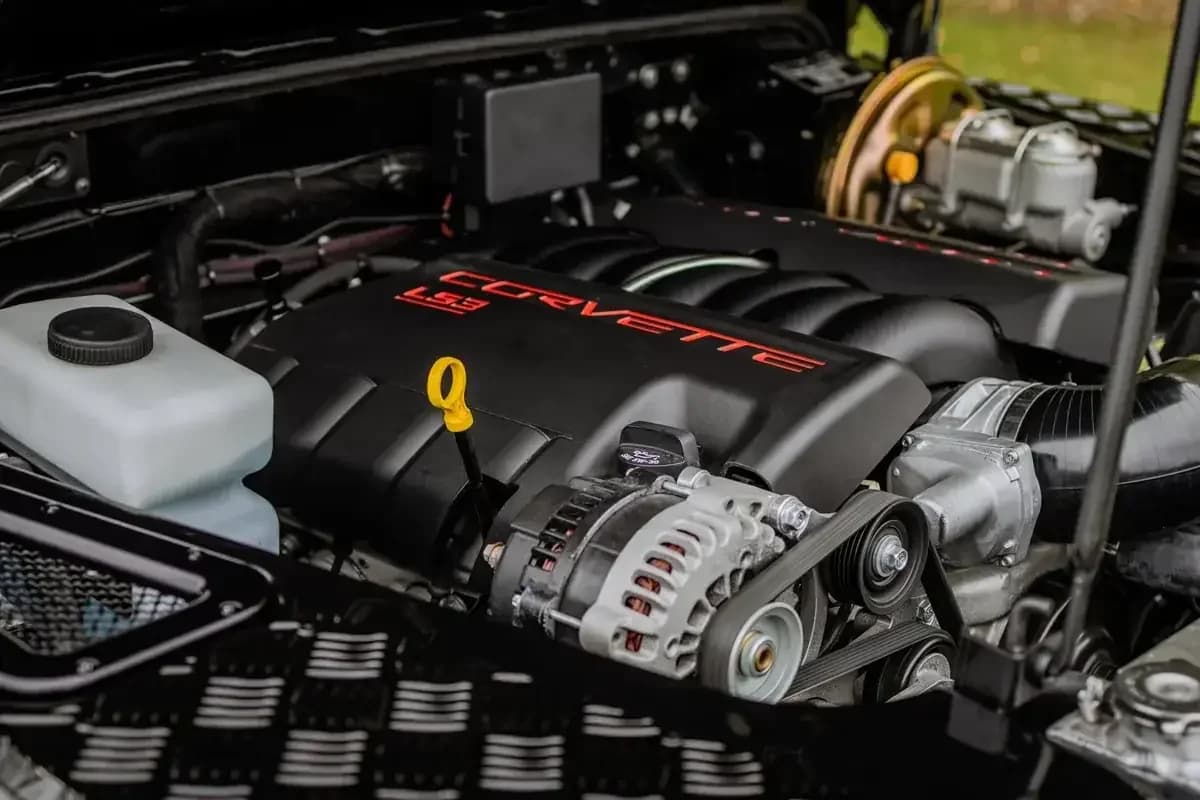
But if you want real V8 performance in an old Land Rover Defender chassis, the GM LS3, LT1 or LT4 is where the conversation ends. At Monarch, we build with the GM LS3 (about 430 hp), LT1 (about 460 hp, 465 lb-ft of torque) or supercharged LT4 (650 hp), all paired with a modern 6-speed automatic, and we also offer EV builds. The first time I heard a 6.2L LS turn over in a Defender chassis, I stood there grinning like an idiot for a solid ten seconds.
The Chassis Problem Nobody Wants to Talk About
Here is the uncomfortable truth about every old Land Rover Defender: the chassis most definitely needs work.
At Monarch Motor Company, every Monarch is built on a new KTL-coated, galvanized chassis. The donor we source supplies the identity and title, not the frame. The chassis is the backbone of every Defender. It supports the body, suspension, drivetrain, and every load the vehicle encounters.The problem is that original Defender chassis were not meant to live for so long from the factory. They were painted steel. And after decades of use, especially in the UK, coastal environments, or anywhere with road salt, that steel corrodes from the inside out. The rear crossmember goes first. Then the outriggers. Then the main rails start looking like Swiss cheese.
Classic Defenders were engineered for utility, not long-term corrosion resistance. "The chassis won't rot since it's protected. It is not going to rust through and break off. Because they don't deteriorate as quickly, it gives the life of the vehicle longevity."This is why, at Monarch, every single build starts on a new chassis. We never reuse or repair an original frame. When we say "ground-up build," we mean it literally. None of that matters if your chassis is shot, and on a 30-plus year old truck, assume it is until proven otherwise.
What to Look For: If you're inspecting an old Land Rover Defender, get underneath it with a screwdriver and probe the rear crossmember, outriggers, and the area where the gearbox crossmember bolts to the main rails. If the screwdriver goes through, you're looking at a chassis replacement, not a touch-up.
Vintage Land Rover Defender Price Guide (2026 Market)
The market is, to put it mildly, interesting.
Auctions and online sales of collectible cars surged 10% in 2025 to $4.8 billion, according to Hagerty, the classic-car insurance company and collector platform. Hagerty CEO McKeel Hagerty said based on the sales pipeline and activity in the private classic-car market, demand appears strong for next year.Classic vehicles are moving, and old Defenders are moving with them. Here's a rough snapshot of where pricing sits based on recent auction data:
| Variant | Condition | Approximate Price Range |
|---|---|---|
| NAS D90 (1994-1997) | Running, original | $55,000 - $100,000+ |
| NAS D90 (pristine/low-mile) | Excellent | $120,000 - $200,000 |
| Euro-spec D90 300Tdi | Good, imported | $22,000 - $55,000 |
| NAS D110 (1993) | Average sale | ~$104,000 |
| Custom/restomod builds | Fully built | $250,000+ |
A 1995 NAS Defender 90, one of approximately 1,700 imported that year, sold on Bring a Trailer in December 2025 for $60,000[2]. Meanwhile, a 1996 300Tdi-powered D90 imported from Europe went for just $22,000 on the same platform in September 2025[6].
The spread is enormous. And it comes down to three things: NAS provenance, condition, and originality.
Pristine NAS examples have seen prices approach $200,000, with even decent running models regularly selling for over $70,000. Prices span an incredible range depending on rarity, originality, or degree of modification, with auction sale prices running from as little as $10,000 to more than $100,000.The 25-Year Rule and the Import Pipeline
The other factor driving old Land Rover Defender prices is the 25-year import exemption. Under the Imported Vehicle Safety Compliance Act, any vehicle 25 years or older from its date of manufacture is exempt from federal DOT and EPA requirements. That means a steady drip of European and rest-of-world Defenders is becoming import-eligible every single month.
As of early 2026, Defenders manufactured up to early 2001 now qualify. That includes late Td5 models and even some 2.5L diesel variants that were never officially sold in the US. The import duty sits at just 2.5% of declared value.
This pipeline of newly eligible trucks has, actually, let me be more precise here, it has widened the market without crashing it. NAS trucks hold their premium because of their unique spec and documented US provenance. But the imported 300Tdi and Td5 models give buyers a more affordable entry point into old Defender ownership.
Monarch Standard: We source donor vehicles globally and vet every single one before it enters our 12-stage build process. Provenance and VIN verification come first. Always.
What Makes an Old Land Rover Defender Worth Keeping
Owning a vintage Defender isn't just about off-road capability; it's about the analog connection. Unlike modern SUVs, a vintage truck offers a tactile driving experience: the mechanical clunk of the door, the smell of the leather, and the iconic boxy silhouette that turns heads from the Hamptons to the Highlands. I get asked this constantly. "Why not just buy a new one?"
Because the new one isn't this.
The new model shares no components or technology with its predecessor and has an aluminium monocoque body. The modern Defender is a fine vehicle. I won't disparage it. But it is a fundamentally different machine. It shares a name and nothing else. No ladder frame. No aluminum body panels bolted to a separate chassis. No mechanical simplicity.
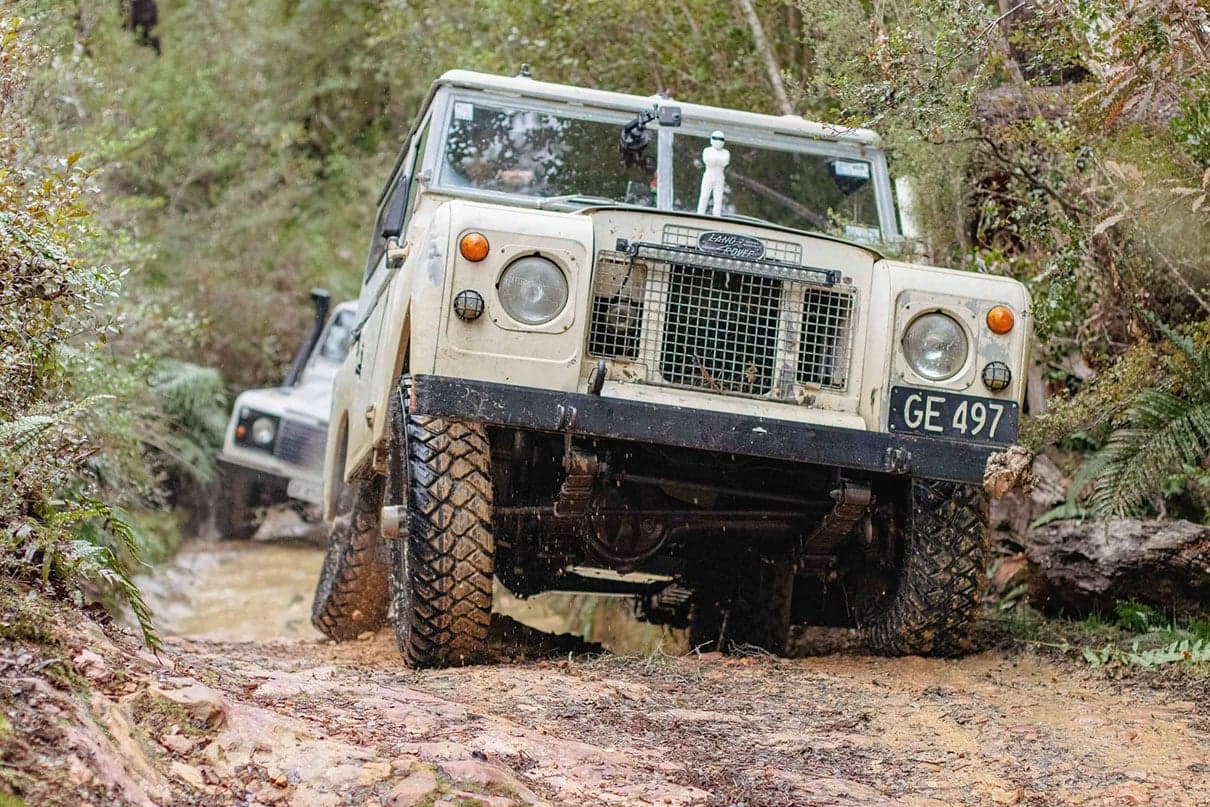
The old Land Rover Defender is a body-on-frame truck with flat aluminum panels that you can literally hammer back into shape with a rubber mallet. The doors have drain holes in the bottom because Land Rover assumed you'd be fording rivers. The windshield folds flat. The sills are bolted, not welded, so you can replace them when they corrode.
Every design choice screams "fix me in the field." That philosophy doesn't exist in modern automotive engineering. It can't. Safety regulations, crash structures, pedestrian impact standards, they all conspire against it.
And that's why collectors are willing to pay six figures for a 30-year-old truck with 111 horsepower.
Five Things to Check Before You Buy
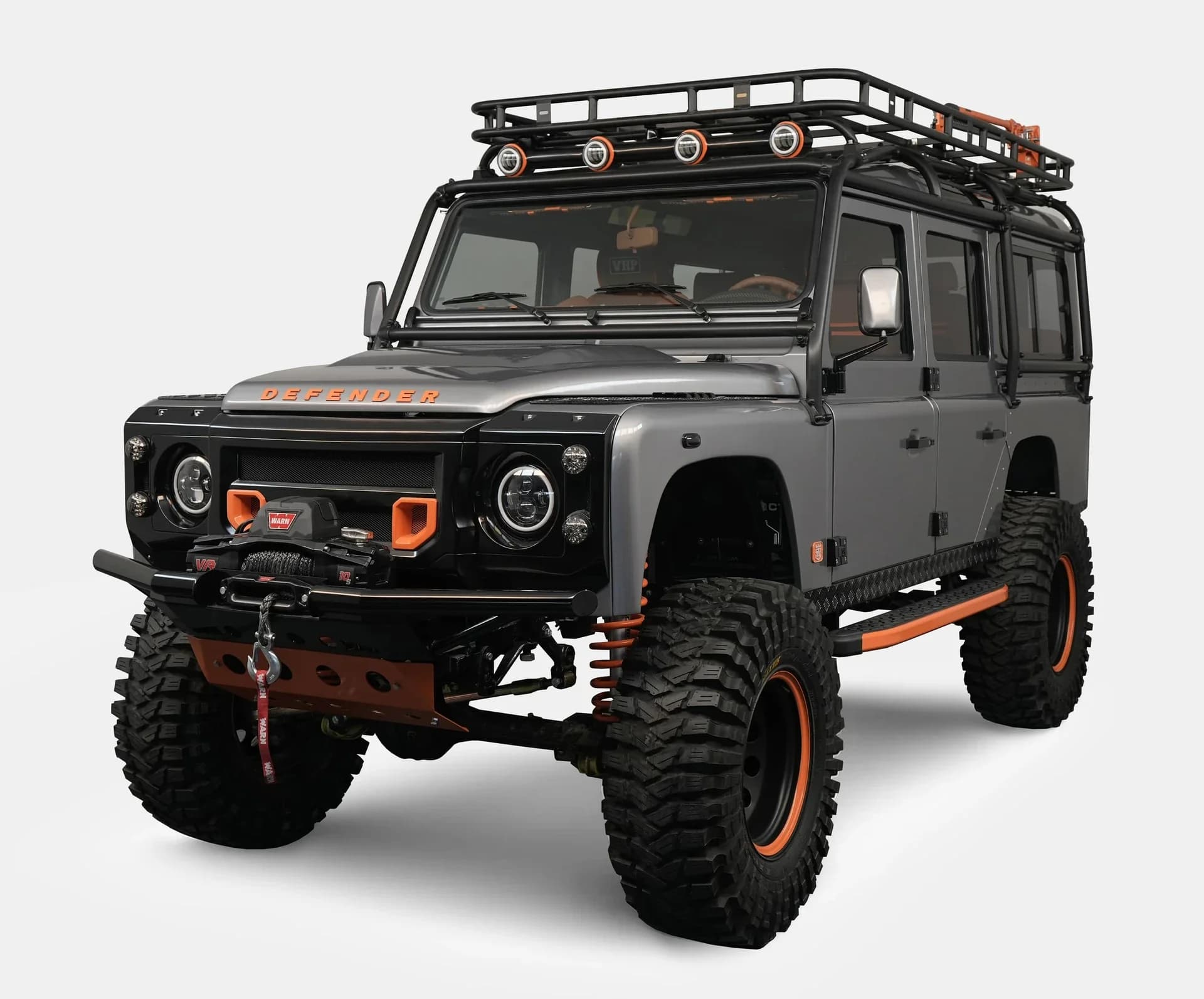
If you're seriously shopping for an old Land Rover Defender, here's what I'd check before writing a check:
- The chassis. I've said it twice and I'll say it again. Get under the truck. Probe the steel. If there's rust perforation in the main rails, walk away or budget for a full replacement.
- The bulkhead. The steel footwells and A-pillar junctions trap moisture between double-skinned panels. Corrosion here is expensive to address and easy to hide with a fresh coat of paint.
- VIN and documentation. On NAS trucks, verify the BMIHT (British Motor Industry Heritage Trust) certificate matches the chassis plate. As confirmed by its accompanying British Motor Industry Heritage Trust certificate, one example was completed at Land Rover's Solihull plant on 21 May 1997. Finished in Alpine White over a Grey vinyl interior, it was a left-hand-drive vehicle built to North American export specification.
- Engine originality or quality of swap. A proper V8 swap with a modern ECU, correct wiring harness, and engineered exhaust headers adds value. A hack job with zip ties and silicone hose? Run.
- Gearbox condition. On 300Tdi trucks with the R380, check second gear synchro cold. Synchromesh wear: second gear synchronizers tend to wear, resulting in difficult shifts when cold. If it grinds going into second on a cold morning, the gearbox needs work.
Why Ground-Up Builds Make More Sense Than Restorations
Look, I'm biased. I run a company that does ground-up builds. But I'm biased because I've seen what happens when people try to "restore" a tired old Defender by bolting new parts onto a corroded foundation.
The old Land Rover Defender was designed for a 10 to 15 year service life. Land Rover never imagined these trucks would still be on the road in 2026. Every rubber bushing, every seal, every electrical connection in a 30-year-old truck is living on borrowed time. You can replace the obvious stuff and still get bitten by a failed loom buried behind the dash or a cracked brake line hidden under the body cappings.
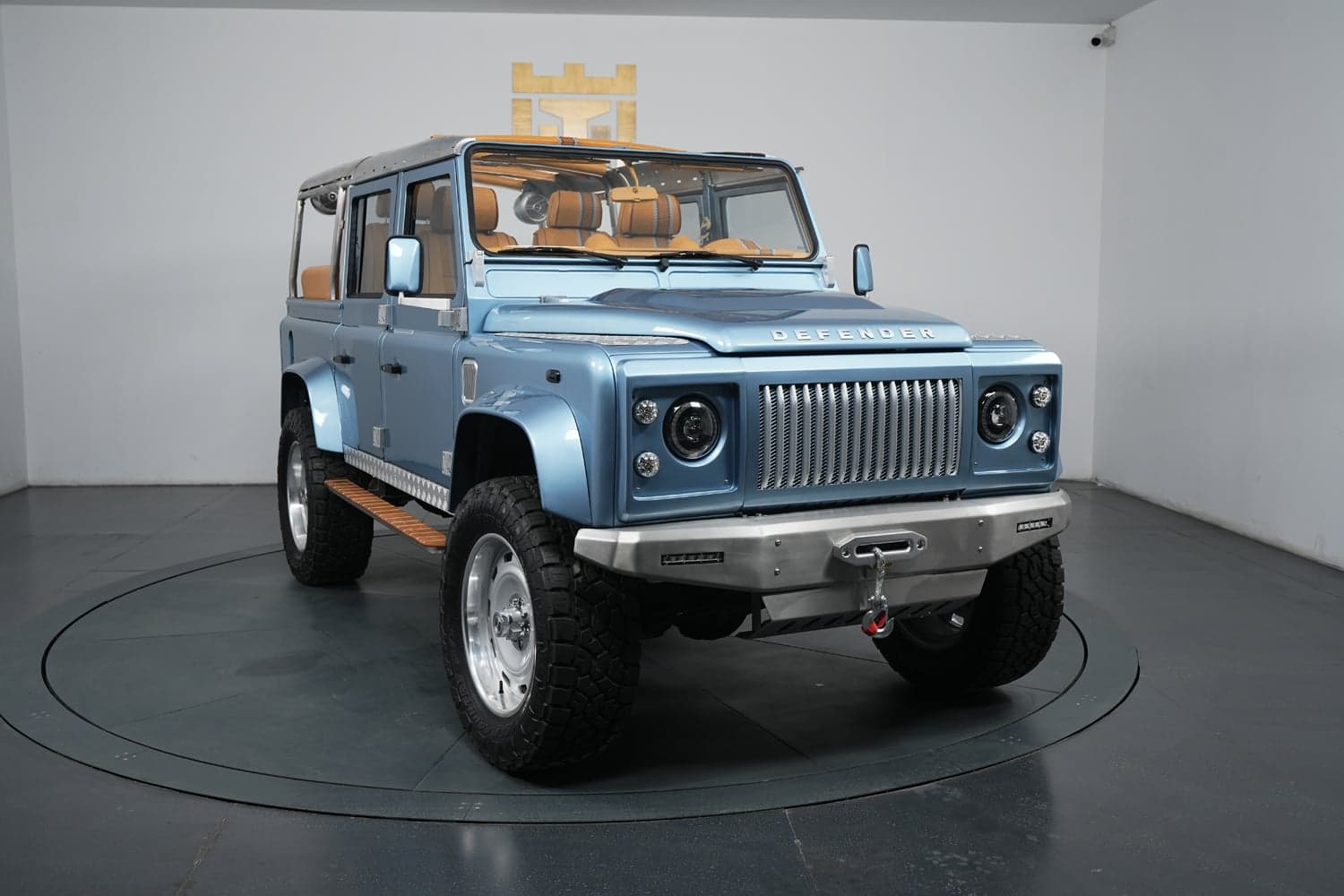
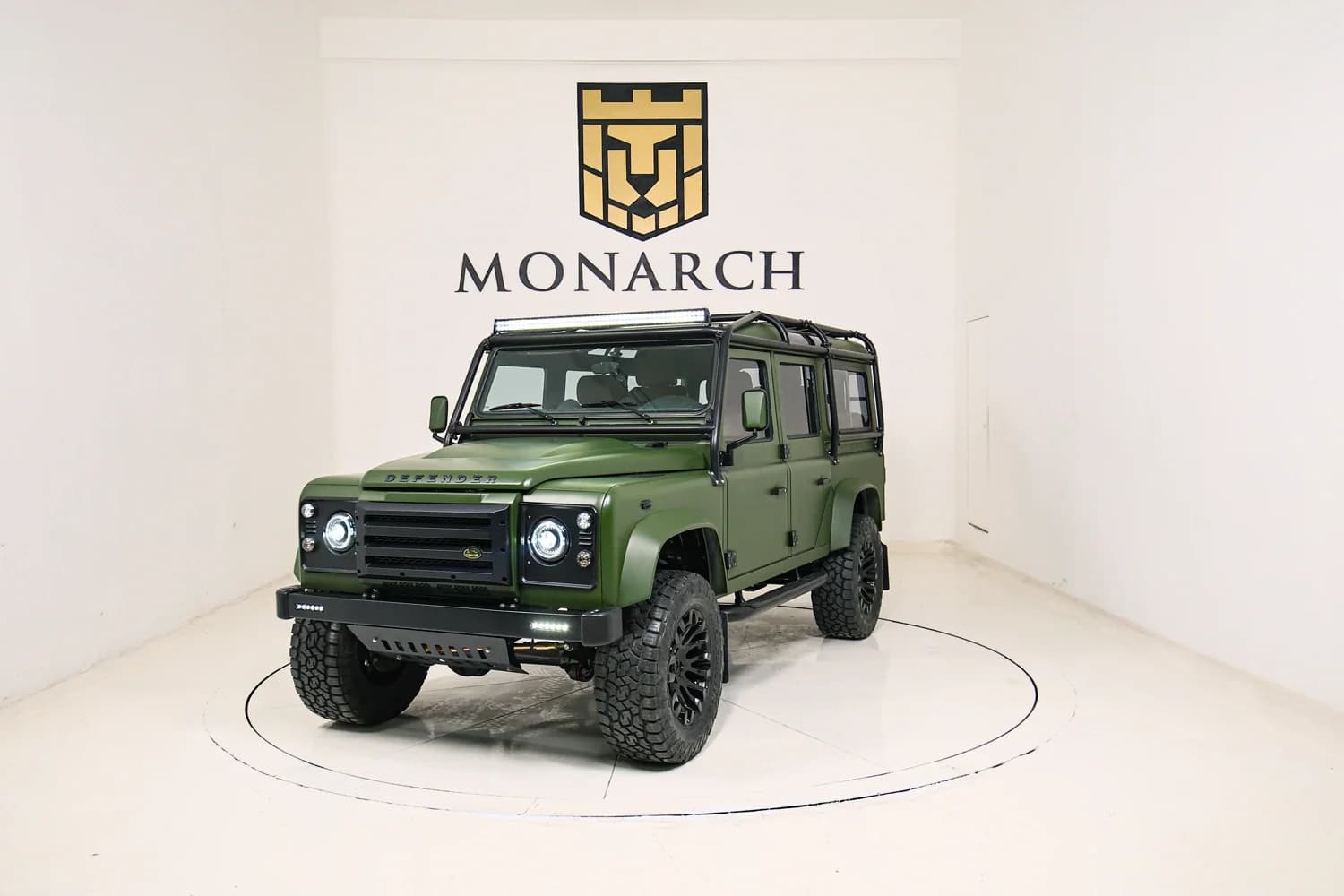
A ground-up build, the kind we do at Monarch, strips the vehicle to bare components. Every wire, every bolt, every bushing gets evaluated and replaced. The chassis is new. A modern drivetrain, like our LS3, LT1 or supercharged LT4 V8, or an EV build, goes in with a proper wiring harness, not an adaptation of 1990s British electrics. Hand-stitched Italian leather replaces the original vinyl. Climate control actually works.
You keep the soul. The silhouette. The analog feel of driving something honest and purpose-built. But you lose the anxiety of wondering what's going to fail next.
Commencing Your Commission
The old Land Rover Defender is not going to get cheaper. The supply is fixed. The demand keeps climbing. And each year, the surviving donor vehicles lose a little more of themselves to corrosion, neglect, and time.
A Monarch is a different proposition entirely. Our 12-stage ground-up build process takes a classic Defender donor and rebuilds it on a new chassis, transforming it into something that will outlast you, your children, and quite possibly your grandchildren, all while looking and driving better than it ever did leaving Solihull.
If you've been thinking about this for a while, the best time to start was five years ago. The second best time is now. Begin your commission here and speak directly with our build team.