Three Numbers, Three Personalities
Somewhere around build number forty, it hit me. A client had flown in from the West Coast to see his Defender 110 station wagon on the lift, and he asked a question I'd heard dozens of times: "Should I have gone with the 90 instead?" The answer, as with most things Defender, depends entirely on what you intend to do with it. But the fact that grown men agonize over 17 inches of wheelbase tells you everything about how deeply these three variants have burrowed into the collector psyche.
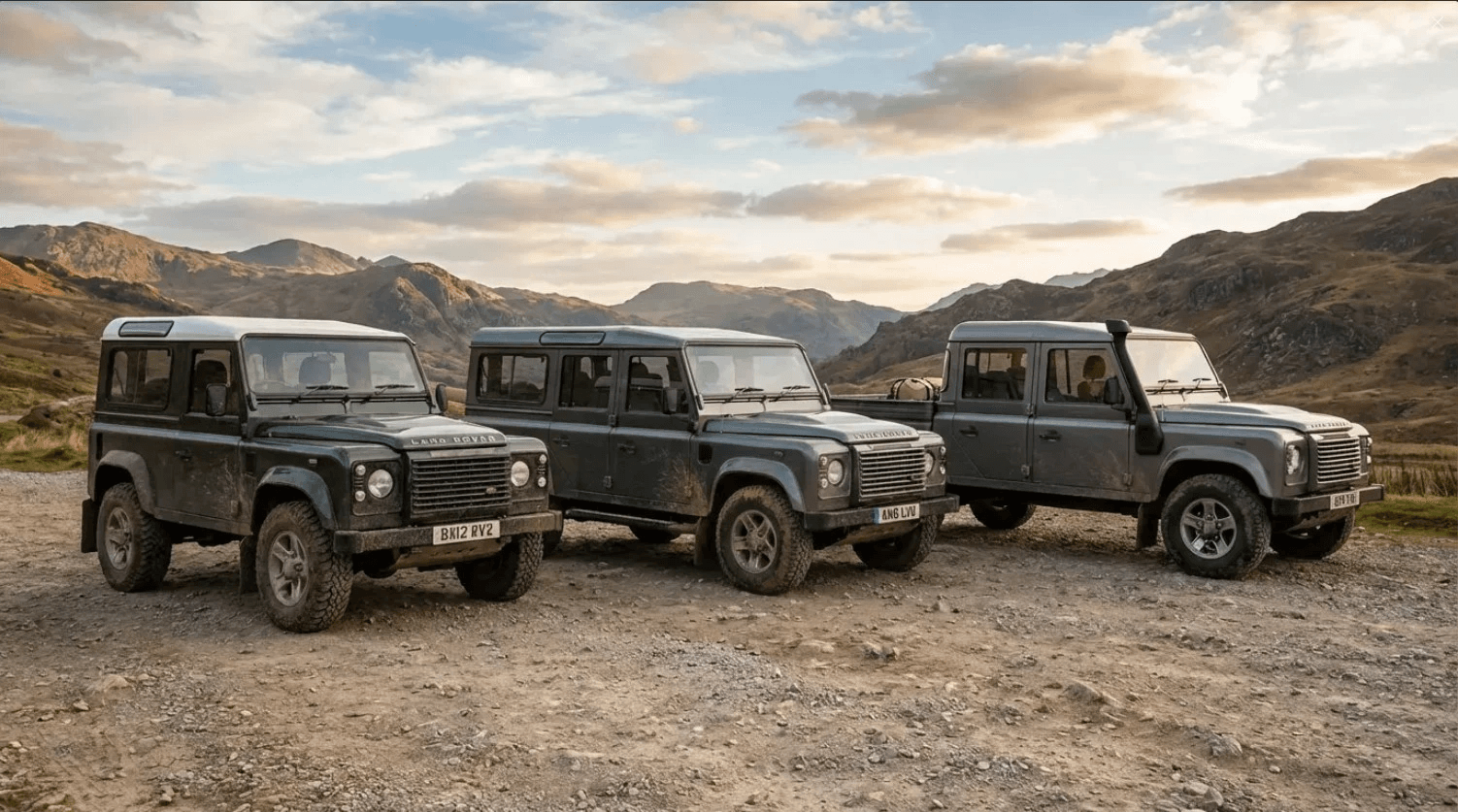
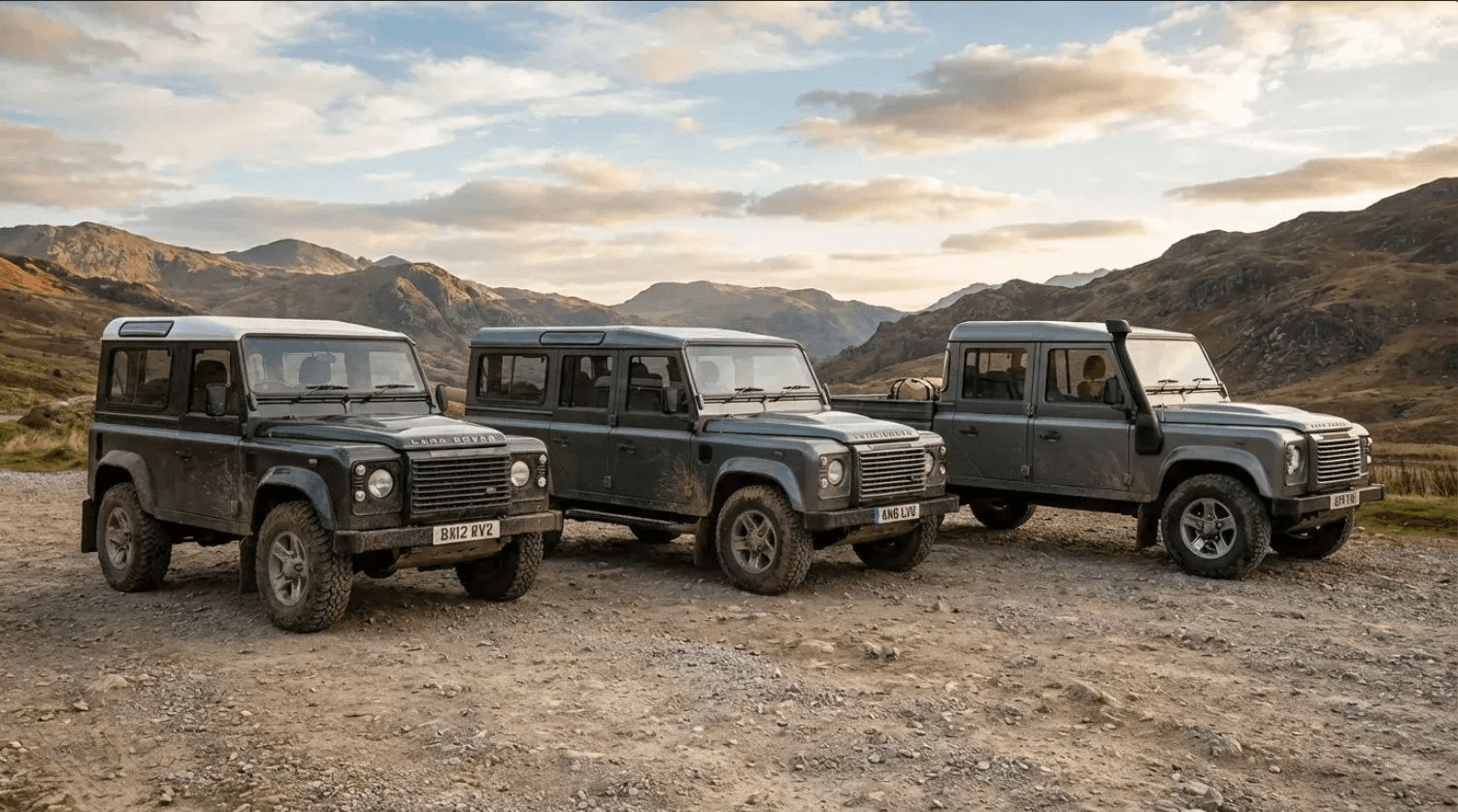
The classic Land Rover Defender 90, 110, and 130 share a ladder-frame chassis, aluminum body panels, and solid axles front and rear. Same DNA. Same soul. But each wheelbase creates a fundamentally different machine, and after putting my hands on more than 150 of them from the frame up, I can tell you the differences are far more than cosmetic.
A Quick History (Because the Naming Is Confusing)
Production of what we now call the classic Defender began in 1983 as the Land Rover One Ten[1]. The short-wheelbase Ninety followed in 1984, and the extra-long One Two Seven arrived in 1985[1]. None of them were called "Defenders" yet.
That name didn't appear until 1990, when the arrival of the Discovery forced Land Rover to distinguish its utilitarian workhorse from its newer, more comfortable sibling[1]. Overnight, the Ninety became the Defender 90, the One Ten became the Defender 110, and the One Two Seven was rounded up to the Defender 130, even though its 127-inch wheelbase stayed exactly the same[1].
Production ran continuously at Solihull until January 29, 2016, when the last Defender, a 90 Heritage Edition soft top, rolled off the line[9]. Over two million Series Land Rovers and Defenders had been built across 68 years[9]. That number still gives me pause.
The Defender 90: Collector's Darling
The D90 is the short one. That's the simplest way to put it.
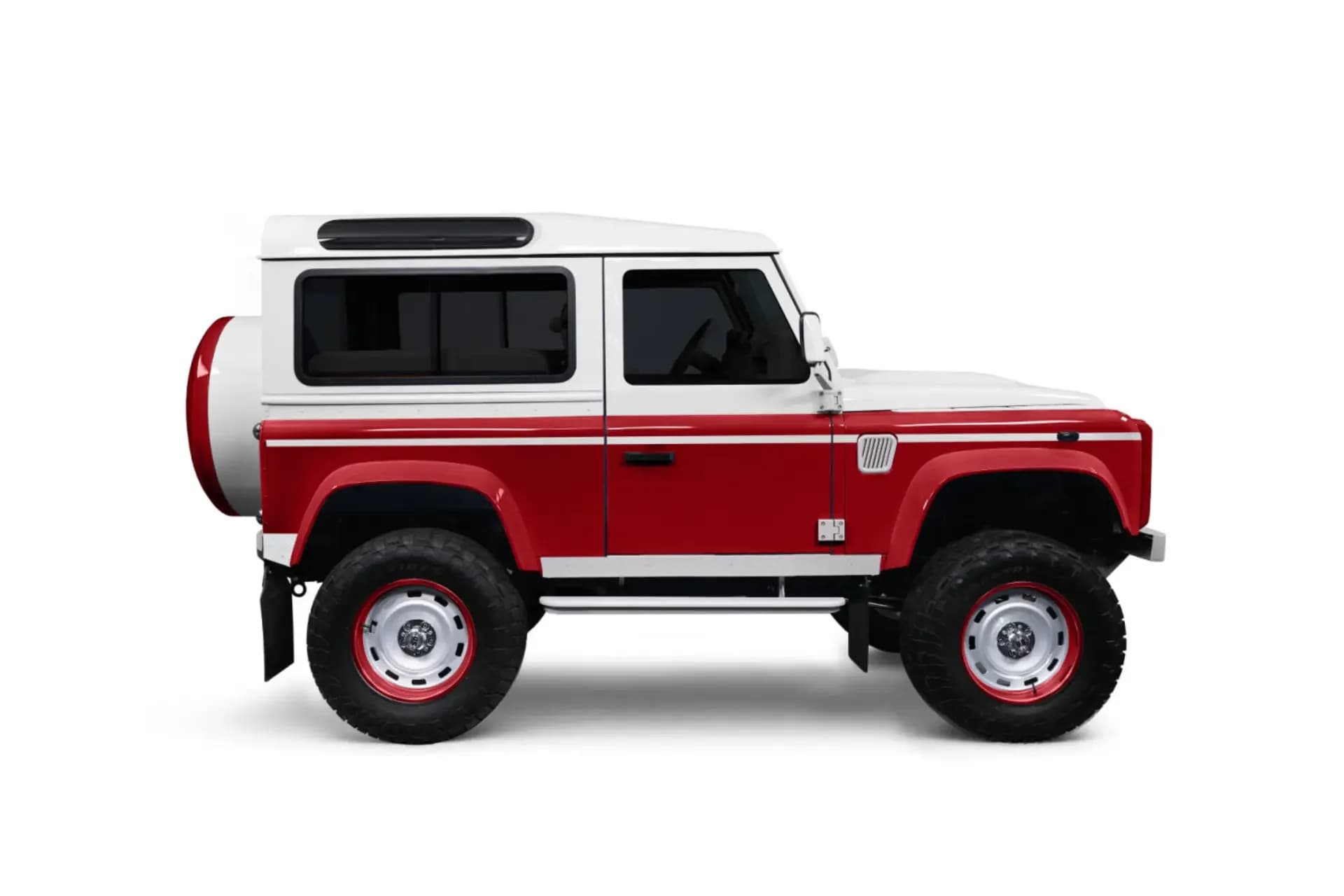 Its wheelbase actually measures 92.9 inches[1], not 90, but nobody cares about the discrepancy. What matters is what that stubby footprint does on a trail: sharper turning radius, better approach and departure angles, and a willingness to claw up technical terrain that makes longer-wheelbase vehicles hesitate. The D90 also happens to be the lightest of the three, tipping the scales at roughly 3,900 pounds in NAS trim[2].
The two-door, three-door layout is its most recognizable feature. You get a driver's door, a passenger door, and a side-hinged rear tailgate. That's it. Climbing into the back requires folding the front seat forward and a certain flexibility that my knees complain about more each year.
For American buyers, the NAS (North American Specification) Defender 90 holds an almost mythical status. Land Rover sold them in the US from 1994 to 1997, fitted with a 3.9-liter Rover V8 making 182 horsepower[7]. Only about 7,059 total NAS Defenders were produced for the US market[7], and the D90 accounted for the majority. NAS models came with a factory roll cage, BFGoodrich mud-terrains, and colors like AA Yellow and Monza Red that have become iconic.
And those values? They've gone through the roof. The average sale price for a NAS Defender 90 Soft Top sits at $78,340 according to Classic.com market data[4], with the highest recorded sale reaching $176,400 for a 1997 example[4]. A 1995 NAS D90 with 121,000 miles sold on Bring a Trailer in December 2025 for $60,000[8]. Not bad for a truck that listed at $27,900 new[2].
The Defender 110: The Do-Everything Workhorse
If the D90 is the sports car of the Defender family (and I use that term very loosely), the D110 is the estate car. The family hauler. The expedition machine.
Its 110-inch wheelbase[1] gives it four doors, proper rear seats, and enough cargo space behind the second row to actually be practical. This is the variant that armies, aid organizations, and overland explorers have relied on for decades. The British military ordered adapted 90s and 110s throughout the 1990s[1], and you'll still find D110s doing real work in places where tarmac is a distant memory.
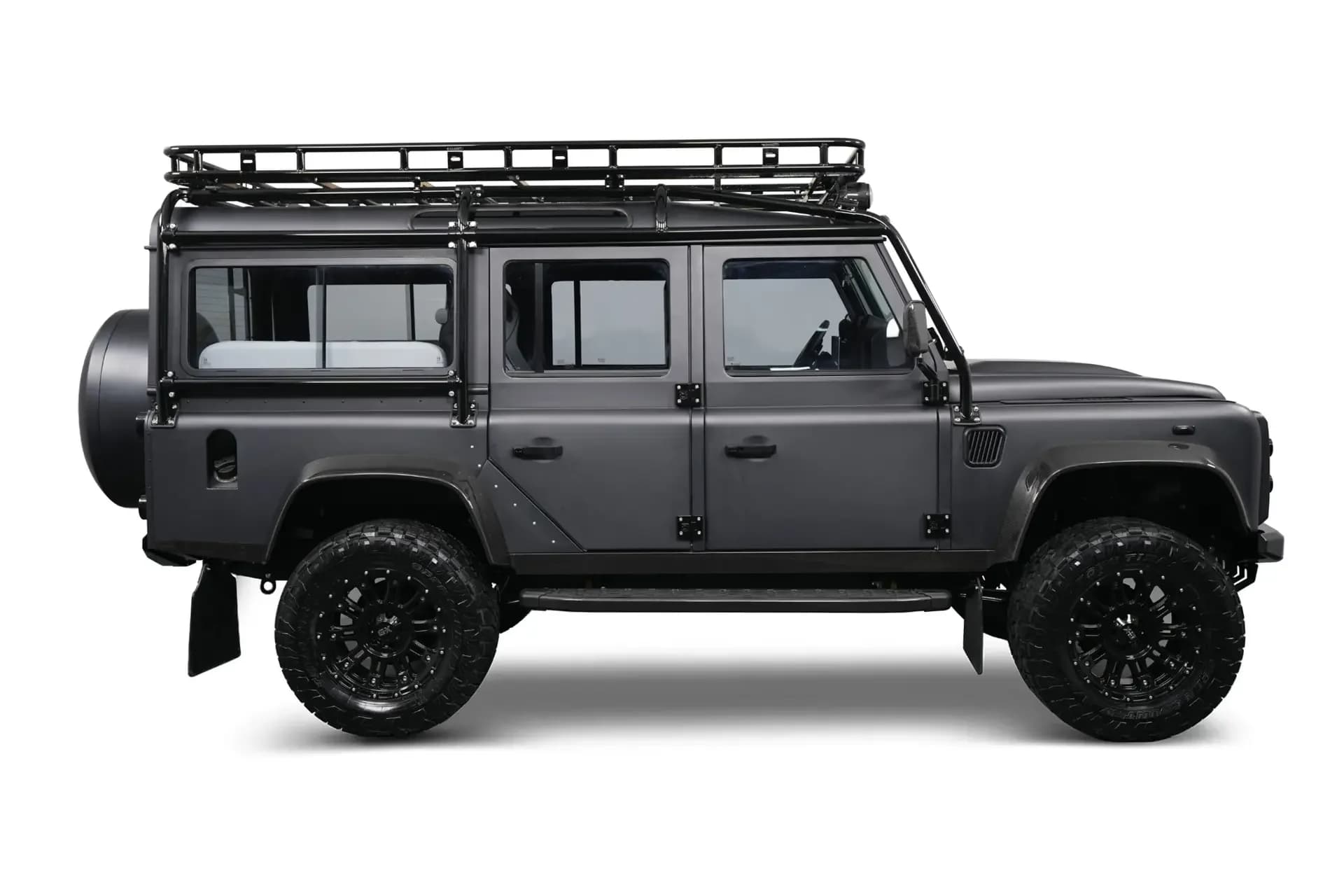
From a build perspective, the D110 is the most versatile canvas. It came in more body configurations than any other variant: station wagon, hard top, soft top, pickup, and eventually a double-cab pickup[5]. That means when sourcing donor vehicles, D110s are the easiest to find, the most plentiful, and offer the widest range of starting points.
The longer wheelbase does change the driving character. You trade some of the D90's nimbleness for better highway composure and a less nervous ride over rough terrain. The D110 doesn't dart around as much. It settles in. On long, high-way drive, the D110 is meaningfully more comfortable.
Let me be precise about the engine timeline, because this matters for buyers:
- 200Tdi (1989-1994): The engine that changed everything. 2.5-liter turbo diesel, first direct injection diesel in a Land Rover.
- 300Tdi (1994-2006): Virtually a new design despite the same displacement. 111 bhp, 195 lb-ft of torque[1]. The British Army kept ordering this engine even after the Td5 arrived, partly because it had no ECU that could be fried by electromagnetic pulse weapons. I'm not making that up.
- Td5 (1998-2007): Land Rover's five-cylinder, 122 hp, 221 lb-ft[1]. The first electronically controlled diesel in the Defender. Enthusiasts were suspicious of the electronics. Time proved them mostly wrong.
- 2.4/2.2 Puma (2007-2016): Ford Duratorq engine. Quieter, cleaner, and the last engine the classic Defender would ever receive.
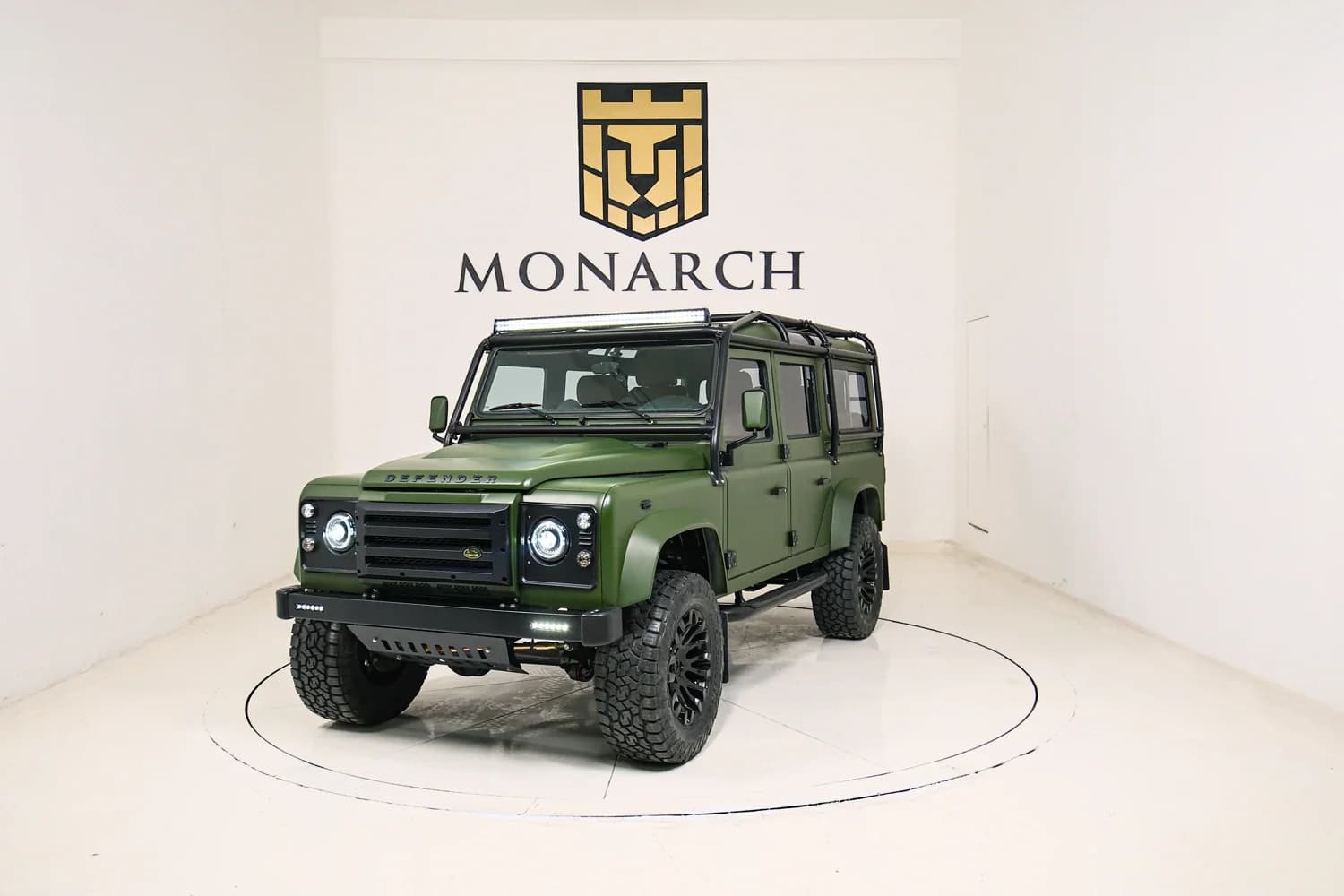
None of those original powerplants, frankly, are adequate for modern driving. That's not nostalgia talking. It's physics. The 300Tdi is a brilliant, reliable engine, arguably the best Land Rover ever made, and it still only produces 111 horsepower. At Monarch, every one of our D110 builds receives either our GM LS3 (430 hp) or LT1 (460 hp), and the transformation is not subtle. The first time I heard that 6.2-liter LS3 turn over in a D110 chassis, I stood there grinning like an idiot.
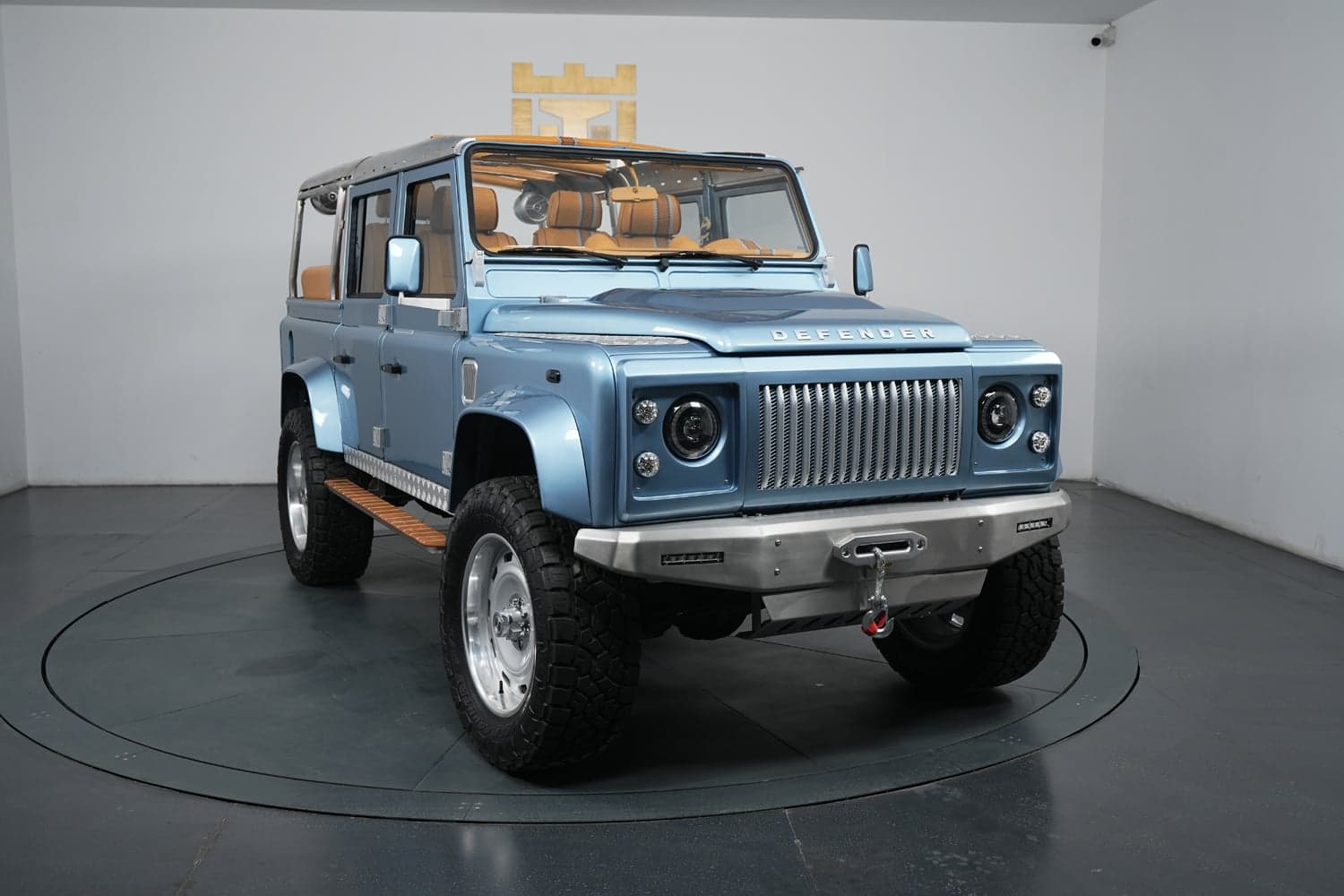
The Monarch Standard: At Monarch, we've found that the D110 is the most requested platform for restomod builds. Its bigger dimensions make it a natural fit for modern V8 power, and the enhanced wheelbase means more space for friends & family.
Market-wise, Classic.com data shows the average sale price for a classic D110 (L316 generation) at $68,258[5]. The top recorded sale was $300,000 for a 1992 Himalaya D110[5], which is a restomod, not a stock truck. Hagerty's data shows auction values ranging widely, from $20,350 for a 110 pickup to $125,500 for upfitted examples[3]. Modified Defenders are among the few collector vehicles that can be worth more than stock originals[3].
The Defender 130: The Rarest of the Three
Most people don't even know the classic 130 exists. And I get it. It was never sold in North America, was never marketed as a lifestyle vehicle, and was built in far smaller numbers than its siblings. But the Defender 130 might be the most interesting platform of the three.
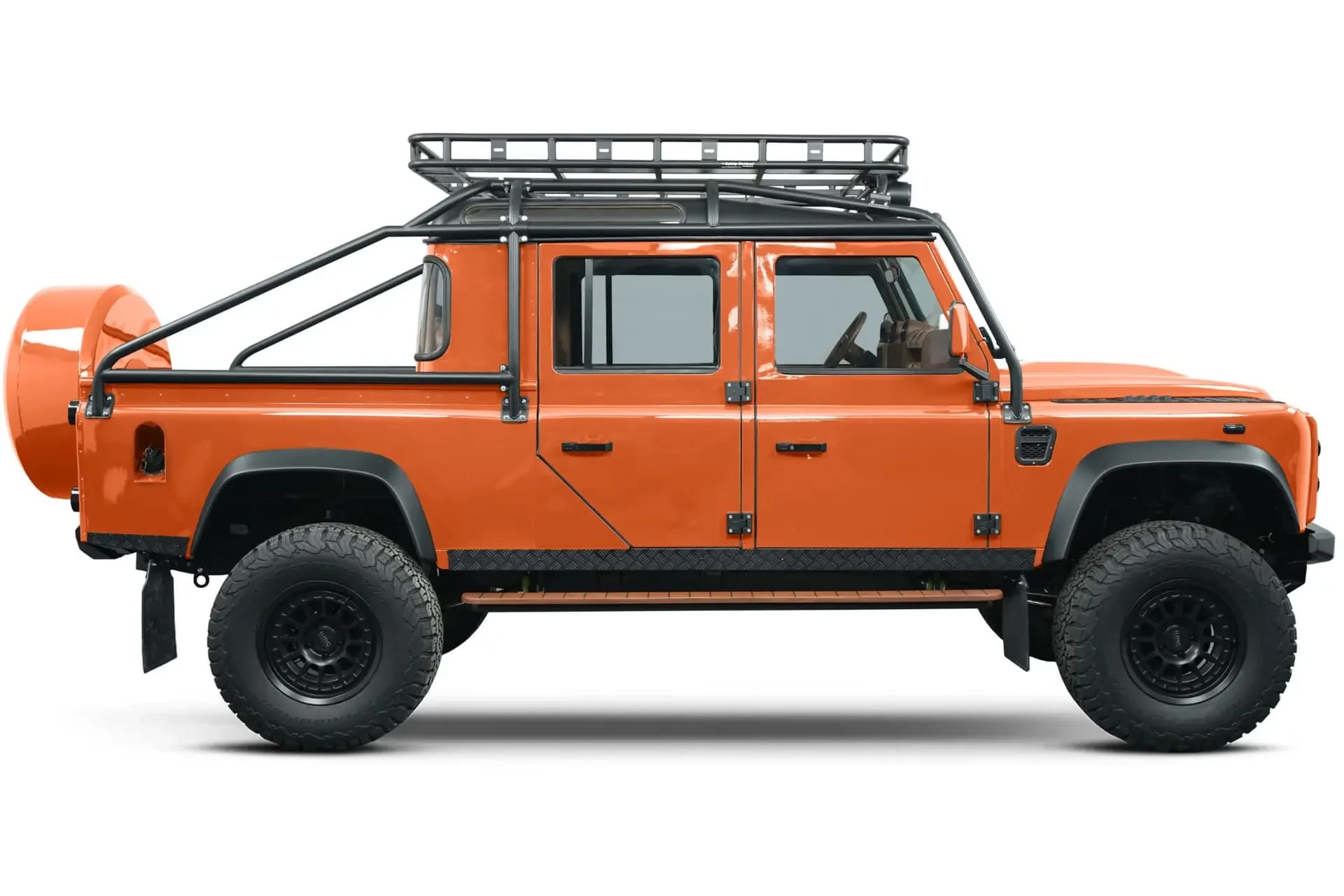
Here's the origin story, and it's wonderfully rough. The original One Two Seven was literally built by cutting a 110 chassis in half and welding in an extra 17 inches of steel[1]. These were "cut-and-shut" jobs done on a special production line. It wasn't until the 200Tdi era that 130s finally got their own dedicated chassis built from scratch[1].
The 130's actual wheelbase is 127 inches (3,226 mm)[1]. Same as the original One Two Seven. Land Rover just rounded up the number when the Defender name arrived. So if precision matters to you (and it should), the "130" is really a 127.
The classic 130 was designed for commercial and military use. Its standard body style was the crew cab pickup, seating six in the cabin with a full pickup bed behind[6]. You could also get it as a high-capacity pickup (HCPU), panel van, chassis cab, or bare chassis for specialist conversions like ambulances, mobile workshops, and fire engines[1]. What you could not get, notably, was a 130 station wagon. That body style simply didn't exist for the classic 130.
At Monarch, we love the 130 chassis for one reason: space. That extra wheelbase gives us room to do things we can't easily accomplish on a 90 or 110. The crew cab configuration, in particular, offers genuine rear-seat comfort that the D90 can only dream of, combined with utility that no station wagon can match.
Builder's Note: The D130 crew cab is the only classic Defender that seats six adults in forward-facing seats while still offering a usable cargo bed. For clients who want to haul people and gear without compromise, it is the banswer.
Classic 130s are rare on the open market. Classic.com shows just 32 have sold in the last five years, with an average sale price of $58,937[6]. The top sale reached $140,000 for a 1991 example[6]. These are not cheap trucks, but they remain the most affordable entry point of the three variants relative to their scarcity.
The Spec Sheet, Side by Side
| Specification | Defender 90 | Defender 110 | Defender 130 |
|---|---|---|---|
| Wheelbase | 92.9 in (2,360 mm) | 110 in (2,794 mm) | 127 in (3,226 mm) |
| Doors | 2 + rear tailgate | 4 + rear tailgate | 4 + tailgate (crew cab) |
| Seating | 2-5 (config dependent) | 5-9 (config dependent) | 6 (crew cab) |
| Primary Body Styles | Station wagon, hard top, soft top, pickup | Station wagon, hard top, soft top, pickup, double cab | Crew cab pickup, HCPU, chassis cab |
| Production Years | 1984-2016 | 1983-2016 | 1985-2016 |
| Avg. Sale Price (Classic.com) | ~$78,340 (NAS soft top) | ~$68,258 | ~$58,937 |
| Rarity in US | Medium (NAS models common) | Medium-High | Very High |
So Which Classic Defender Should You Build?
I've been asked this question hundreds of times. My answer has evolved.
If you want the icon, the truck that gets photographed in parking lots and makes grown men walk over to ask questions, you want the D90. It is the classic Defender in its most recognizable, most emotionally charged form. It's less practical than the 110, less capacious than the 130, and none of that matters because it looks like the idea of a Land Rover.
If you want the truck you'll actually drive the most, you want the D110. It does everything reasonably well. It fits the family. It fits the dogs. It fits the gear. And with a modern LS3 or LT1 under the hood, paired with a 6-speed automatic, it becomes something the factory engineers in Solihull never imagined: a Defender you actually want to drive cross-country.
From Our Shop Floor: About 55% of Monarch commissions are D110 builds. Roughly 30% are D90s. The remaining 15% split between D130s and our 6x6 platform. The 110 outsells everything else because it's the rational choice, and there's nothing wrong with being rational.
If you want something almost nobody else has, and you want a real conversation piece, the D130 crew cab is it. There might be thirty of them in the entire United States right now. Maybe fewer. When you pull up in a properly built D130, even other Defender owners do a double take.
The honest truth is this: all three share the same bones. The same chassis architecture. The same suspension geometry. The same permanent four-wheel-drive system with a two-speed transfer case. What changes with wheelbase is proportion, practicality, and presence.
And presence, for a lot of our clients, is what closes the deal.
A Note on the 25-Year Import Rule
For US buyers, the federal 25-year exemption has opened the floodgates. A 2001 Td5-powered Defender 110 is now eligible for import without the headaches of DOT and EPA compliance. This is significant. For decades, the only legal classic Defenders in America were the ~7,059 NAS models[7] and grey-market trucks of questionable paperwork. Now, right-hand-drive 110s and 130s from the UK, Europe, Africa, and beyond are arriving in shipping containers every week.
But, and I cannot stress this enough, being legal to import does not mean being ready to drive. Many of these trucks have lived hard lives. Chassis corrosion, especially around the rear crossmember and outriggers, can be terminal. At Monarch, every donor vehicle goes through a complete chassis inspection before we commit to a build. Some we reject outright. An inspected and properly coated chassis is not optional for a truck that is going to last another three decades.
Commencing Your Commission
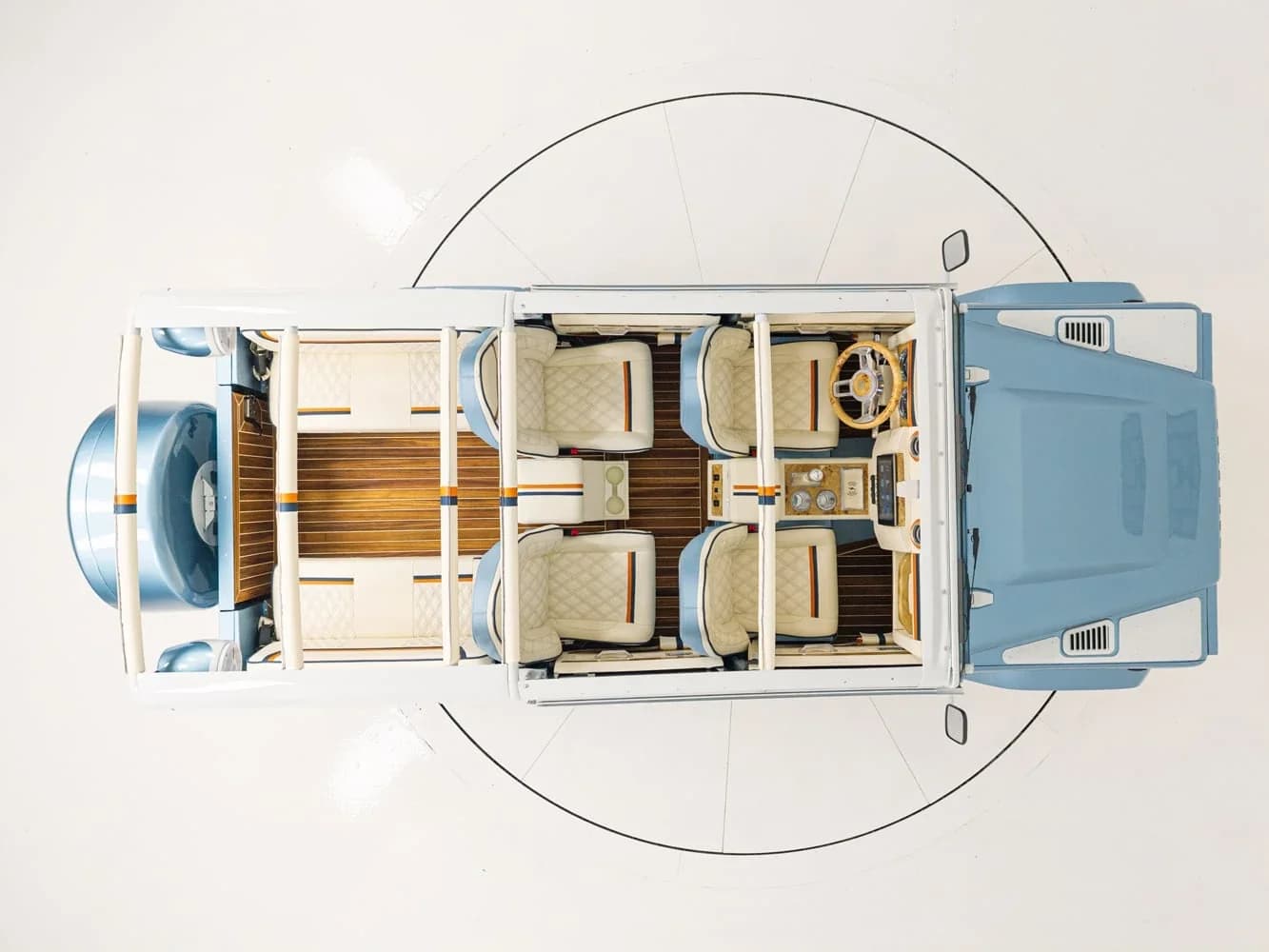
The classic Defender 90, 110, and 130 each carry the same heritage, the same bloodline, and the same capacity to become something extraordinary. What separates a weekend project from a generational heirloom is the quality of the build. Our 12-stage ground-up process takes each of these platforms and rebuilds them from bare steel outward, with modern drivetrains, hand-crafted interiors, and the kind of attention that only comes from doing this hundreds of times over. Start your commission today and let us help you choose the right platform for the Defender you've been thinking about.