The Quick Verdict: Choose a modern Mercedes G-Class for turn-key luxury, a factory warranty, and high-speed highway commuting. Choose a classic Land Rover Defender restomod if you want an appreciating financial asset, raw mechanical heritage, and a truly bespoke, finite collector's piece.
Defender vs G-Class: Which Classic 4x4 is Right for You?
| Feature | Status | Value Trajectory | Drivetrain | Off-Road Tech | Primary Appeal |
|---|---|---|---|---|---|
| Classic Defender (Restomod) | Finite | Appreciating | Custom LS3/LT1 V8 | Mechanical | Soul & Heritage |
| Mercedes G-Class (Modern) | In-Production | Depreciating | Factory Twin-Turbo V8 | 3 Locking Diffs | Turn-key Luxury |
In 1979, two very different companies, working on two different continents, arrived at nearly the same conclusion: the future of off-road capability was a box.
Mercedes-Benz rolled its first Geländewagen off the line at Magna Steyr in Graz, Austria. Land Rover had already been building boxy utility trucks at Solihull since 1948, and by 1983 they'd evolved their Series models into the coil-sprung One Ten and Ninety that we now call the classic Defender. These two vehicles would go on to define what a proper 4x4 means to entirely different audiences, for entirely different reasons.
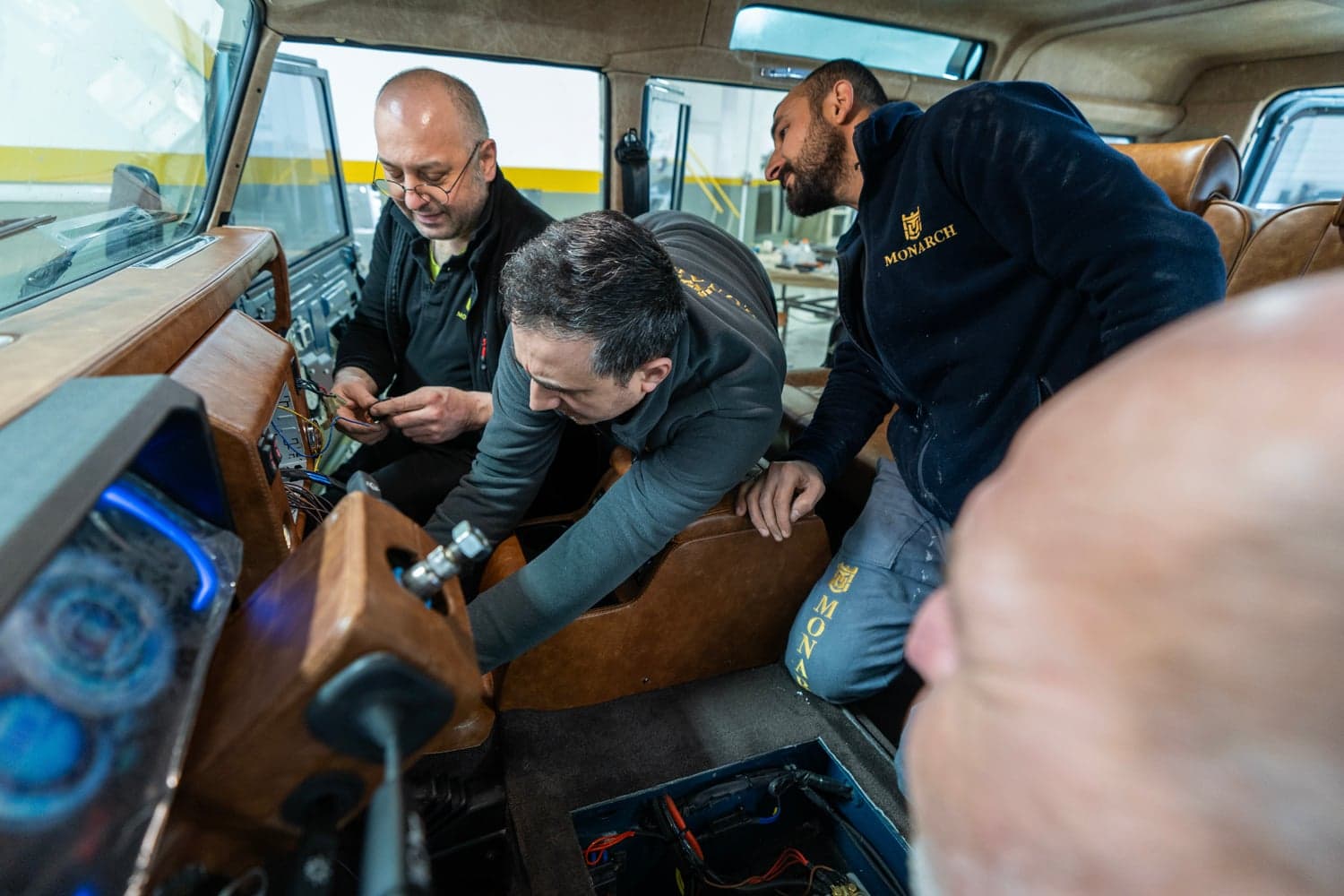
I've spent years building Defenders from the frame up. Over 150 ground-up builds at Monarch. And the question I get asked more than almost any other, especially from collectors who already own a G-Wagen, is some version of: Why a Defender instead?
Good question. Complicated answer.
Classic Defender vs G-Wagen: Military Roots, Divergent Paths
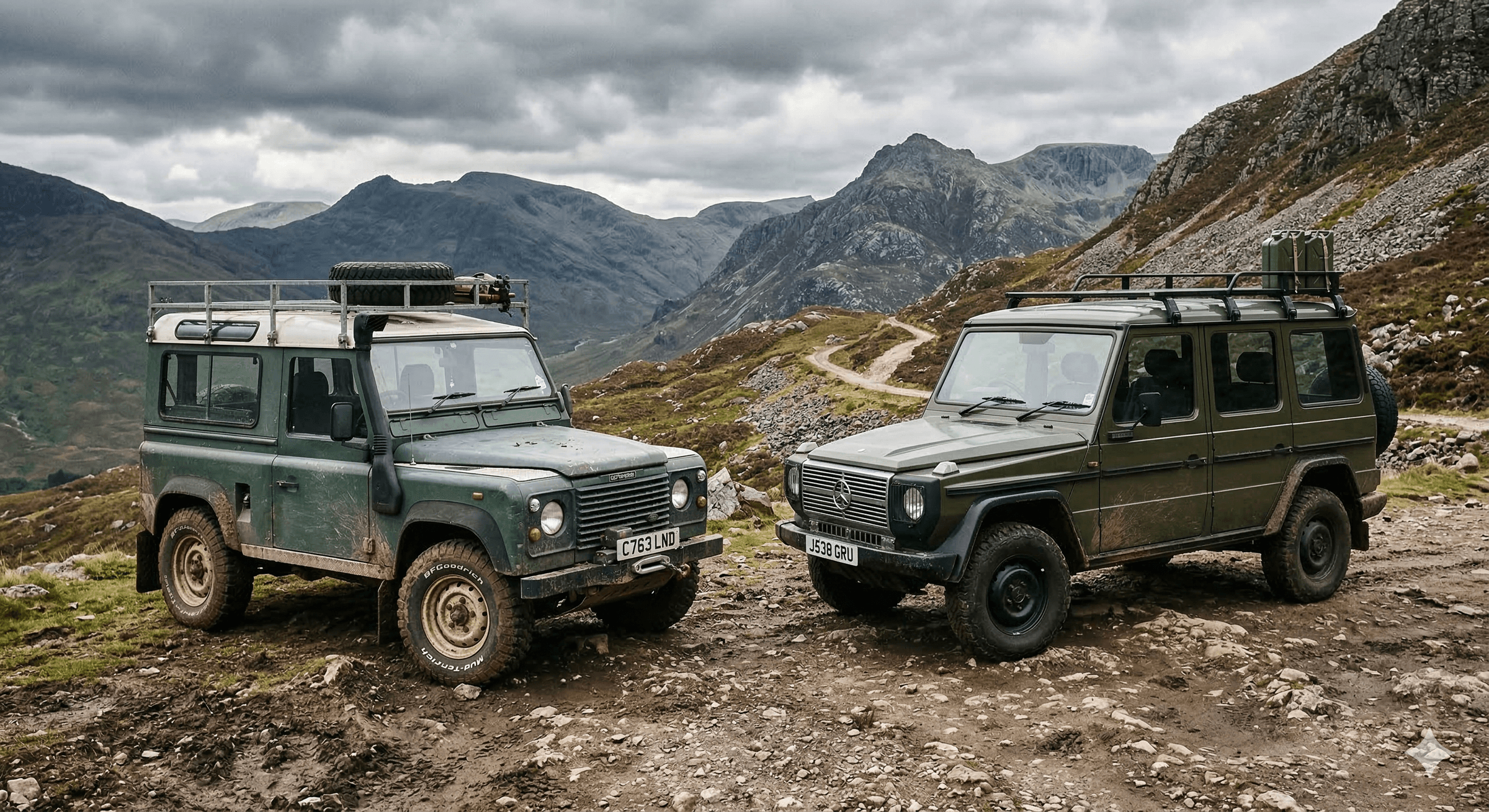
Both trucks started life as military tools. That part is identical. But where those tools ended up tells you everything about the two philosophies at work.
The Mercedes-Benz G-Class was originally developed as a military off-roader, with later, more luxurious models added to the line. Development started in 1972 with a cooperative agreement between Daimler-Benz and Steyr-Daimler-Puch in Graz, Austria. Mercedes-Benz engineers in Stuttgart handled design and testing, while the Graz team developed production plans. The first drivable prototype was tested across German coalfields, the Sahara Desert, and the Arctic Circle in 1974, with production beginning in Graz in 1979.The Defender's story is rougher around the edges. After a continuous run of 67 years, production finally ended on 29 January 2016, after a total of just over two million Land Rover Series and Defender models had been built. That lineage traces back to Maurice Wilks scratching a shape in the sand at Red Wharf Bay in 1947. No cooperative agreements with Austrian production facilities. No committee of Stuttgart engineers. Just a man who needed to replace his worn-out Willys Jeep.
The G-Wagen was designed by a corporation. The Defender was designed by a farmer. That difference echoes through everything that followed.
Why is the Classic Defender Rarer Than the Mercedes G-Class?
Mercedes just celebrated the 600,000th G-Class produced, and it was only two years prior that they'd hit 500,000 units, showing serious production growth for the marque. The G-Wagen is still in production. You can walk into a dealer, write a check for $155,000 or more, and order one. That number will go up. And up.
The classic Defender? The last unit rolled off the line wearing the registration H166 HUE, a reference to HUE 166, the very first pre-production Land Rover. This was the 2,016,933rd Defender produced. Done. Finished. That number is frozen. And it shrinks every year as unrestored trucks rot, crash, or get parted out in someone's back garden.
So yes, the G-Wagen is rare compared to, say, a Toyota RAV4. But it isn't finite.
Being finite matters to collectors.
Which is Better Off-Road: A Classic Defender or a G-Wagen?
I'll give credit where it's earned. The G-Class has always had a impressive drivetrain. The G-Class is characterised by its boxy styling and body-on-frame construction, and it uses three fully locking differentials, one of the few passenger vehicles to have such a feature. Three lockers from the factory. That's serious hardware.
The classic Defender, by comparison, came with a lockable center diff and open diffs front and rear. On paper, the G-Wagen wins. But here's where real-world building experience matters more than spec sheets.
The Defender was designed to be fixed by a soldier in a field with basic hand tools. The 300TDi engine, a 2.5-liter turbocharged diesel, produced 111 hp at 4,000 rpm and 195 lb-ft of torque at 1,800 rpm. Not exactly thrilling numbers. But that engine has no ECU, no complex electronics, and can be rebuilt easily if you had to.
The G-Wagen's engineering is impressive in a different way. German over-engineering at its finest. But German over-engineering also means German repair bills, German specialist tools, and German parts prices. The G-Class was first introduced to the civilian market in 1979 and was officially offered in the U.S. starting with the 2002 model year. Those early civilian models were durable, but try sourcing a W460 transfer case seal in Botswana. Good luck.
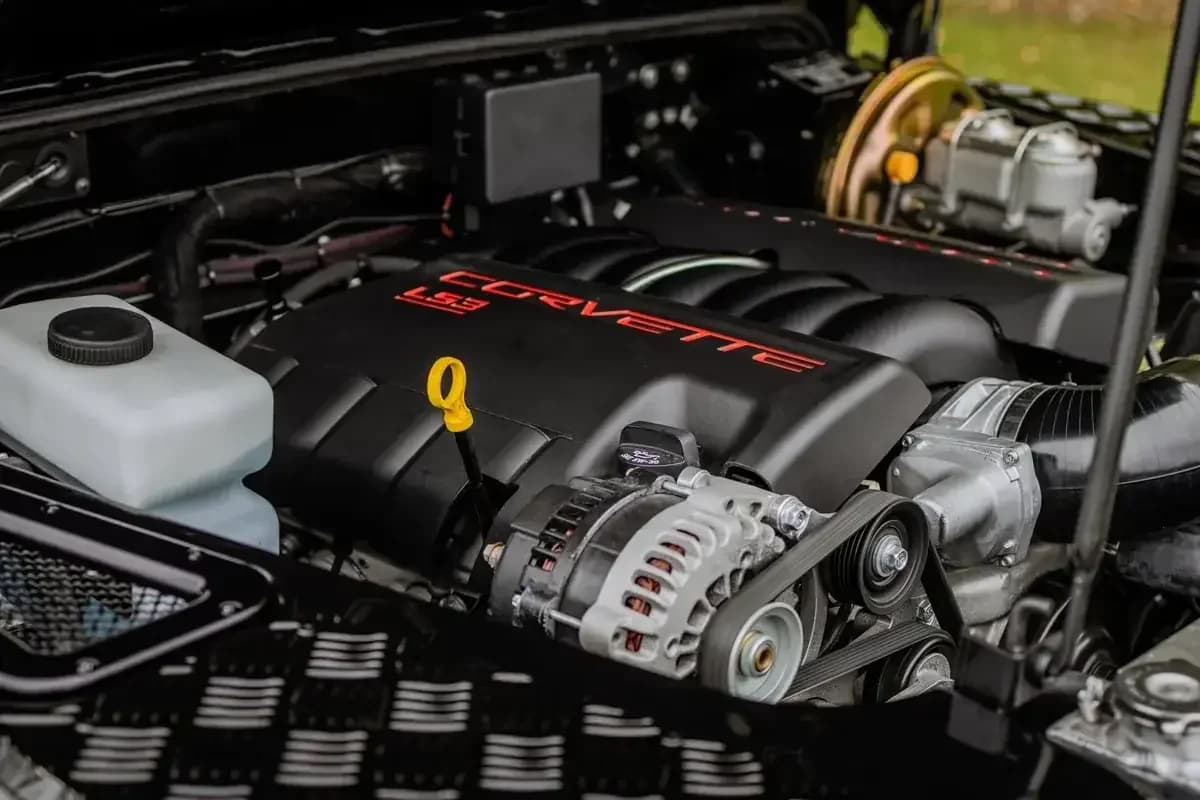
Monarch Standard: At Monarch, we replace the original Defender drivetrain entirely. A GM LS3 producing 430 hp paired with a 6L80E six-speed automatic gives you modern reliability with none of the fragility of the original powertrain or the complexity of a German V8.
Is a Classic Defender a Better Investment Than a G-Class?
The modern G-Wagen holds value well for a new vehicle. Kelley Blue Book ranks the G-Class the sixth overall best resale value vehicle for 2025, and the second-best SUV, keeping 56.6% of its original sticker price of $148,000–$186,000 after five years. That's good for a luxury SUV. Most competitors lose 50 to 60% in that window.
But "losing only 44% of your money" is not the same as "making money." A $175,000 G-Class is worth roughly $99,000 after five years. You burned $76,000. That's a cost, not an investment.
Now look at the classic Defender. A 1997 NAS Defender 90 with fewer than 1,325 miles hammered for $176,400 at RM Sotheby's Miami sale in February 2025. That same truck carried a base sticker of $27,900 when it left Solihull nearly three decades ago. That is more than a 530% return.
530%!
Now, not every Defender is a museum-quality NAS 90 with four-digit mileage. But even working examples with real miles are commanding strong money. A well-documented 1997 NAS Defender 90 with 58,000 miles sold for $155,000 in January 2025, while a 38,000-mile example brought $95,000 in June 2024.
The G-Wagen depreciates. Slowly, gracefully, with all three differentials locked, but it depreciates. The classic Defender appreciates. That's the difference between a luxury purchase and a collector acquisition.
Why Do Collectors Prefer the Driving Experience of a Classic Defender?
I'll be direct about something. The modern G-Class is a better vehicle than a stock classic Defender. It rides better, it's faster, it's safer, it is quieter. If you handed me the keys to both on a Monday morning commute, I'd pick the G-Wagen.
But nobody commutes in a collector vehicle.
What collectors are buying is feeling. And this is where the Defender wins so completely it's almost unfair.
A classic Defender was hand-built at Solihull. Each one took approximately 56 hours on the line. The aluminum body panels were formed on tooling that hadn't changed in decades. You can see hammer marks on early examples. The doors don't quite fit. The wind noise at 60 mph is loud. And none of that matters because the thing has a soul that no amount of Nappa leather and Burmester speakers can replicate.
The G-Wagen has presence. I'm not arguing that. Park one outside a restaurant and heads turn. But park a properly built classic Defender 90 next to it? People walk past the G-Wagen to look at the Defender. I've seen it happen.
Can You Restomod a G-Wagen Like a Classic Defender?
Here's where the comparison really breaks down in the Defender's favor.
You can't restomod a G-Wagen. Well, you can, technically, Brabus does their thing, but you're starting with a vehicle that costs $155,000+ and adding cost. You're making a depreciating asset depreciate slightly less while spending more money.
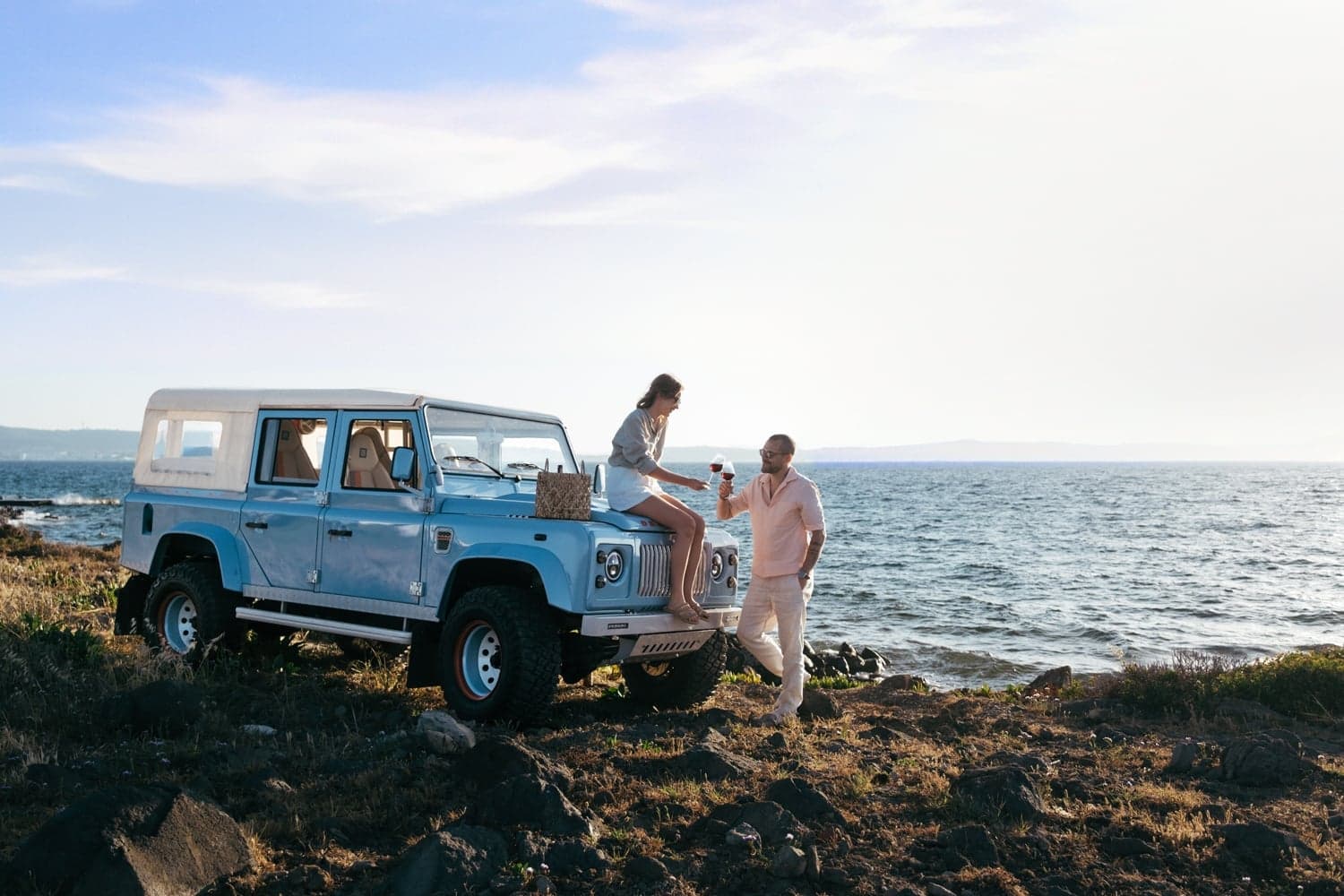
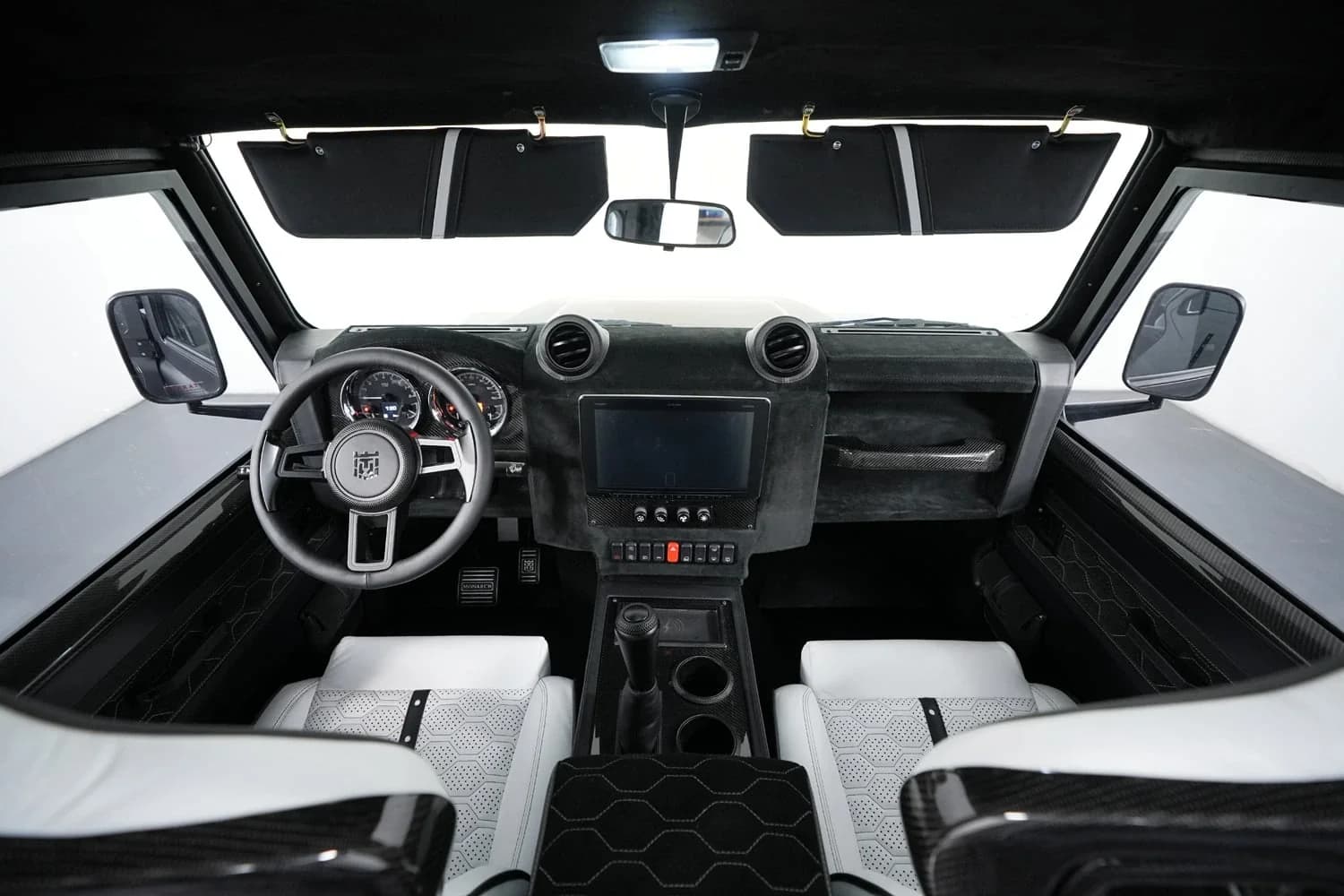
A classic Defender restomod is the opposite proposition. You take a vehicle with established, appreciating collector value. You rebuild it from the frame up with hot-dip galvanized chassis, modern drivetrain, hand-stitched Italian leather, and contemporary electronics. And the market rewards this. Modified Defenders are among the few collector vehicles where professional modifications can be worth more than stock originals.
At Monarch, we see this daily. A stock 300Tdi Defender 110 might trade for $40,000 to $70,000 depending on condition. Our ground-up builds, with an LS3 or LT1 putting down 430 to 460 hp through a proper automatic, with full documentation of every stage, trade at multiples of that figure.
The G-Wagen doesn't have an equivalent path. It starts expensive and stays expensive, but it's always losing altitude. The Defender starts with heritage and gains value.
Builder's Insight: The single biggest difference between a Defender restomod and a modified G-Wagen is documentation. At Monarch, our 13-stage build process generates a complete dossier of every torque spec, every supplier invoice, every process photograph. The collector market is learning to discriminate between documented, professional builds and backyard modifications, and the premium for proper documentation is growing every year.
When Should You Buy a Mercedes G-Class Instead of a Defender?
Buy a G-Class if:
- You want to lease a vehicle
- You prioritize modern infotainment out of the box
Build a Monarch Defender if:
- You view vehicles as alternative investments
- You want a 1-of-1 vehicle tailored to your exact tastes
- You prioritize analogue driving feel with modern reliability.
I'd be dishonest if I didn't acknowledge where the G-Wagen genuinely outperforms. Off the showroom floor, the modern G-Class offers three locking differentials, a legitimate 4x4 system, genuine luxury, and a twin-turbo V8 that makes absurd power. For someone who wants a turn-key luxury off-roader with a factory warranty, the G-Class is hard to argue against.
There's also the convertible. The original W460 did an 11-year stint from 1979 until it was replaced in 1990 by the W463, marking the beginning of the G-Class's reign as both a luxury car and status symbol for the wealthy. Those early cabriolet G-Wagens are genuinely collectible, and I respect them enormously. They occupy a niche that no Defender variant really touches.
And the sound. I'll say it: a G63 AMG at full throttle sounds absolutely ferocious. Different from an LS3 in a Defender chassis, but ferocious all the same.
Final Verdict: Should You Buy a Classic Defender or a G-Wagen?
So which one do you buy?
If you want a new luxury SUV that happens to look tough and hold its value better than a Range Rover, buy a G-Class. It does that job well.
But if you're a collector, if you understand the difference between an asset that depreciates slowly and one that appreciates steadily, if you value mechanical honesty and heritage over badge prestige, the classic Defender is the only answer. The supply is fixed. The demand keeps growing. And a properly built restomod gives you the heritage and soul of a 1990s Solihull product with the reliability and performance of a modern American V8.
The G-Wagen is a luxury product. The classic Defender is a collector's piece.
There is a difference.
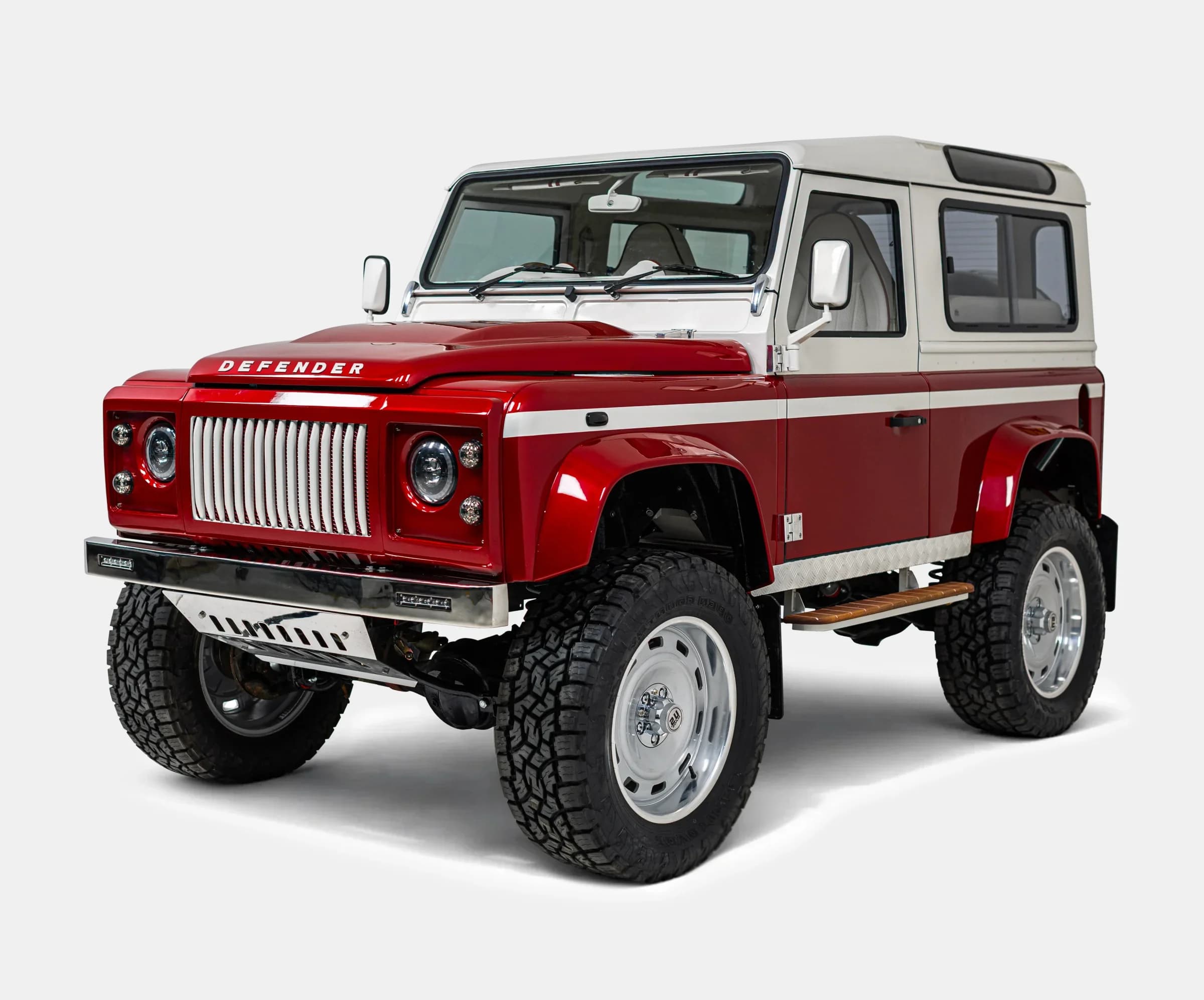
The Monarch Perspective: We build for collectors who've already owned the alternatives. Many of our clients have had G-Wagens. Some still do. But when they commission a Monarch Defender, they're making a different kind of decision, one that's equal parts passion, heritage, and financial intelligence.
How to Commission a Custom Classic Defender Build
A Monarch Defender is built once, from the ground up, for one owner. Our 13-stage build process begins with a hand-selected donor chassis and ends with a vehicle that carries the soul of Solihull and the reliability of modern engineering. No client vehicles. No parts sales. No compromise.
If you've been comparing these two icons and the Defender keeps pulling you back, trust that instinct. Start your commission today and speak directly with our build team.