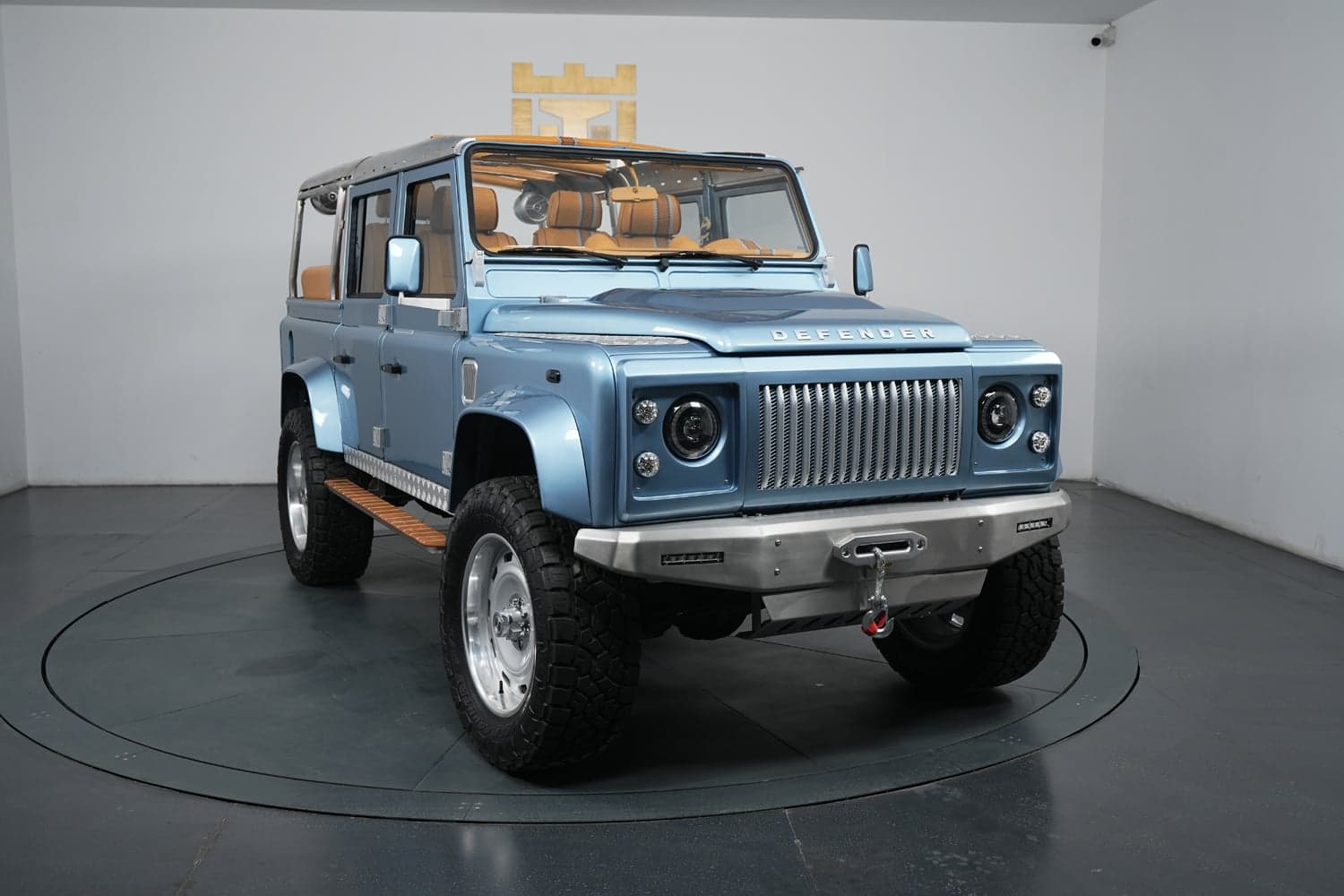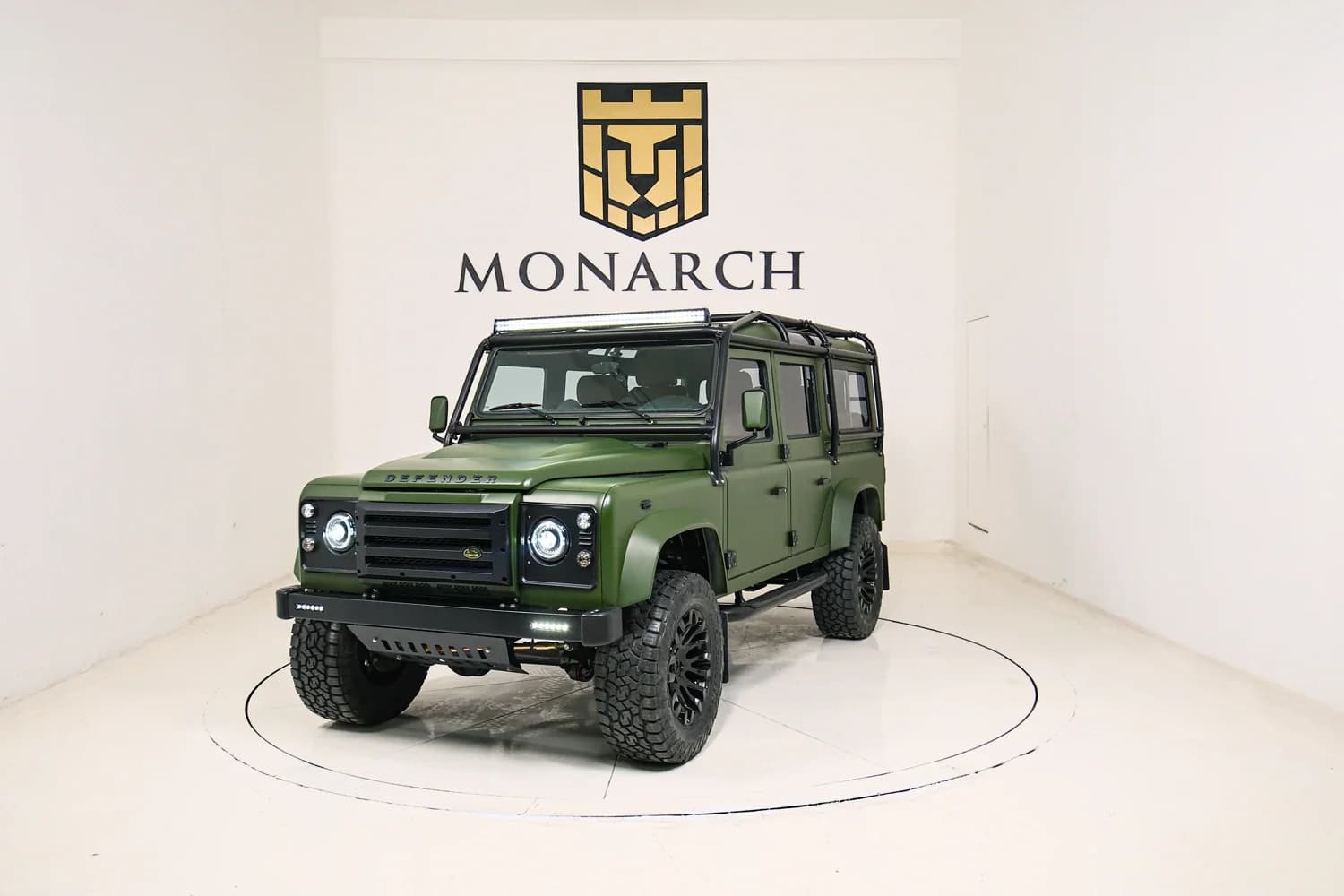
Quick Answer: How to Import a Land Rover Defender to the USA To legally import a Land Rover Defender to the USA, the vehicle must be exactly 25 years old (to the month of manufacture) to be exempt from NHTSA safety standards and EPA emissions. You must file DOT Form HS-7 and EPA Form 3520-1 upon port entry. Total import costs average $10,000–$20,000 (including ocean freight, a 2.5% customs duty, and brokerage fees), taking approximately 6 to 12 weeks
A Solihull Icon, Three Thousand Miles of Ocean, and a Stack of Federal Paperwork
Somewhere between Southampton and Newark, inside a steel shipping container bolted to a cargo vessel, there is almost certainly a classic Defender crossing the Atlantic right now. Probably a 300Tdi-powered 110, maybe a later Td5 90 with a cracked windscreen and twenty years of British weather baked into its paint. And when that container hits the port, a complicated dance of federal agencies, customs forms, and state DMV clerks begins.
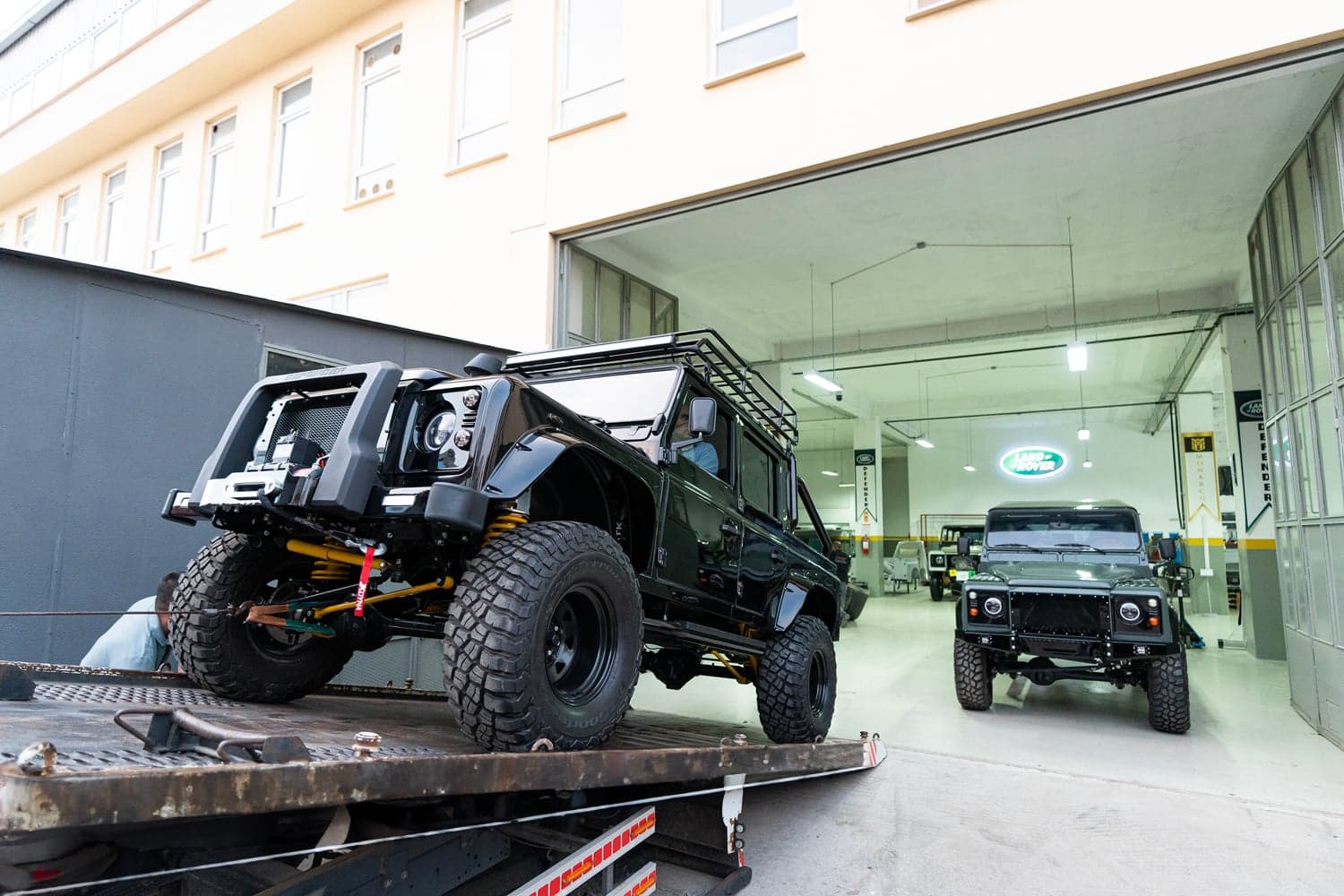
I have personally handled the importation paperwork on dozens of donor vehicles destined for Monarch builds. The process is straightforward if you know the rules. Get one detail wrong, though, and federal agents will crush your truck in a parking lot while filming it for a press release.
So here is everything you actually need to know about importing a Land Rover Defender to the USA, written by someone who has watched this process unfold (and occasionally go sideways) more times than he can count.
The 25-Year Rule for Importing a Land Rover Defender
Every conversation about importing a Land Rover Defender to the USA starts with one number. Twenty-five.
[1] A motor vehicle that is at least 25 years old can be lawfully imported into the U.S. without regard to whether it complies with all applicable Federal Motor Vehicle Safety Standards. That's straight from NHTSA. No ambiguity. No negotiation.
The rule was established under the Imported Vehicle Safety Compliance Act of 1988[3], and it provides a complete exemption from both NHTSA/DOT safety standards and EPA emissions requirements for vehicles that are at least 25 years old from their month and year of manufacture. Month and**** year. A Defender built in July 2001 is not eligible until July 2026. Not January. Not "close enough." July.
The EPA actually runs on a slightly different clock. Their exemption kicks in at 21 years for vehicles in original, unmodified condition[2]. But since the NHTSA's 25-year threshold is the stricter of the two, that's the one that matters in practice.
As of March 2026, any classic Defender manufactured through early 2001 now qualifies. That means Td5-powered Defenders, the later 300Tdi builds, and of course every Tdi and earlier variant are all fair game. For the short version of the legality picture, including state registration and what a V8 swap means, see our guide to whether Land Rover Defenders are legal in the US.
Monarch Insight: At Monarch, we source donor vehicles from around the globe. Every donor we import is verified to the month and year of manufacture with original documentation before it touches a shipping container. One digit off, and you're looking at seizure.
What Happens If You Get It Wrong
The federal government does not play around with import violations.
In 2013, U.S. Customs and Border Protection seized a Defender at the Port of Baltimore and publicly crushed it because the vehicle had been manipulated to appear older than 25 years[5]. That same year, customs officials said they seized "dozens" of Defenders at ports in Philadelphia, Norfolk, Houston, Tacoma and several other cities, many with altered VINs[5]. And then in July 2014, Homeland Security agents conducted pre-dawn raids across the country, seizing 40 Land Rovers in a single morning as part of a criminal investigation into illegal importation[5].
Forty trucks. Taken from driveways while owners ate breakfast.
The investigation centered on an importer who had brought 114 Defenders into the country between 2009 and 2012[5], allegedly with falsified age documentation. The owners, many of whom believed they'd purchased legal vehicles, were left fighting federal forfeiture proceedings.
Bringing a non-compliant Defender into the U.S. if it's less than 25 years old can lead to authorities seizing and destroying it. That is not a theoretical risk. It happens. I have spoken with people who lost trucks this way, and the experience shattered them financially and emotionally.
VIN swapping, where someone takes the identification plate from a genuine pre-1983 Series vehicle and bolts it onto a 2004 Td5, is a federal felony. Don't do it. Don't buy a truck where it's been done. And don't trust anyone who tells you it's a gray area. It isn't.
Required Customs Forms and Paperwork for US Import
Assuming your Defender legitimately qualifies under the 25-year exemption, the federal paperwork is surprisingly manageable. Two critical forms:
DOT Form HS-7: Check Box 1, which declares the vehicle is 25 years old or older and exempt from FMVSS. This goes to U.S. Customs at the port of entry[1].
EPA Form 3520-1: Declare Code E, which confirms the vehicle is exempt from Clean Air Act requirements[3].
You'll also need:
- Bill of Lading from your shipping carrier
- Original title or registration document proving the vehicle's age
- Bill of sale with purchase price, buyer, and seller information
- CBP Form 7501 (Customs entry form)
- Valid proof of insurance
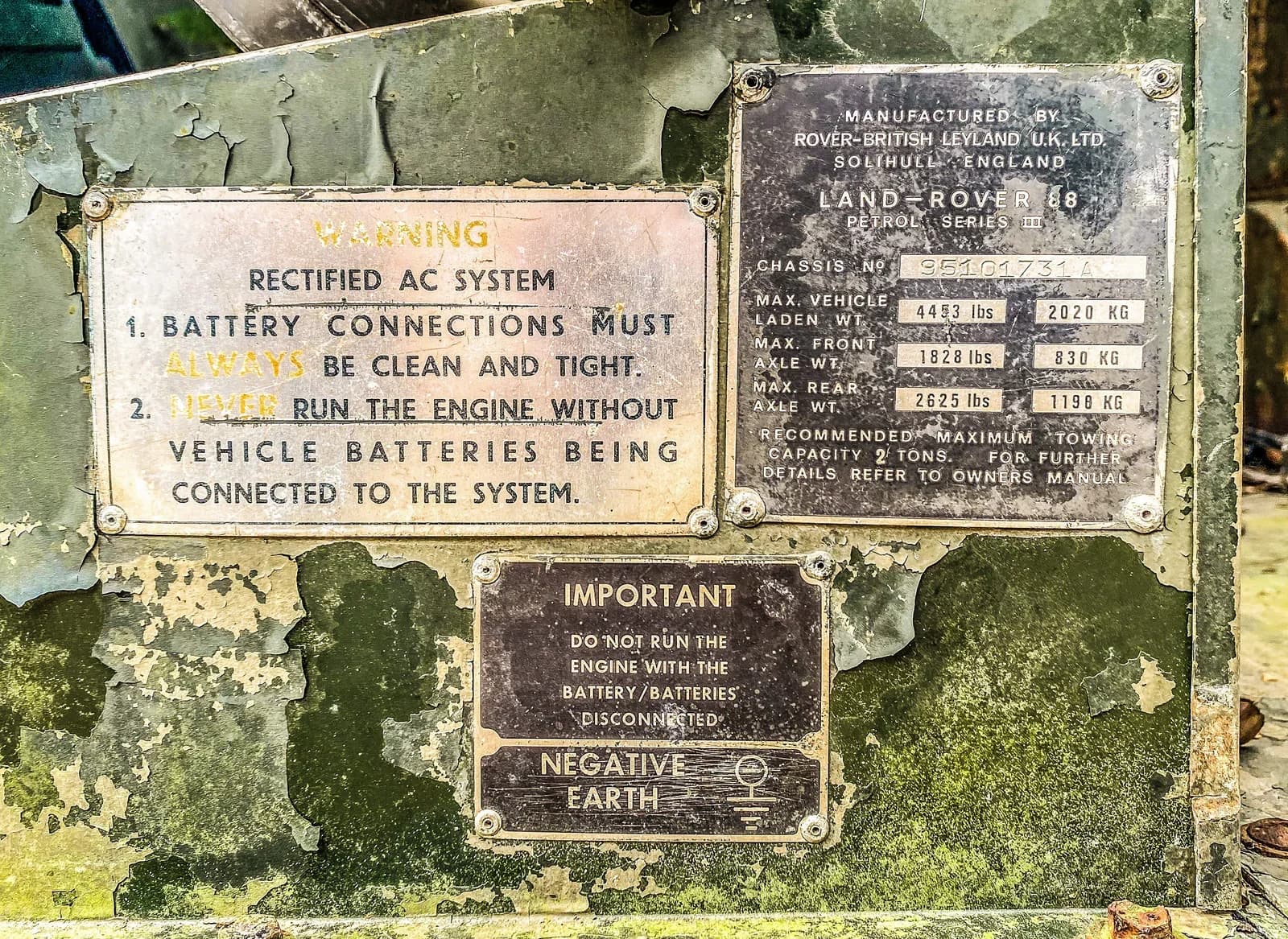
The 25-year period runs from the date of the vehicle's manufacture[1]. If the manufacture date isn't on the vehicle's original label, NHTSA says you should have documentation such as an invoice showing the first sale date or a registration document showing the vehicle was registered at least 25 years ago[1].
This is where Land Rover's somewhat haphazard record-keeping from the 1990s can bite you. I've seen chassis plates that are barely legible after decades of mud, oil, and corrosion. If your date stamp is unreadable, a statement from a recognized vehicle historical society can establish the age[1]. But "I think it is old enough" doesn't fly at the port.
How Much Does It Cost to Import a Defender? (2026 Breakdown)
Ocean freight (UK to US): Consolidated container shipping from Southampton to New York runs approximately $2,750 with a typical 26-day transit[4]. Dedicated containers cost more. Roll-on/roll-off (RoRo) shipping is cheaper but exposes the vehicle to salt air and weather.
Import duty: Classic vehicles are subject to a 2.5% duty based on the vehicle's declared value at the time of import[10]. On a $30,000 Defender, that's $750. Not terrible. And vehicles coded under HTS 9903.94.04 are exempt from the 25% Section 232 tariff that hits modern vehicles[3].
Customs brokerage and port fees: Budget $600–$1,200 for origin and US port handling, brokerage, and document processing[4].
UK-side collection and preparation: Getting the truck from wherever it sits in England to the port at Southampton typically runs $400–$900, plus deregistration paperwork[4].
US-side transport: Once cleared through customs, getting the Defender from the port to your location adds $1,000–$4,000 depending on distance.
All told, the import process itself, not counting the purchase price of the vehicle, typically runs $10,000–$20,000 depending on condition and fees. The timeline from purchase to final registration usually spans 6 to 12 weeks.
That might sound steep until you compare it to what clean Defenders fetch stateside. NAS Defender 90 Soft Tops currently average $78,340 in transaction price[9], and the highest recorded NAS Defender 90 sale hit $212,800 at auction in November 2025[9]. The math works, if you buy the right truck.
Tip: Always factor in post-import inspection and repair costs. A Defender that looks solid in photos from a UK dealer's yard might reveal significant chassis corrosion, electrical gremlins, or an engine that is been quietly burning oil for 200,000 miles once you get it on a lift stateside.
Registering an Imported Defender in California (CARB Emissions)
I wish I could tell you that a properly imported, 25-year-old Defender is legal to register in all 50 states. It's legal in 49 of them without much drama.
California is the exception.
A properly imported, 25-plus-year-old Defender is legal to drive in nearly every state, provided you follow local registration laws. California residents, though, must budget for extra emissions compliance steps. The California Air Resources Board (CARB) does not recognize the federal 25-year exemption for emissions. All gasoline vehicles from 1976 onward require smog certification in California. There is no sliding window.
Because diesel Defender engines (200Tdi, 300Tdi, Td5) were never EPA or CARB certified, you have three primary options for California registration
- CARB Lab Certification: Send the vehicle to an ARB-certified lab for permanent emissions compliance testing (Cost: $7,500–$15,000).
- CARB-Compliant Engine Swap: Remove the non-compliant diesel and install a modern, smog-legal V8 (like a GM LS3, LT1 or LT4) with full emissions equipment, verified by a California Referee. (what is done at Monarch Motor Company)
- Out-of-State Registration: Register the vehicle under an LLC in a state with lenient classic car laws (e.g., Montana), though this carries local compliance risks.
At Monarch, we solve this problem by installing GM LS3, LT1 or LT4 V8s with full emissions equipment, or with an EV build. A properly executed LS swap with all required catalytic converters and sensors can pass California smog through a referee inspection. It's the cleanest path to a California-legal Defender.
Where to Source Your Defender
The UK remains the primary hunting ground for import-worthy Defenders, and that makes sense. Land Rover built over two million of them, and the vast majority went to markets outside North America. The initial batch of NAS Defender 110s for the US was just 525 units for the 1993 model year: 500 to the United States and 25 to Canada[8]. All Alpine White, all fitted with the 3.9-liter V8 and external roll cages[8]. The full NAS production run totaled only about 7,059 vehicles[9].
Seven thousand trucks for an entire continent. That is not a lot.
But you do not need an NAS truck. Any classic Defender that meets the 25-year threshold can be imported. UK-market Defenders with 300Tdi engines, European-spec Td5 models, even South African and Australian examples, they are all eligible once they hit the age requirement. The sourcing process itself takes 4-6 months when you factor in finding the vehicle, inspecting it, arranging transport, and clearing customs.
Some tips from years of doing this:
- Inspect for rust ruthlessly. The chassis, bulkhead, and footwells are the three kill zones. A Defender that looks great from three feet away might be structurally compromised. At Monarch we inspect with a ball-peen hammer and bore scope, because photos lie.
- Verify engine and VIN match. Customs will reject vehicles with swapped engines or mismatched numbers. If the engine number doesn't match the logbook, walk away.
- Use a customs broker experienced with Defenders. This is not the place to save $400. A broker who has never processed a Land Rover will make errors that cost you weeks at the port.
State Registration: The Final Hurdle
Once your Defender clears federal customs, you still need to register it with your state DMV. For most states, this is straightforward. Many states offer historic or vintage plates for vehicles more than 25 years old, and the registration process involves VIN verification, proof of ownership, proof of insurance, and payment of applicable state taxes.
States like Florida, Texas, and Montana are generally more accommodating for 25-year imports[3]. States like New York, Massachusetts, and Connecticut may require emissions and safety inspections[3]. Know your state's requirements before the truck arrives at port.
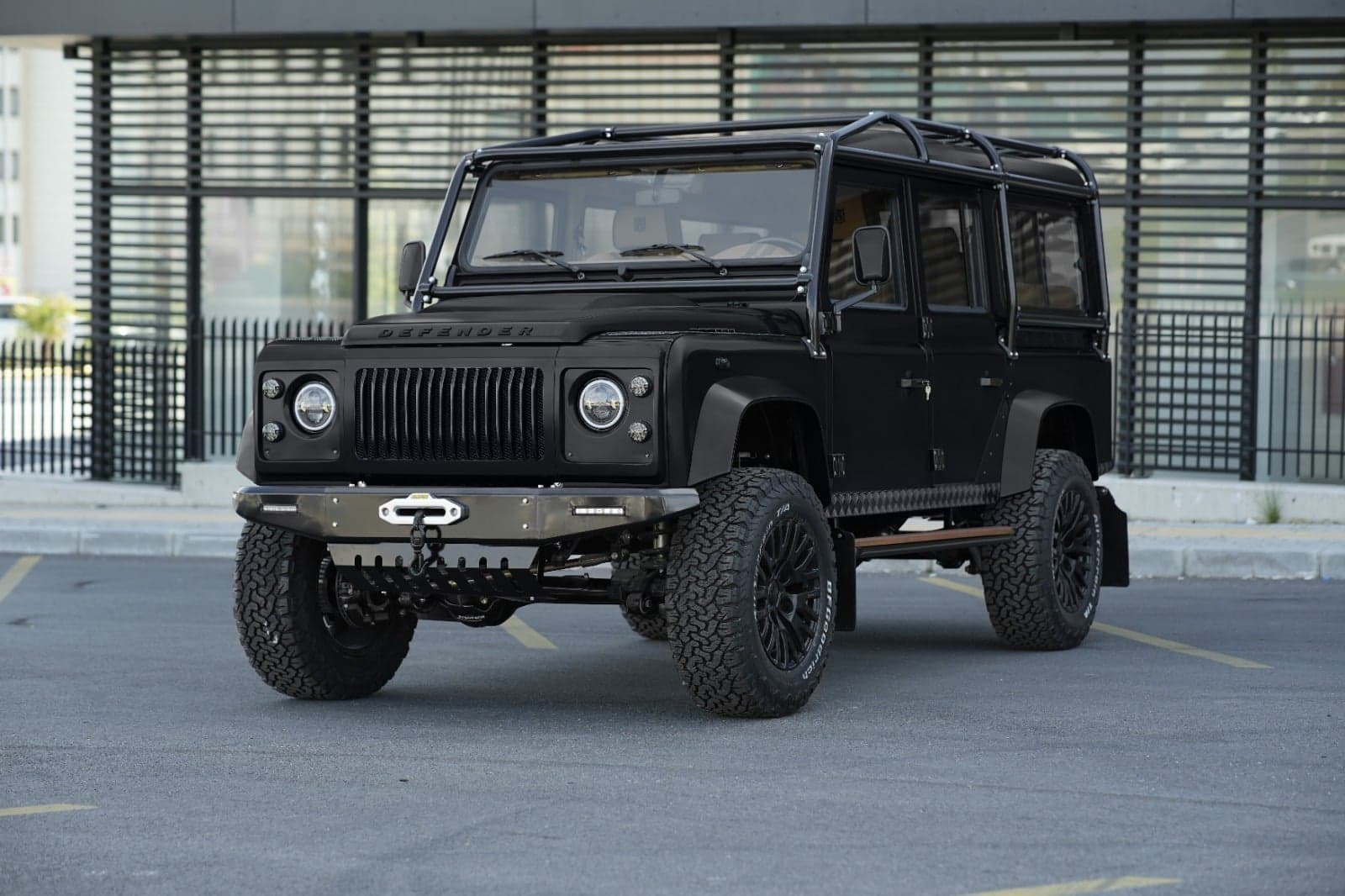
Right-hand-drive Defenders are legal at the federal level, there is no federal requirement to convert to left-hand drive[4]. But daily driving an RHD truck on American roads is weird. Highway on-ramps, drive-throughs, parking garages, all of it becomes an exercise in neck-craning frustration. An RHD-to-LHD conversion runs $15,000–$35,000[4], but most collectors either adapt or, more wisely, source a left-hand-drive Defender from continental Europe to begin with.
Monarch Standard: Every Monarch build starts with a left-hand-drive donor vehicle. We believe a Defender built for American roads should drive like it belongs on American roads. No compromises.
Why a Ground-Up Build Makes More Sense Than a Straight Import
Here's my honest take, and it is one informed by a decade of ground-up builds.
Importing a classic Defender and driving it as-is is an adventure. The 300Tdi will start in any weather, the permanent four-wheel drive will get you through anything, and the experience of piloting 1990s British engineering down an American highway has a romantic quality that's hard to argue with.
But romance fades quickly when the wiring loom melts, the transfer case leaks onto your exhaust, and you discover the chassis has been rusting from the inside for twenty years because Land Rover, bless them, never hot-dip galvanized their frames. Production ended in 2016[9], and every surviving unrestored Defender is now aging out. The supply is shrinking.
A ground-up build takes that imported donor, rebuilds it on a new chassis, and reimagines everything. A new KTL-coated, galvanized frame. GM LS3 (about 430 hp), LT1 (about 460 hp) or supercharged LT4 (650 hp) power, or an EV build. Six-speed automatic. Climate control that actually works. An electrical system that won't leave you stranded in a parking lot.
You keep the soul. You fix everything that was always wrong.
Step-by-Step Process to Import a Defender
- Verify the 25-Year Rule: Confirm the exact month and year of manufacture via the chassis VIN plate or British Motor Industry Heritage Trust certificate.
- Purchase and Deregister: Buy the vehicle and officially deregister it in its home country (e.g., the UK).
- Arrange Ocean Freight: Hire a customs broker and book RoRo (Roll-on/Roll-off) or container shipping to a US port.
- File Federal Import Paperwork: Submit DOT Form HS-7 (Box 1) and EPA Form 3520-1 (Code E) to US Customs.
- Pay Import Duties: Pay the 2.5% classic vehicle import duty based on the declared value.
- State Registration: Transport the vehicle from the port to your local DMV for VIN verification and historic/standard plate registration.
Commencing Your Commission
Importing a classic Defender to the USA is entirely achievable with the right preparation, but the truck that arrives at your door will always be a 25-year-old vehicle with 25-year-old problems hidden beneath the surface. A Monarch starts with that imported donor and transforms it into something that honors the heritage while delivering genuine modern performance. Every Monarch is built on a new KTL-coated, galvanized chassis. The donor we source supplies the identity and title, not the frame. Our 12-stage build process takes 8 to 12 months and produces a vehicle that's built to last another half-century. Begin your commission today and speak directly with our build team about what's possible.