A Line Drawn in Sand
Somewhere on the north shore of Anglesey, around 1947, a man named Maurice Wilks scratched the outline of a vehicle into wet beach sand with a stick. His brother Spencer looked at it and asked what he planned to do. Maurice said he was going to build it. That rough sketch, made while the brothers were figuring out how to keep the Rover Company alive in post-war Britain, became the most consequential doodle in automotive history.
The vintage Land Rover Defender traces its bloodline directly to that moment. Not figuratively. Literally.
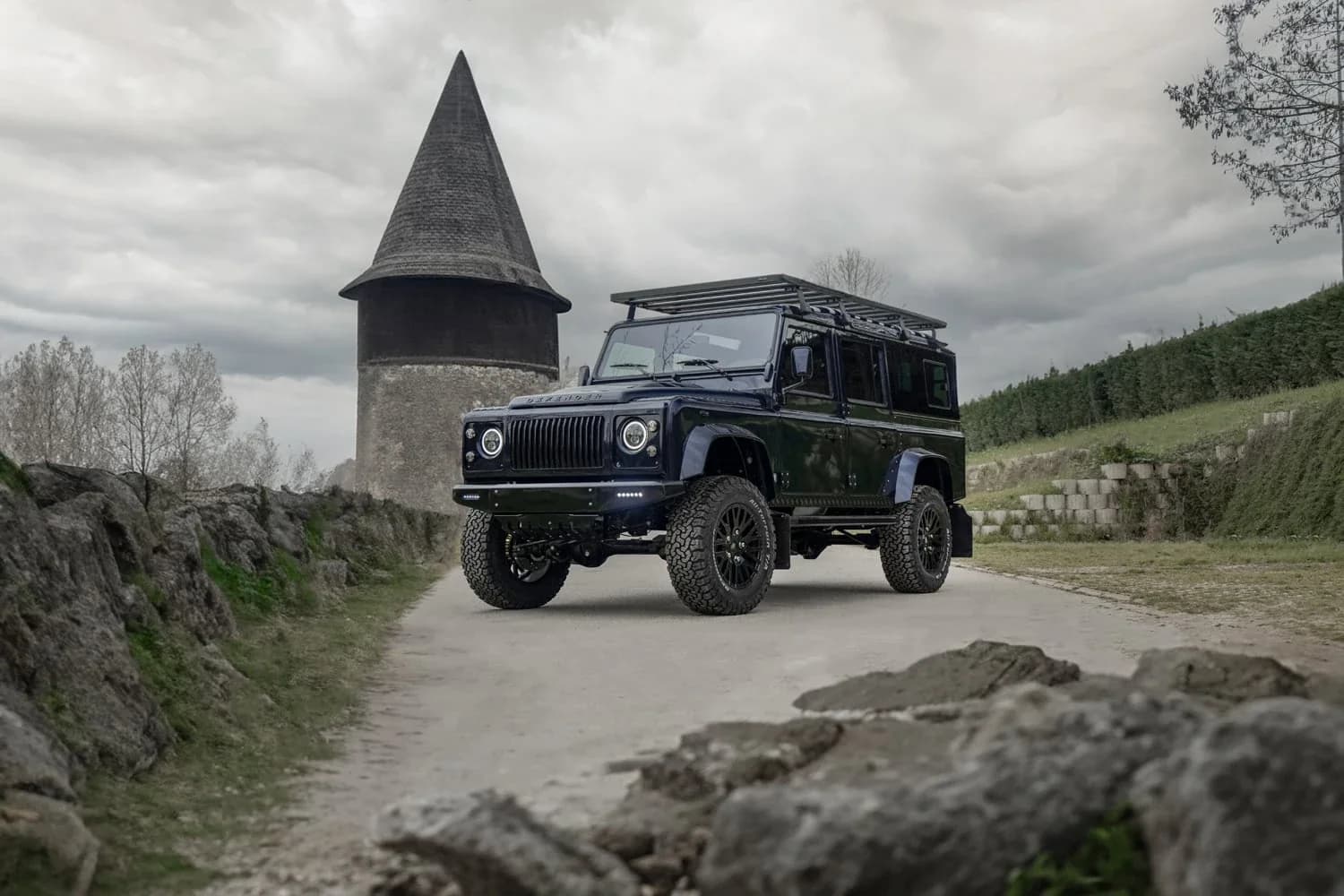
The vehicle that would become the Defender entered production at Solihull in 1948 as the Series I[5], and across nearly seven decades, over two million units rolled off that same line[2]. When production finally ceased on January 29, 2016, the last Defender bore the registration plate H166 HUE, a deliberate callback to the very first pre-production Land Rover, HUE 166[2]. That last truck was the 2,016,933rd to be built[2].
Those numbers matter. They tell you something about an object that transcended being merely a vehicle and became, for lack of a better word, a species.
Why the Vintage Land Rover Defender Commands the Market
The collector market for a vintage Land Rover Defender has shifted from niche enthusiasm to serious money in the last five years. And I don't mean "prices have gone up a bit." I mean the kind of appreciation that makes financial advisors take notice.
Look at the NAS (North American Specification) Defender 90. These were the trucks Land Rover built specifically for the U.S. market between 1993 and 1997[6], powered by a fuel-injected 3.9-liter V8 making 182 bhp[1]. Only about 2,000 were imported per year[1], and the base price was $27,900[1]. A nice truck, sensibly priced.
Fast-forward to now. The highest recorded sale for a Unmodified NAS Defender 90 Hard Top hit $212,800 in November 2025[3]. NAS Soft Top models average $78,340 at auction[4], with the top sale reaching $176,400 in February 2025[4].
That's not a typo.
A truck that sold for under $30,000 new is now fetching six figures routinely, and the best examples are cracking $200,000. RM Sotheby's offered a final-year 1997 NAS Defender 90 with fewer than 1,290 miles on the clock, estimating it would sell for between $200,000 and $250,000[6]. That particular truck, confirmed by a British Motor Industry Heritage Trust certificate, was completed at Solihull on May 21, 1997[6].
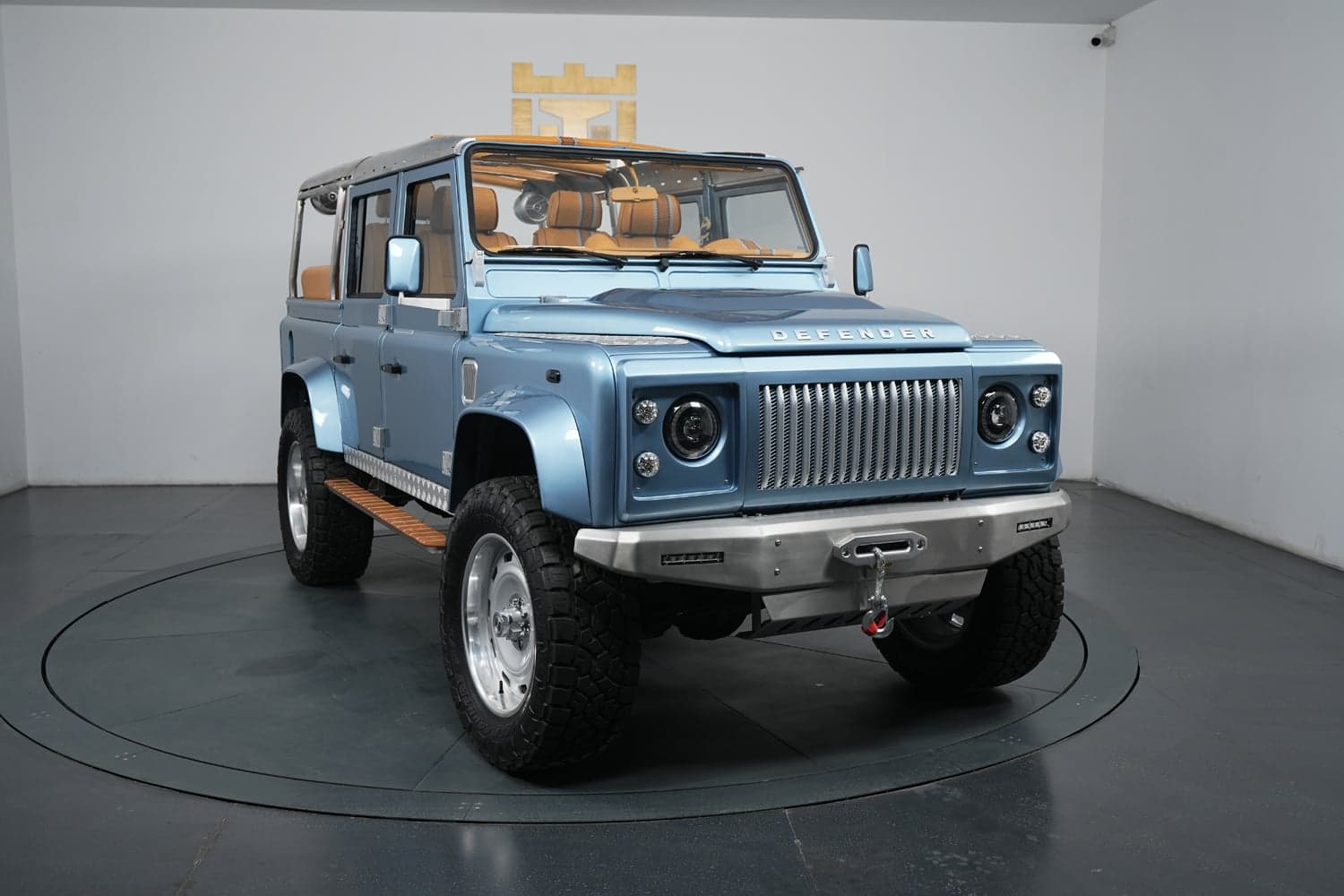
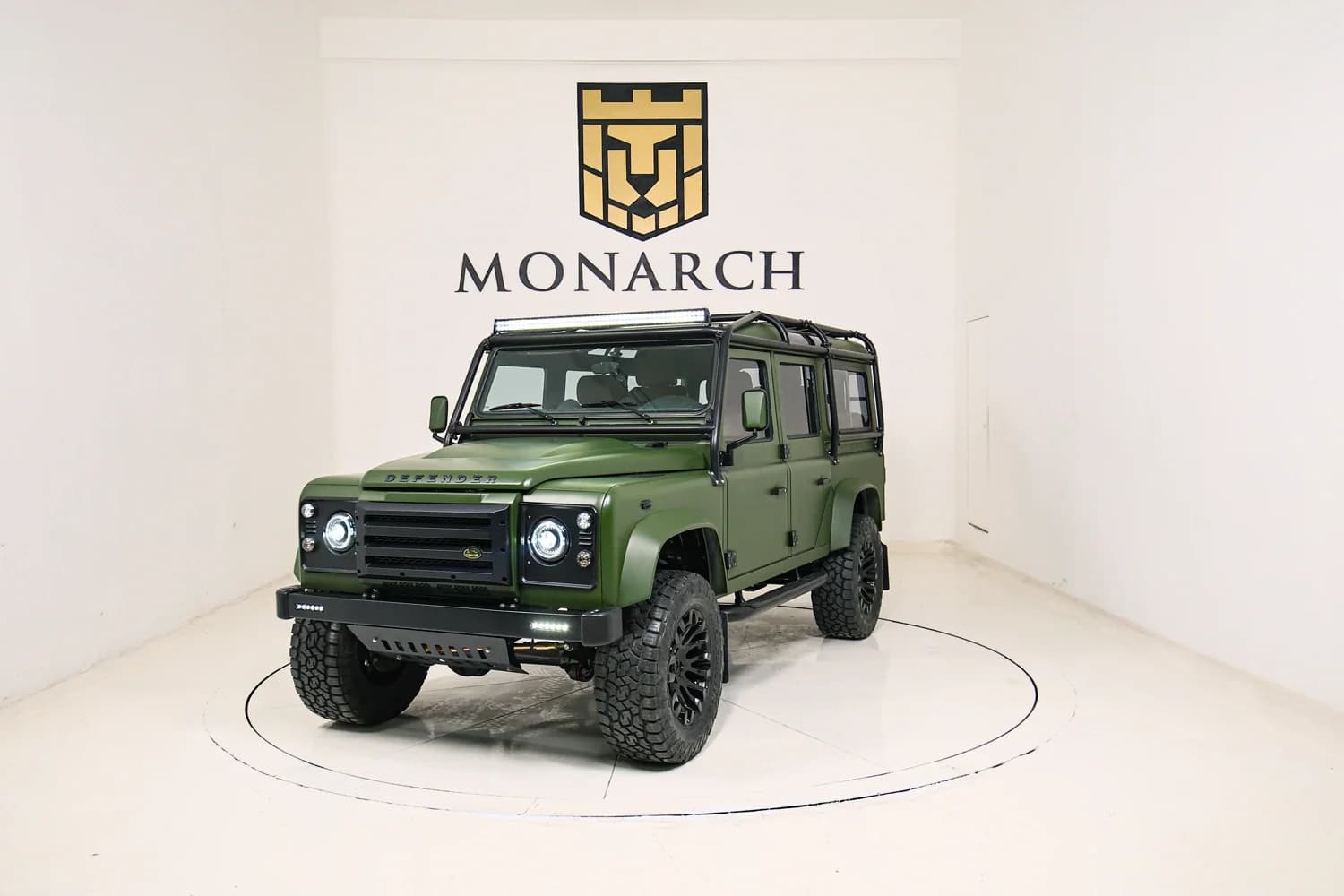
Monarch Insight: At Monarch, we've watched this market closely for years. Originality drives premiums on unmodified examples, but the smartest collectors are commissioning ground-up builds that pair vintage Defender character with modern reliability, side-stepping the risk of acquiring a truck with hidden corrosion or questionable provenance.
So why the surge? A few reasons, and they compound each other.
First, scarcity. Land Rover pulled the Defender from the U.S. market after 1997 because safety regulations regarding airbags and side-impact protection outstripped the vehicle's design[1]. The 25-year import rule has been slowly unlocking European and rest-of-world examples for American buyers, but Hagerty has noted that demand in this country has lured many foreign-market Defenders here via the grey market, meaning buyers should shop very carefully[1].
Second, the truck stopped being made. Entirely. The classic Defender died in January 2016[5], and the modern L663 that replaced it shares, and I want to be precise here, zero components with its predecessor[2]. It's a fine vehicle. But it's a different animal.
Third, cultural weight. This is the truck the Queen drove around her estates[2]. It served in every branch of the British military. It carried relief workers through floods and explorers across deserts. That kind of biography doesn't depreciate.
The Anatomy of a Vintage Land Rover Defender
Body-on-Frame: The Foundation of Everything
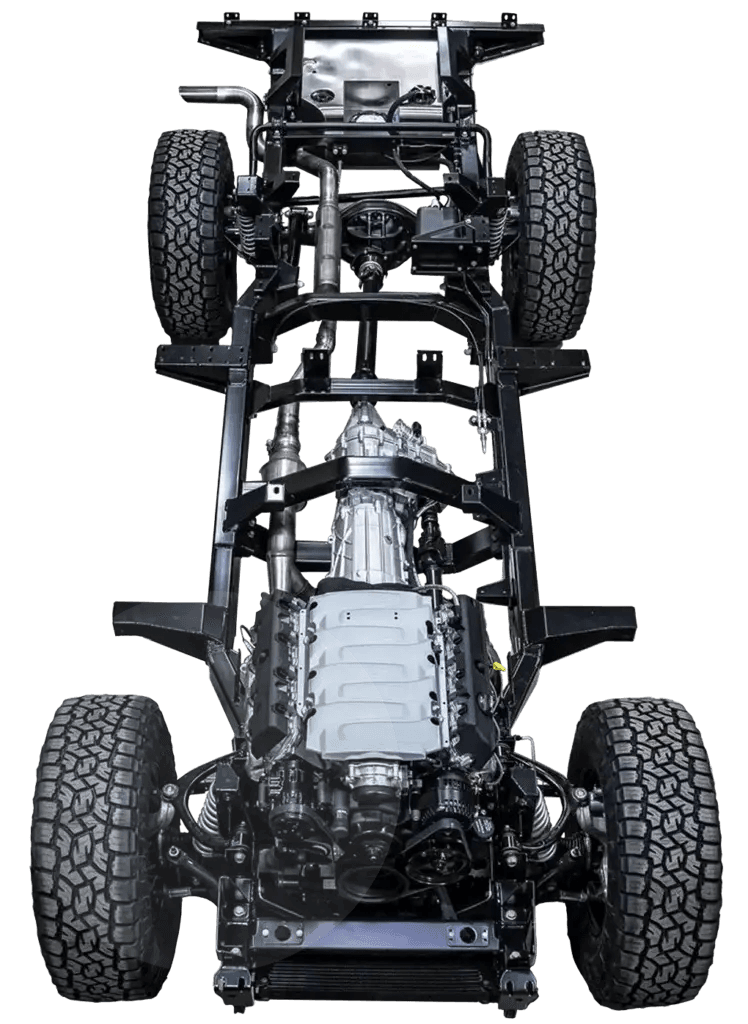
Every vintage Land Rover Defender is built on a separate ladder-frame chassis, a design philosophy Land Rover held onto from 1948 through the final 2016 production run. The aluminum body panels bolt to this steel frame, which is both the truck's greatest strength and, frankly, its most persistent weakness.
Rust. That's the word every Defender buyer learns to fear.
The original Solihull chassis was never galvanized from the factory. Bare steel, painted, and sent into a world of mud, salt and river crossings. The rear crossmember is the first casualty, almost always. Water sprays up from the wheels, collects in the boxed frame sections, and quietly eats the structure from the inside out. At Monarch, when we inspect a donor, the rear crossmember tells us the whole story of the truck's life in about thirty seconds.
This is why a hot-dip galvanized chassis is non-negotiable for any serious build. The process submerges the entire steel frame in molten zinc, coating every interior cavity, every seam, every surface the original paint never reached. A quality galvanized coating can protect the steel for 50 years or more, which is the kind of number that changes the conversation from "restoration" to "legacy."
Engine Eras: What Powered Each Generation
The vintage Land Rover Defender ran through several engine families, and understanding them matters if you're buying or commissioning a build.
The 200Tdi (1990-1994) was the first proper turbodiesel. Tough. Simple. But rough by modern standards.
The 300Tdi replaced it in 1994, and this is the engine that most Defender purists point to as the sweet spot of the diesel era. The development project, codenamed Romulus, produced 208 individual changes over the 200Tdi[8], including modifications to the block, cylinder head, fuel injectors, crankshaft, pistons and connecting rods[8]. It got a rubber acoustic cover to reduce noise and switched from multiple V-belts to a single serpentine belt[8]. Power stayed at 2.5 liters, but the refinement was a different story altogether.
The 300Tdi had no ECU. No computer. Just diesel, compression, and a mechanical injection pump. You could fix it with hand tools in the middle of nowhere, and people did. The British Army specifically chose to keep the 300Tdi in service rather than adopt the Td5 that replaced it in 1998, because they couldn't guarantee the electronic engine management would survive an electromagnetic pulse[8]. That tells you something about military-grade simplicity.
Then came the Td5 in 1998, bringing electronic engine management. More power, more refinement, more things to go wrong in the bush. I'll be honest: the Td5 is the most divisive engine in Defender history.
For NAS trucks sold in America, the engine was a Rover aluminum V8, initially the 3.9-liter making 182 bhp, upgraded by 1997 to a distributorless 4.0-liter paired with a ZF four-speed automatic[6]. Good for 0-60 in about 10.2 seconds and a top speed of 86 mph[1]. Not fast. But a V8 in a Defender has a presence that no four-cylinder diesel can match.
Monarch Standard: At Monarch, we build with the GM LS3 (about 430 hp, 424 lb-ft), LT1 (about 460 hp, 465 lb-ft) or supercharged LT4 (650 hp), all paired with a six-speed automatic such as the 6L80E, and we also offer EV builds. The LS3 produces roughly 2.4 times the horsepower of the original NAS V8. The bellhousing alignment requires careful attention during installation, and the 6L80E demands about 42mm of additional transmission tunnel clearance, but the result is a truck that idles like a sports car and cruises at highway speed without breaking a sweat.
The Coil-Spring Revolution
Before 1983, Land Rovers rode on leaf springs. They were agricultural. Uncomfortable. Effective. When the One Ten launched in 1983, it borrowed the Range Rover's coil-spring suspension[2], and the Ninety followed in 1984. This single engineering change, really a cultural shift disguised as a suspension upgrade, transformed the Land Rover from a pure work truck into something a broader audience could tolerate on tarmac.
The wheelbase designations were always slightly misleading. The "90" was actually 92.9 inches[2]. The "110" was truly 110 inches. And the 127 (later 130) completed the family.
In 1990, with the Discovery entering the lineup and threatening brand confusion, Land Rover gave these trucks the name they'd carry to the grave: Defender[2].
What Makes a Vintage Defender Worth Collecting
Not all vintage Land Rover Defenders are created equal. Here's what separates a $30,000 project from a $200,000 collector piece:
Provenance. A Heritage Trust certificate, a documented service history, a clear chain of ownership. RM Sotheby's noted that vintage Land Rovers are often heavily used and abused, and the Defender is an increasingly popular platform for modification[6]. A truck with verifiable factory-original specification commands a premium that a cobbled-together import simply cannot.
Condition of the chassis. I cannot stress this enough. Everything else on a Defender can be replaced. Panels are aluminum and available. But a structurally compromised chassis means the truck needs to be stripped to bare bones and rebuilt from the ground up. Which, if you're going to do it right, is exactly what we do at Monarch anyway.
Specification rarity. The 1997 final-year NAS Defender 90 Limited Edition, of which just 300 were built[6], commands a massive premium. Heritage Editions from the 2016 end of production, limited to 400 units[5], are already climbing.
Build quality. Each Defender required 56 hours to hand-build at Solihull, with approximately 7,000 individual parts[5]. That hand-built nature means variation. Two trucks off the same line in the same week could have different panel gaps, different wiring routing, different little quirks. It's part of the charm. It is also part of the problem if you're chasing perfection.
Land Rover's Own Bet on the Vintage Defender
Here's something that tells you everything about where this market is headed: Land Rover itself is now in the restomod business.
The Classic Defender V8 Works Bespoke program takes 2012-2016 donor vehicles, strips them completely, and rebuilds them with a 5.0-liter V8 producing 400 hp and a ZF eight-speed automatic[7]. Each one spends over 300 hours in the paint shop alone[7]. The starting price? £190,000, roughly $254,000 before taxes and options[7].
That's more expensive than a new Defender Octa[7].
Land Rover is effectively betting that the vintage Defender platform, the body-on-frame, ladder-chassis, recirculating-ball-steering truck, is worth more than its own flagship modern product. And they're right. Because you can configure a new L663 on a website. You can't configure soul.
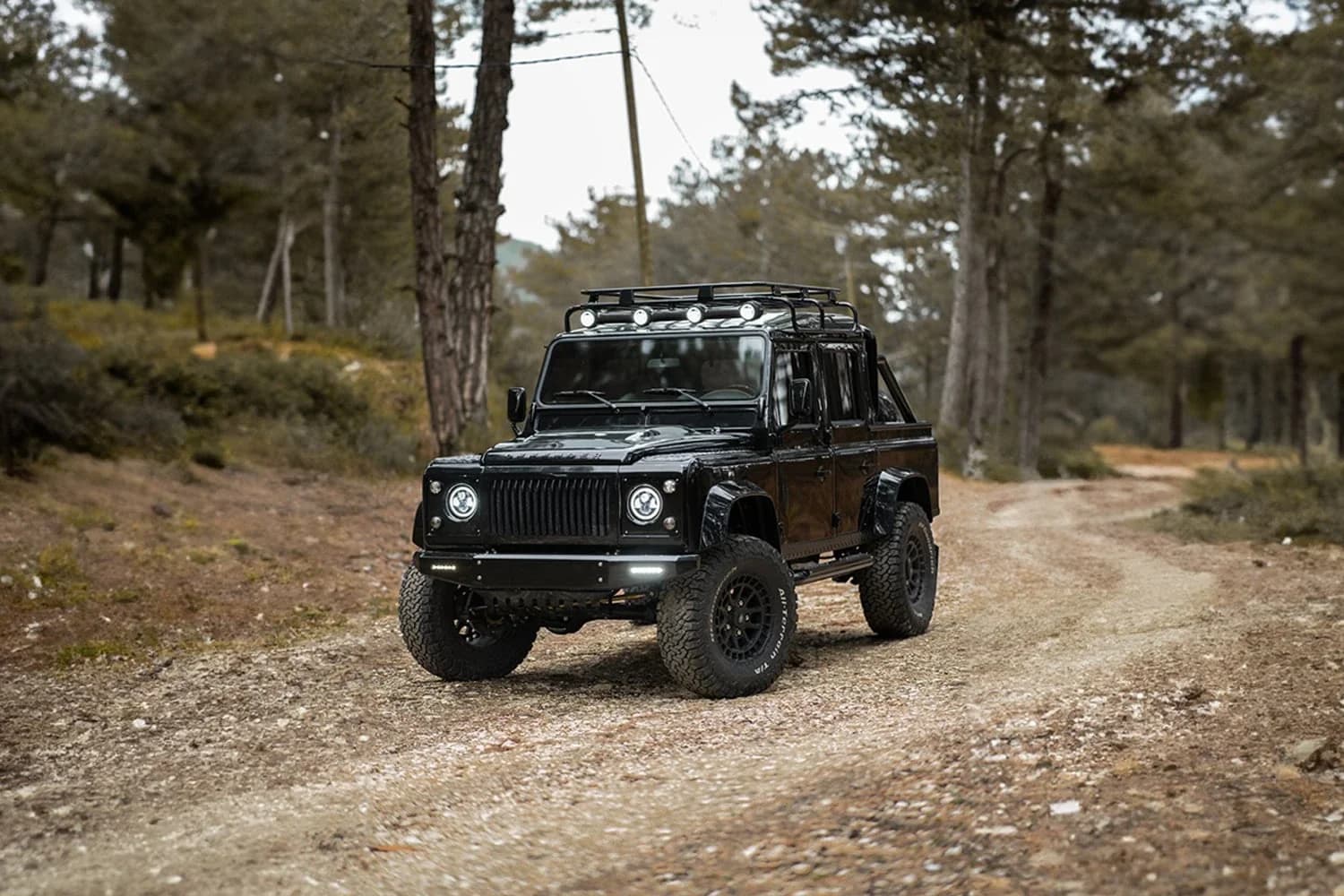
Builder's Note: At Monarch, our ground-up builds achieve a similar result at competitive pricing, with the added benefit of American V8 powertrains (LS3 at about 430 hp, LT1 at about 460 hp, or supercharged LT4 at 650 hp) that offer superior aftermarket support, wider parts availability, and the kind of throttle response that makes you forget you're driving something designed in 1983. We also offer EV builds. Every build goes through our 12-stage process, starting with donor sourcing and a new galvanized chassis, and ending with a vehicle you could drive cross-country on the day you take delivery.
What to Watch For If You're Buying Original
A few things I've learned since 2016:
The bulkhead is the second-most-critical area after the chassis. The original double-skin construction traps moisture between layers, especially around the footwells and A-pillar bases. By the time you see rust on the surface, the inner skin has often been compromised for years.
Doors are another problem area. Around 1989, Land Rover stopped galvanizing the body capping and started painting it body color instead. The result was predictable: rust starts on the underside of the capping where only a thin primer layer exists, then causes galvanic corrosion where the steel meets the aluminum skin.
Electrical gremlins are endemic to any vintage Defender. Lucas electrics earned the nickname "Prince of Darkness" for a reason. A complete modern wiring harness is, in my opinion, a requirement for any truck that is going to be driven regularly. Every Monarch build gets one.
And then there's the grey-market question. The 25-year rule has opened the door for importing European-spec Defenders, but compliance, emissions, and title issues vary wildly by state. Hagerty has specifically warned buyers about grey-market imports flooding the American market[1]. Do your homework. Or better yet, commission a build from a reputable shop that handles sourcing, compliance, and documentation from start to finish.
The Vintage Defender's Future
The math is simple: they stopped making them, demand keeps rising, and the ones that survive are either being carefully preserved or ground-up rebuilt. There is no scenario in which the supply of vintage Land Rover Defenders increases. Annual production peaked in 1971 at 56,000 units[5]. Every year, corrosion, accidents, and neglect remove more from the global population.
The trucks that will matter in ten years, in twenty years, are the ones that are rebuilt correctly now. New galvanized chassis. Modern drivetrains that you can actually get serviced. Interiors that invite you to drive rather than endure. Documentation that tells the full story.
That's not just collecting. That's building something that outlasts you.
Commencing Your Commission
A Monarch is built from the frame up, one at a time, with your name on it from day one. Our 12-stage process starts with sourcing the right donor vehicle and ends with a vehicle that carries the soul of a vintage Land Rover Defender and the reliability of a modern grand tourer. If you're the kind of person who understands the difference between owning a truck and owning the truck, start your commission today and speak with our build team.