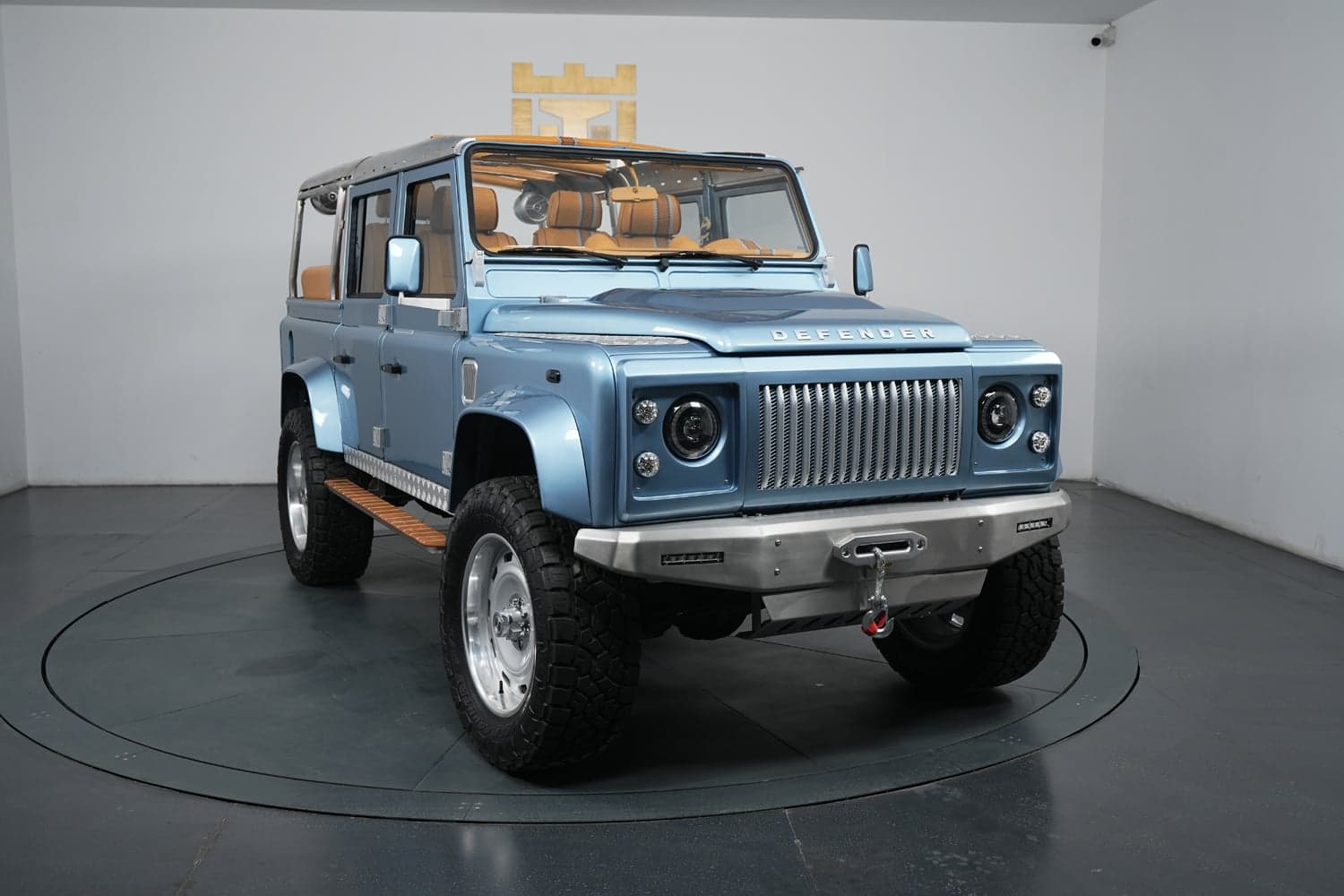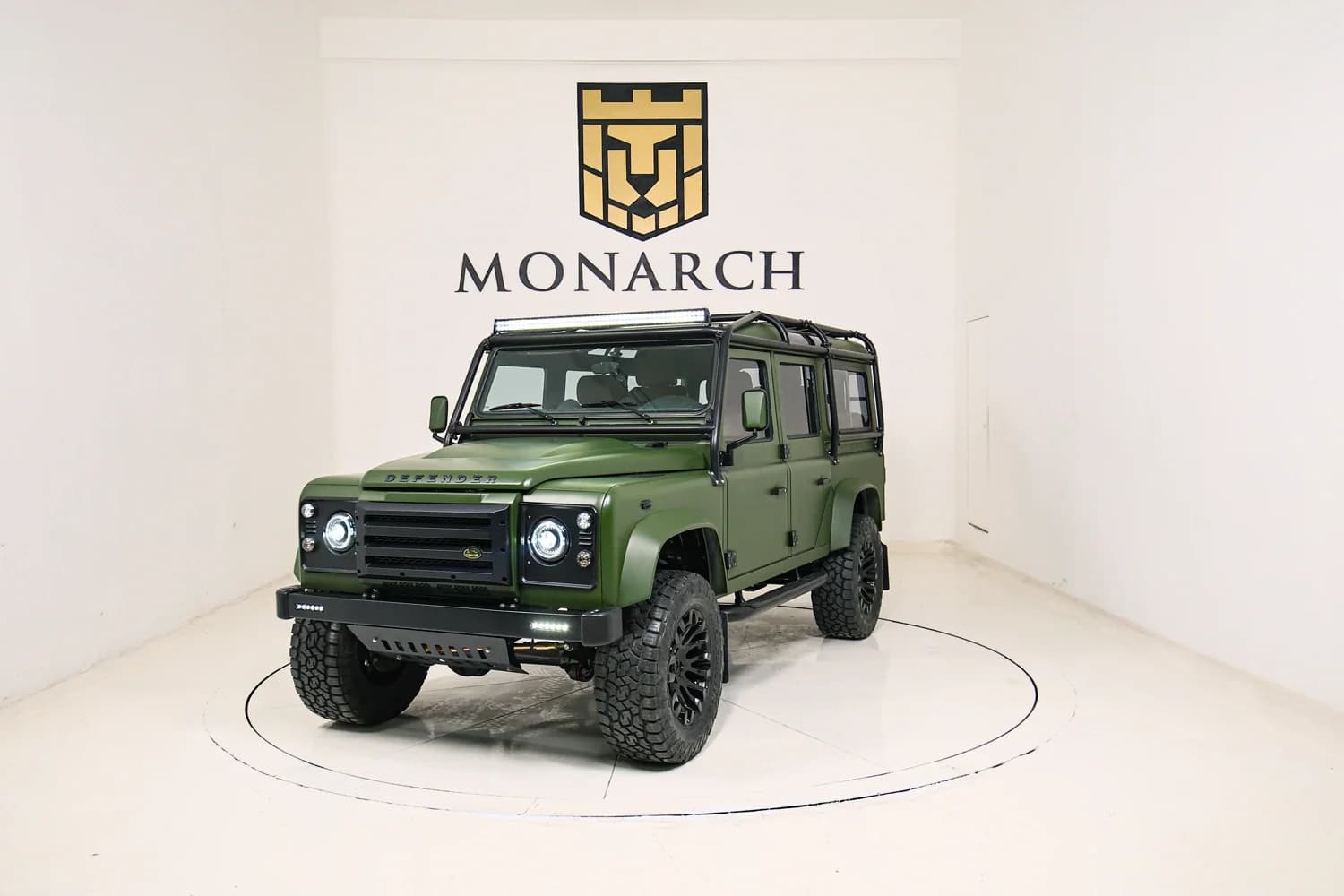
A $212,800 Truck That Started Life at £450
On November 21, 2025, a 1997 Land Rover Defender 90 NAS Hard Top sold for $212,800[4]. The original Land Rover—a Series I presented at the 1948 Amsterdam Motor Show—carried a price tag of £450[2]. That spread tells you everything and nothing at the same time. The number is staggering, yes. But it doesn't explain the thousands of engineering hours, the hand-shaped aluminum panels, or the Italian leather hides that separate a proper custom Defender from the truck Maurice Wilks sketched in the sand at Red Wharf Bay nearly eight decades ago.
At Monarch Motor Company, we've completed over 150 ground-up builds. Every one begins as a bare chassis and emerges as something that didn't exist before—a vehicle that carries the soul of Solihull and the performance of a modern grand tourer. The price reflects exactly that transformation. Here's what you're actually paying for.
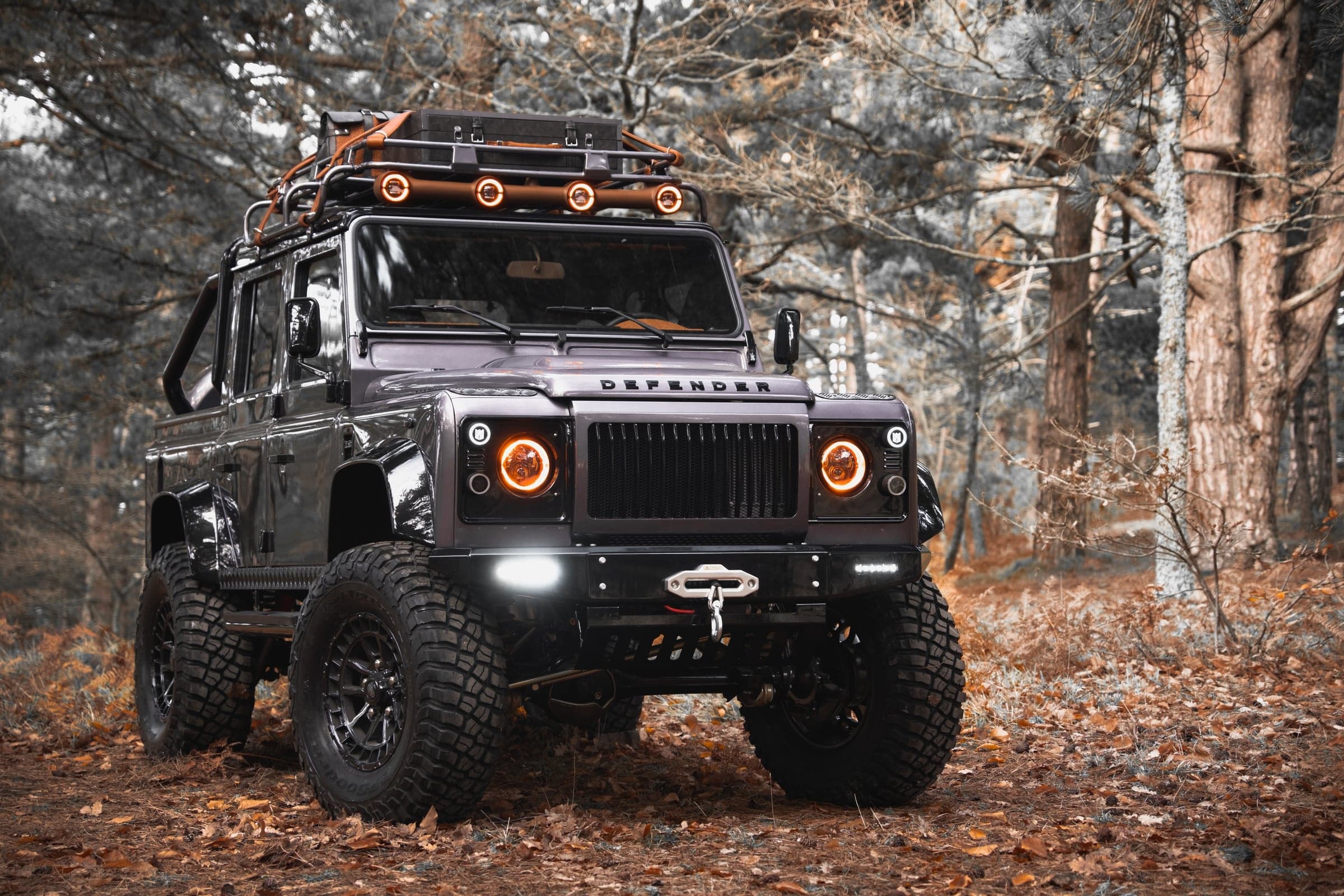
Before we dig deep, if you just want a simple estimated cost breakdown for a Custom Luxury Land Rover Defender, here you go:
| Build Component | Estimated Labor Hours | Key Cost Drivers |
|---|---|---|
| Donor Chassis & Renewal | 40+ hours | Global sourcing, 87-point inspection, chassis inspection & renewal |
| Powertrain (LS3/LT1 V8) | 80 - 100 hours | Crate engine, custom mounts, bespoke wiring, cooling system |
| Body & Paint Fitment | 200+ hours | Hand-fitting aluminum panels, precision gapping |
| Bespoke Interior | 100+ hours | Hand-stitched Italian leather, modern climate control integration |
| Total Average Investment | ~2,000 hours | $200,000 - $300,000+ |
The Donor Chassis: Scarcity Drives the Foundation Cost
Classic Defender production ended on January 29, 2016, when the last Defender 90 Heritage Soft Top rolled off the Solihull line at 9:22 AM[1]. Since 1948, a total of 2,016,933 Series Land Rovers and Defenders had been built[1]. That sounds like a large number until you consider how many survived decades of agricultural abuse, military deployment, salt-belt corrosion, and enthusiast neglect.
For the North American market specifically, the numbers are far more sobering. Only about 7,059 NAS Defenders were ever produced for the U.S.[7], spread across the 1993 Defender 110 and the 1994, 1995, and 1997 Defender 90 model years. Regulations introduced in 1998—requiring dual airbags and side-impact door reinforcement—made further production cost-prohibitive.
Those constraints create the first layer of cost. Sourcing a proper donor chassis with clean documentation, verifiable provenance, and a VIN that traces back to Solihull takes time, contacts, and money. We source our donors from across Europe, Africa, and Australia—regions where drier climates and lower road-salt exposure have preserved chassis integrity. Each one passes our 87-point inspection before we commit to the build.
The Monarch Standard: We never build on a compromised foundation. If a donor chassis fails our structural inspection—particularly around the rear crossmember and outrigger mounts—we pass on it. No exceptions.
Chassis Renewal: Where Most of the Hidden Cost Lives
The original Defender chassis was a painted mild steel ladder frame. Land Rover never galvanized production chassis from the factory during the classic era, and corrosion was the vehicle's Achilles' heel. A chassis that looks solid from the outside can be paper-thin where the boxed sections trap moisture—particularly along the fuel tank outriggers and at the junction of the rear crossmember.
At Monarch, every chassis is media-blasted to bare metal, structurally inspected with ultrasonic thickness gauges, repaired or reinforced where needed, and then hot-dip galvanized. That galvanizing process—submerging the entire chassis in a bath of molten zinc at roughly 840°F—creates a metallurgical bond between the zinc and steel. The resulting coating provides 50 to 75 years of corrosion protection in most environments, dwarfing what paint alone can achieve.
But galvanizing a Defender chassis isn't as simple as dropping it in the tank. The process requires a specialized jig to prevent warping from thermal stress. Boxed sections must be properly vented and drained. Threaded holes fill with zinc and require careful cleanup afterward. On a typical build, our team spends 40+ hours on chassis preparation and post-galvanization fitting work alone. That's before a single body panel goes on.
Engine Swap Costs: LS3 V8 Land Rover Conversions
The original 300Tdi engine—the 2.5-liter turbodiesel inline-four introduced in 1994—produced 111 bhp at 4,000 rpm and 195 lb-ft of torque at 1,800 rpm, mated to the R380 five-speed manual gearbox. It was reliable, simple, and perfectly adequate for a vehicle designed to crawl through African bush at 25 mph. It was never designed to merge onto an American interstate at 70 mph with the air conditioning running.
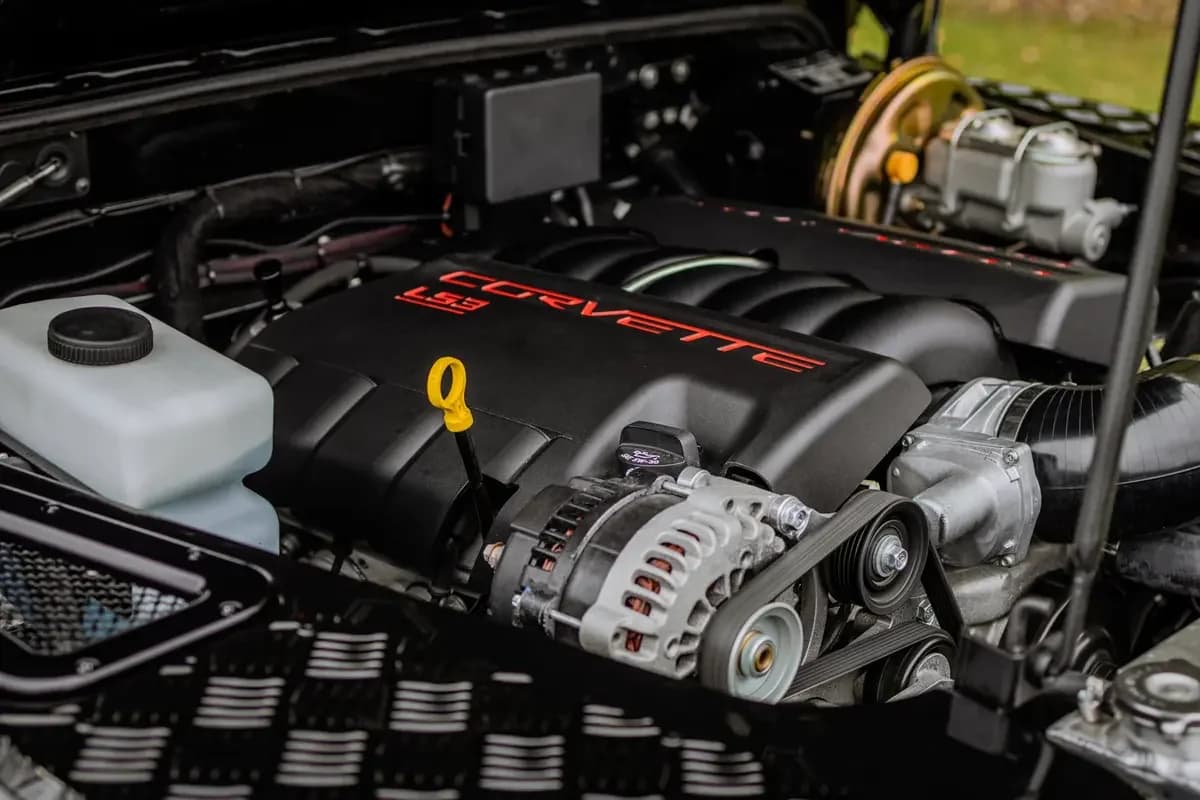
Our builds replace the original drivetrain with the GM LS3—a 6.2-liter aluminum V8 producing 430 hp at 5,900 rpm and 425 lb-ft of torque at 4,600 rpm[5]. We also offer the GM LT1, pushing 460 hp and 465 lb-ft for clients who want the added benefit of direct injection. Both engines pair with the 6L80E six-speed automatic transmission.
The LS3 crate engine alone runs approximately $7,500 to $10,000 depending on configuration and accessories[10]. But the engine is the least expensive part of the powertrain integration. Custom engine mounts must be fabricated. The transmission tunnel requires approximately 42mm of additional clearance. Exhaust headers are built by hand to clear the Defender's narrow engine bay and steering column. The cooling system demands a bespoke aluminum radiator, electric fans, and rerouted plumbing to handle the V8's thermal output in a body designed for a four-cylinder diesel.
We fabricate custom wiring harnesses for every build—no generic adapters, no spliced factory looms. The LS3's electronic throttle control, variable valve timing, and OBD-II diagnostics all require proper integration with the Defender's lighting, instrumentation, and accessory circuits. This single task—wiring—typically consumes 80 to 100 labor hours.
Restoring the Classic Defender Aluminum Body
The Defender's aluminum body panels were its original stroke of genius. Post-war Britain had steel shortages but abundant aluminum, so the Wilks brothers built their utility vehicle from what was available[2]. That decision—born of necessity—produced body panels that resist corrosion for decades.
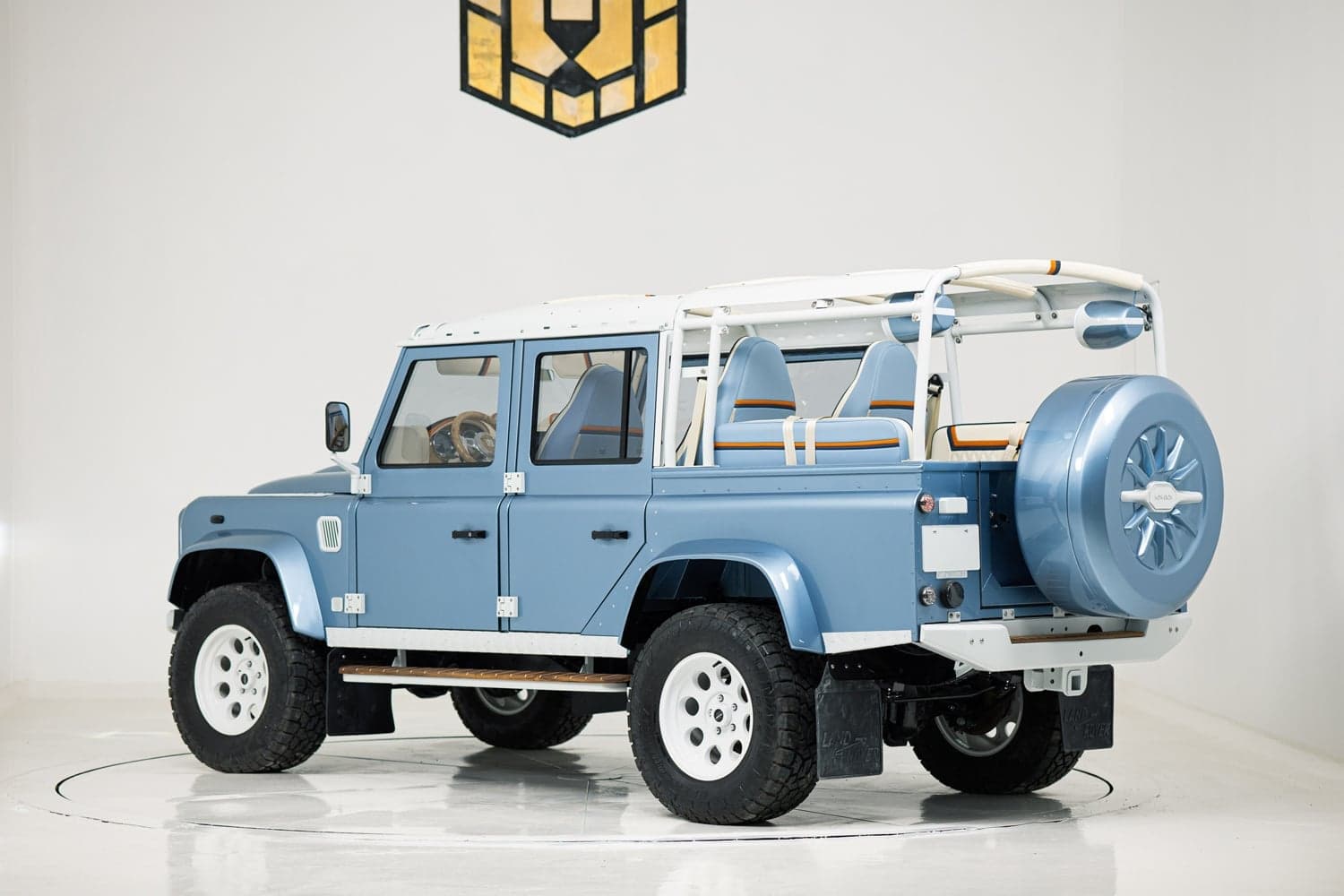
But aluminum brings its own challenges in a rebuild. Panels that have been straightened, patched, or poorly repaired over 30+ years don't fit properly. Gaps between the bonnet, wings, and bulkhead on a stock Defender were generous by factory standards; on a Monarch build, they need to be consistent and tight. We hand-fit every panel to the galvanized chassis, adjusting mounting points, shimming hinges, and sometimes reshaping flanges to achieve panel gaps that would satisfy a Porsche restorer.
Sourcing genuine NOS (new old stock) panels has become harder with each passing year. Aftermarket reproduction panels vary widely in quality—some require significant rework to achieve acceptable fitment. We stock the best available supply and inspect every piece before it enters the build process.
Bespoke Defender Interior Upgrades & Material Costst Does
The original Defender interior was unapologetically utilitarian. Vinyl seats. Rubber floor mats. A heater that worked sometimes. The dashboard was a slab of molded plastic with gauges that provided information roughly, not precisely.
Transforming that cabin into a space worthy of a six-figure vehicle requires stripping everything to bare metal, sound-deadening the entire body, installing modern climate control, and then building a completely new interior environment. Our builds feature hand-stitched Italian leather—sourced from tanneries that supply European luxury automakers—covering the seats, dashboard, door cards, and center console. Each interior requires approximately 35 to 40 square feet of premium hide, hand-cut and stitched by our upholstery team.
Modern conveniences that buyers expect—dual-zone climate control, a premium sound system, Apple CarPlay integration, heated seats, LED ambient lighting—each require their own wiring, mounting, and integration work. None of these systems were ever designed for a Defender. Every bracket is fabricated. Every wire is routed by hand.
Why it matters: The interior is where the owner spends every minute of the driving experience. Cutting corners here—using cheaper materials, skipping sound deadening, or fitting generic components—produces a vehicle that looks like a quarter-million-dollar truck from the outside and feels like a $40,000 one from the driver's seat. That's not a compromise we make.
Labor: The Honest Cost of 2,000+ Hours
A proper ground-up Defender build consumes somewhere between 1,500 and 3,000 hours of skilled labor, depending on the level of specification. Some high-specification restomod builds have logged more than 3,000 hours[8]. At Monarch, our 12-stage build process averages approximately 2,000 labor hours per vehicle.
These aren't assembly-line hours. This is specialized work performed by fabricators, welders, engine technicians, electricians, upholsterers, and painters—each with years of experience specific to the Defender platform. The kind of technician who can weld a chassis rail to aircraft-quality standards, then turn around and troubleshoot a CAN bus integration issue on a modern engine management system, doesn't come cheap. Nor should they.
When you divide the build cost by the labor hours, the math becomes surprisingly reasonable. A $250,000 build spread across 2,000 hours works out to $125 per hour—fully loaded, including materials, overhead, and the specialized tooling required for this type of work. That's less than what most luxury dealership service departments charge for routine maintenance.
The Market Reality: Appreciating Assets
The collector market provides context for custom Defender pricing. Hagerty's valuation tools track classic Defender values across multiple condition grades, and the trend line has been unmistakably upward[9]. The average sale price of a NAS Defender 90 Hard Top sits at approximately $75,889[4]—and that's for stock, unrestored examples with original (read: tired) drivetrains.
At the extreme end, the two-millionth Defender ever built—assembled in May 2015 with help from Bear Grylls and the sons of the Wilks brothers—sold at Bonhams for £400,000 (approximately $568,000 at the time) to a bidder from Qatar[6].
The premium custom build market—vehicles rebuilt from the ground up with modern powertrains and luxury interiors—generally falls between $200,000 and $400,000. Industry pricing from established builders ranges from $250,000 to $310,000 depending on model and specification[3]. Top-tier builds with extensive customization can push past $390,000[8].
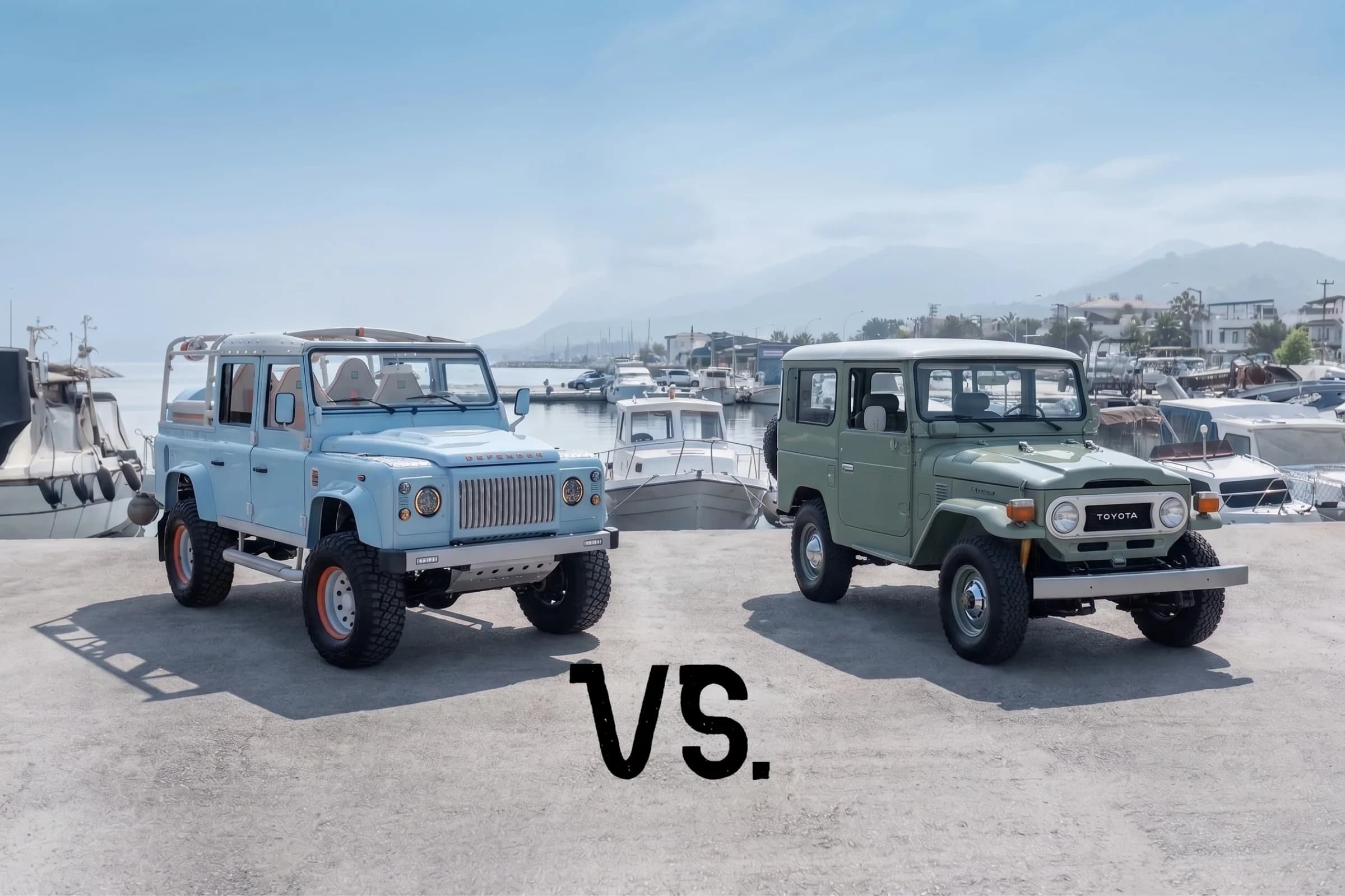
Compare that to other collectible vehicles in this segment—a Singer 911, a ICON FJ40, a restored Mercedes-Benz G-Wagen 4x4²—and the Defender's pricing lands squarely in the middle of the market for bespoke, hand-built collector vehicles with modern performance.
What You're Really Buying
The question isn't really why are custom Defenders expensive? The question is what are you actually getting?
You're getting a vehicle that carries 78 years of heritage in its silhouette—a shape that hasn't fundamentally changed since the Wilks brothers drew it in beach sand on Anglesey[2]. You're getting 430 horsepower from a GM V8 that will run for 300,000 miles with basic maintenance. You're getting a galvanized chassis that will outlast the next two owners. You're getting an interior that rivals anything coming out of Crewe or Maranello. And you're getting something that no factory will ever produce again: a vehicle that is simultaneously vintage and brand new, classic and modern, analog and sophisticated.
There are exactly zero factories in the world producing new classic Defenders. The Solihull line closed permanently in January 2016[1]. Every year, the supply of viable donor vehicles shrinks. Every year, the expertise required to build them properly becomes rarer. Every year, the parts become harder to source.
The price of a custom Defender doesn't just reflect what it costs to build today. It reflects the irreplaceable nature of what you're buying.
A note on value: We're often asked whether a custom Defender is a good investment. We build vehicles, not financial instruments. But the data speaks clearly—well-built classic Defenders have consistently appreciated in value, and the supply of donor vehicles will never increase. Draw your own conclusions.
Commencing Your Commission
A Monarch is more than a vehicle—it is a legacy built on a galvanized foundation, fitted with a modern heart, and finished by hands that understand both the heritage and the engineering. Our 12-stage ground-up build process is reserved for those who refuse to compromise between the classic Defender experience and modern performance, comfort, and reliability.
If you've read this far, you already understand why these vehicles cost what they do. The next step is a conversation about what yours will look like. Start your commission today and speak directly with our build team.