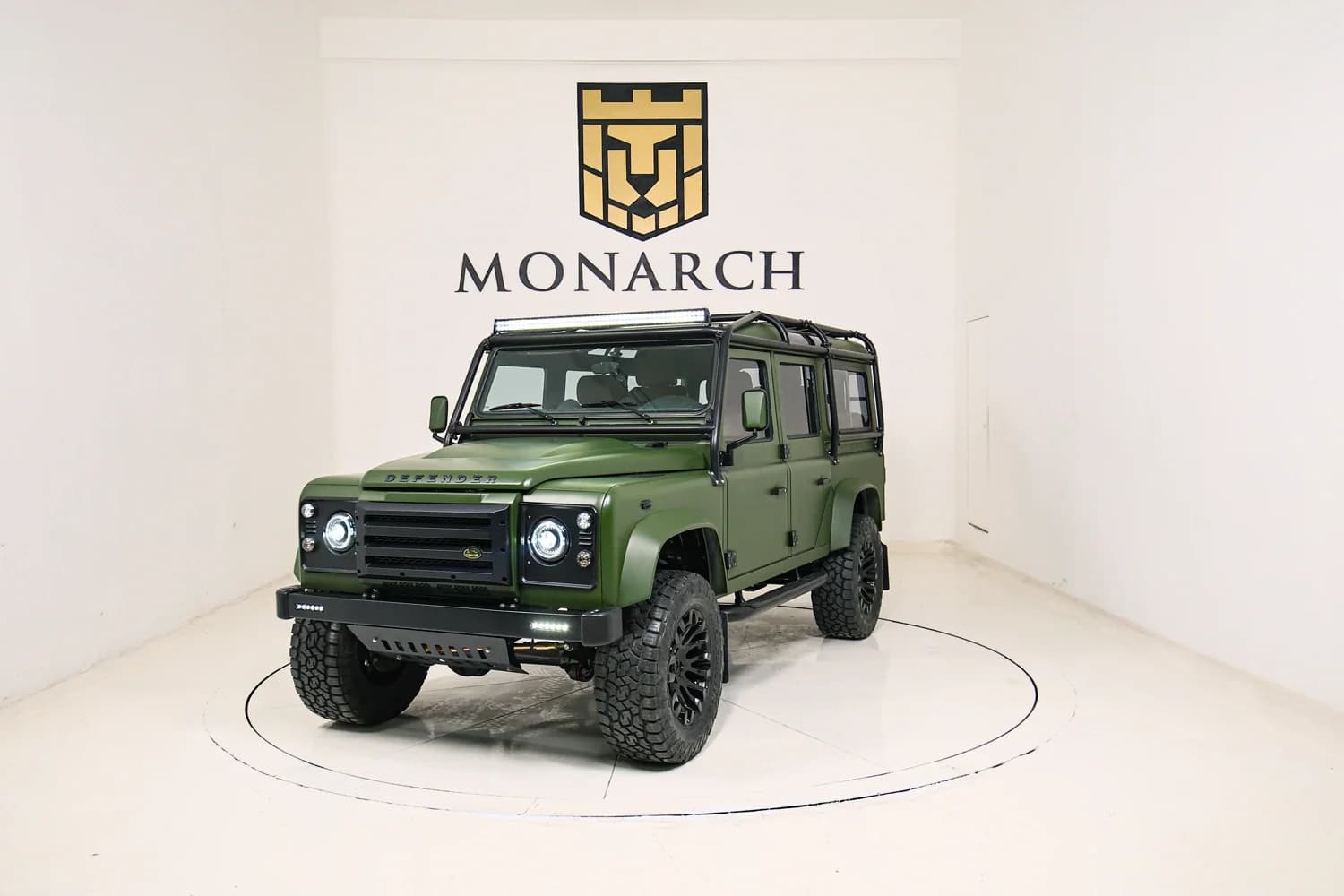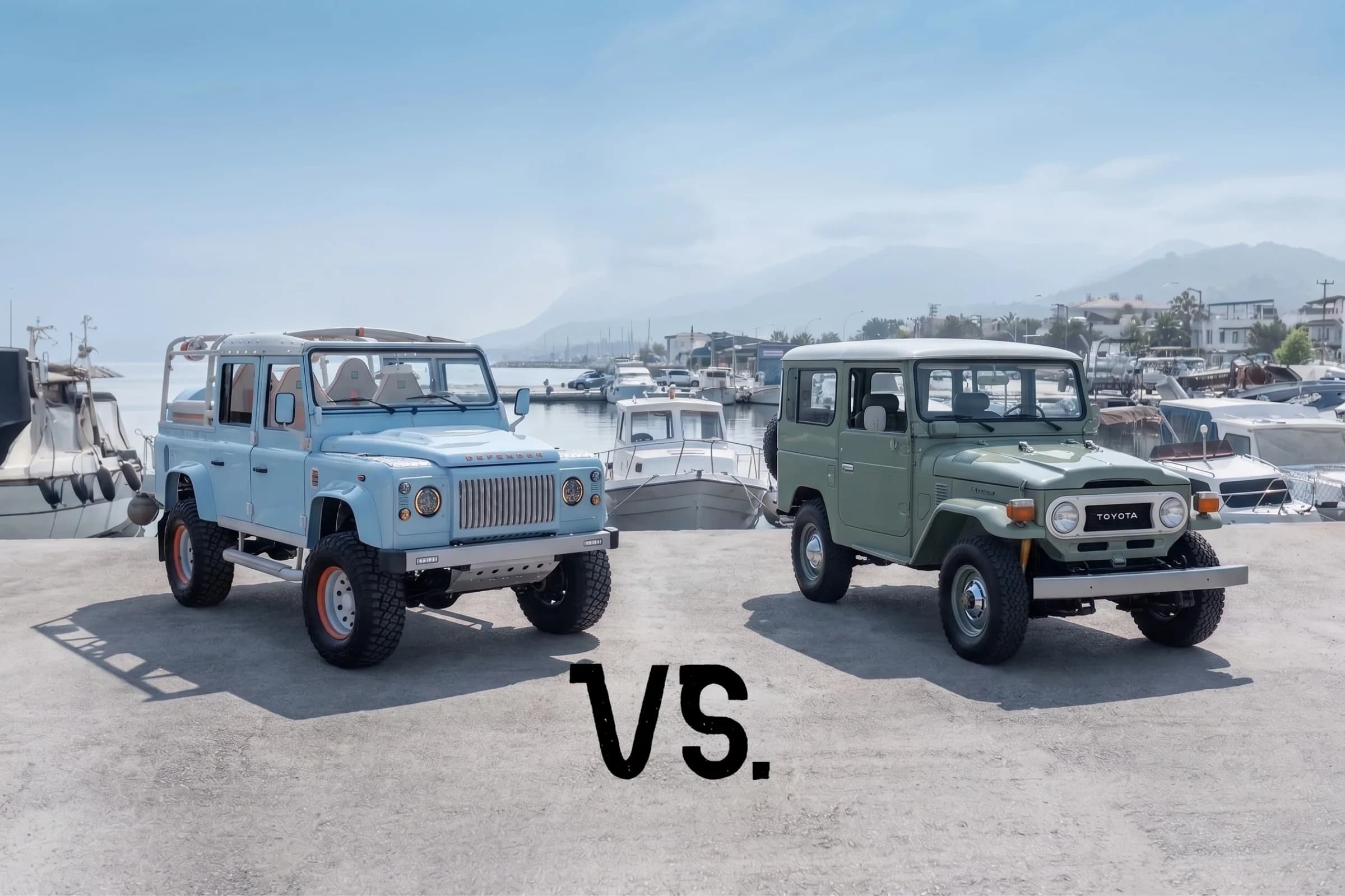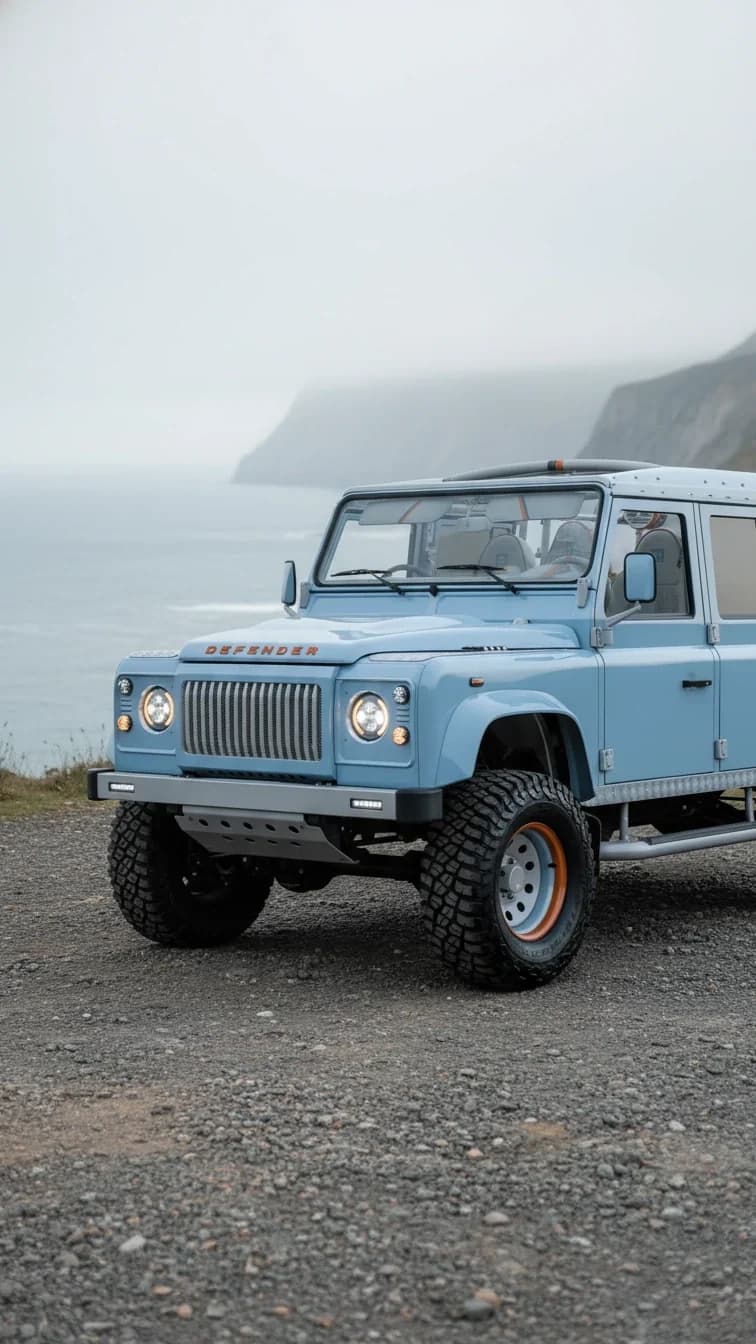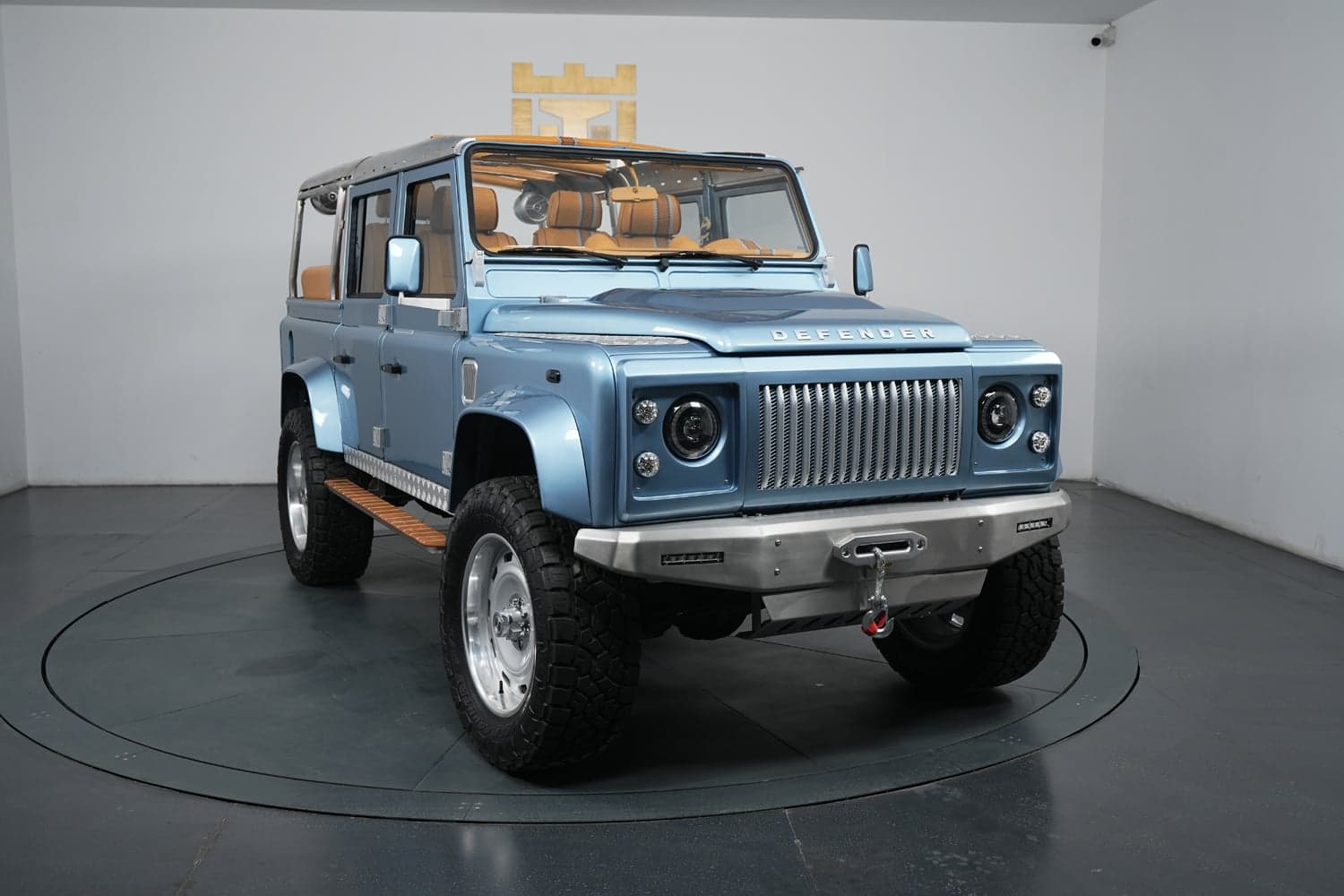
TL;DR: A custom Land Rover Defender's value comes from five drivers: the structural foundation (a new chassis versus a patched original frame), a modern serviceable powertrain, the depth of the build (ground-up remanufacturing versus cosmetic refurbishment), the grade of materials and craftsmanship, and the builder's reputation backed by complete documentation. Builds that get all five right regularly list between $200,000 and $285,000. Builds that skip them trade like used trucks.
Custom-built Land Rover Defenders are regularly listed between $200,000 and $285,000 on the open market[1]. Other trucks wearing the same aluminum panels and the same badge trade for a fraction of that. Same silhouette. Same flat windshield. A six-figure gap in price.
That gap is the sum of specific, verifiable engineering and documentation decisions made during the build, and every one of them can be checked before you wire a deposit. At Monarch Motor Company, we have been making those decisions since 2016 at our facility in Grayslake, Illinois, north of Chicago. This post explains how value is actually created in a custom Defender, driver by driver, and gives you a working framework to price any build you are considering.
Why Do Investment Buyers Choose Custom Land Rover Defenders?
Investment buyers choose custom Defenders because the platform pairs permanently fixed supply with a solvable engineering story. Production ended forever in January 2016, so the heritage cannot be reissued. A ground-up custom build then removes the reliability and usability failures that kept original trucks parked. The result is a scarce classic that gets driven, which is rare in the collector world.
The supply side is simple arithmetic. Land Rover built 2,016,933 Series and Defender vehicles before production ended in January 2016[2], and official US sales stopped after the 1997 model year[3]. Scarcity has already repriced the originals: a 1997 NAS Defender 90 with fewer than 1,325 miles sold for $176,400 at RM Sotheby's Miami sale in February 2025[3], and the record for a NAS Defender 90 Hard Top reached $212,800 in November 2025[4]. We covered the full appreciation case, auction history, and honest downside risks in our analysis of Defenders as an investment. This post answers a different question: once you accept the asset class, what makes one specific build worth $250,000 and another worth $80,000?
For collectors who treat vehicles as part of an alternative asset portfolio, that question is the whole game. Classic car appreciation happens at the level of the individual vehicle, not the model line. The market pays for attributes it can verify, and it discounts everything it cannot.
What Are the Core Value Drivers of a Custom Defender Build?
Five attributes determine where a custom Defender lands on the price spectrum: the chassis it sits on, the powertrain it runs, the depth of the build, the materials inside it, and the documentation behind it. Each one is binary in the eyes of a future appraiser. Either the build has it and can prove it, or the truck gets priced as if it does not.
The Structural Foundation: New Chassis or Patched Frame
Everything in a Defender hangs off a ladder frame, and vehicle valuation starts there. An original frame has spent decades flexing on farm tracks and absorbing road salt. You can blast it, weld it, and paint it, and it is still a 30-year-old structure with fatigue you cannot see and corrosion history you cannot erase. When a build changes hands, the inspection starts underneath, and a patched frame is where refurbished trucks lose their asking price.
This is why every Monarch commission begins with a new KTL-coated chassis rather than a restored original, and why we do not take customer-supplied Defenders for restoration. A new frame gives the build a documented, corrosion-protected spine engineered for modern V8 output. It converts the single largest unknown in the truck into a known quantity, and known quantities are what buyers pay for.
The Monarch Standard: We source and import every donor vehicle ourselves and complete US titling before the build begins. The foundation of the truck, both structural and legal, is settled before the first stage starts.
The Powertrain: Serviceability Is Value
A collector vehicle that cannot be serviced locally is worth less than one that can. Period. Original Defender engines are charming until a part needs replacing in Ohio on a Sunday.
The modern answer is a current GM V8: the LS3 at approximately 430 horsepower or the current-generation LT1 at approximately 460 horsepower, paired with an upgraded automatic transmission and matching axles, suspension, and brakes. The LS3 is a production crate engine from Chevrolet Performance[5], which means parts inventory across the country and any certified GM shop able to work on it. That serviceability follows the truck through every future sale. A bespoke drivetrain from a boutique supplier may be impressive on paper, but the second owner inherits a maintenance problem, and second owners price maintenance problems ruthlessly. Our LS3 versus LT1 comparison covers how to choose between the two.
Materials and Craftsmanship
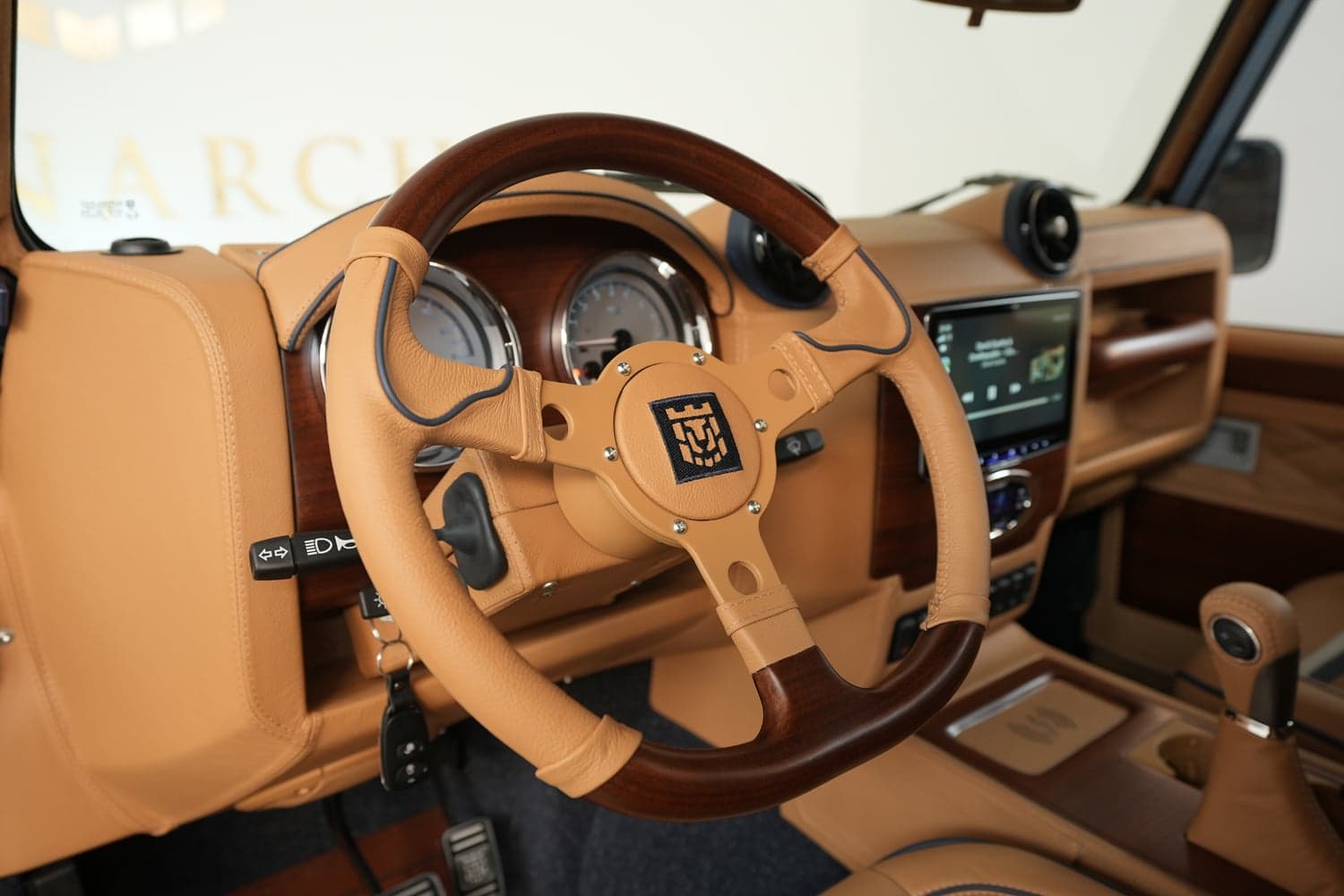
Materials are where a build either earns its price on close inspection or falls apart under it. In our 12-stage process, paint is a dedicated stage using the premium Standox system, insulation is its own stage rather than an afterthought, and the interior stage delivers fully bespoke hand-stitched Italian leather with finishes in aluminum, carbon fiber, or wood grain. Modern technology is integrated, not bolted on: an Alpine 9-inch touchscreen, Apple CarPlay, wireless charging.
The value logic is durability of impression. A wrapped dash and off-the-shelf seat covers look fine in listing photos and cheap in person. Hand-stitched hides, correct panel gaps, and factory-grade paint depth survive the walkaround that precedes every serious offer. Craft you can inspect at arm's length is craft the market will pay for again at resale.
Does Restoration Depth Matter? Frame-Off vs Cosmetic
Yes, and it is the least visible, most consequential difference between two builds that look identical in photographs. A frame-off build separates the body from the chassis and rebuilds every system from bare metal. A cosmetic refurbishment repaints, retrims, and leaves the substructure, wiring, and drivetrain largely as found.
Depth shows up in the systems you cannot photograph. Old Defender wiring looms are a known failure point; a ground-up build replaces the loom entirely with a modern harness sized for contemporary electrical loads. Insulation, sealing, brake lines, bushings, and fasteners either get renewed or they carry their age forward into your ownership. The refurbished truck works at delivery. The difference emerges in year three, and the market has learned this lesson expensively enough that provenance-conscious buyers now ask for bare-chassis photos before they ask about paint colors.
We break down the two philosophies in detail in ground-up bespoke versus customer restoration, and the broader category context in our Defender restomod overview. The short version: depth is expensive once and valuable forever, while shallow work is cheap once and discounted forever.
How Do Donor Scarcity and Provenance Affect Value?
A custom build inherits the provenance of its donor, so donor quality and paperwork flow straight into the finished vehicle's value. The donor pool is fixed and shrinking. Every truck lost to rust or crash reduces it, and demand for sound starting points keeps rising: Hagerty valuation data shows clean, unrestored 1990s Defender 110 examples already commanding $60,000 to more than $100,000[6].
Scarcity of good donors does two things to the custom market. First, it raises the floor under every properly built truck, because the raw material cannot be manufactured again. Second, it widens the gap between builders who source carefully and those who build on whatever arrives on a trailer. A donor with a murky import history, a salvage title, or a questionable identity contaminates the finished build no matter how good the workmanship is, because title problems resurface at every subsequent sale.
Provenance also means the paper trail: original identity documents, import and customs records, and a clean US title issued before the build. Buyers of investment-grade vehicles verify all of it, and a gap in the chain becomes a negotiating lever against the seller. This is one reason we source and import donors ourselves rather than building on customer-supplied trucks; controlling the donor means controlling the paperwork that future value depends on. Builds on our Defender 90 platform start from the same sourcing discipline as every other body style we offer.
Why Do Builder Reputation and Documentation Drive Resale Value?
A custom Defender is worth what a future buyer can verify, and the builder's name plus the build dossier are the verification. This is the driver most first-time commissioners underweight and most second-time buyers check first.
Among US custom shop builders, reputations are built on years in business, a consistent portfolio, and owners willing to vouch for their trucks. A build from an established shop carries an implicit warranty of process: the future buyer knows what a truck from that shop means without inspecting every weld. A build from an unknown garage has to prove everything from zero, and unproven claims get priced at zero. Browse a builder's completed projects and client reviews the way an appraiser would, because that is exactly what the next buyer will do.
Documentation converts reputation into transferable evidence. A complete dossier includes stage-by-stage build photography from bare chassis to final assembly, the full parts and specification list, donor history and title records, and the written warranty. Monarch backs every build with a two-year bumper-to-bumper warranty, plus GM's factory warranty on the crate engine, and the warranty document itself becomes part of the truck's file. There is a reason the same trucks keep outperforming at resale: their files answer every question before it is asked. This post covers how that value is created; for the step-by-step purchase process itself, see how to buy a collector grade custom Defender.
Specification exclusivity matters here too. A single-owner bespoke commission, specified line by line for one client, occupies a different market position than a configured production build chosen from preset options. Bespoke specification is scarcer by definition, and in the collector market scarcity within scarcity is where premiums live.
The Buyer's Framework: Six Questions That Price Any Build
Use these six questions on any custom Defender, from any builder, at any price. Each unverifiable answer moves the truck down the value spectrum.
- What is under the body? New KTL-coated chassis, or a restored original frame? Ask for bare-chassis photographs with dates. This is the largest single value separator.
- Who can service the powertrain? A current GM V8 like the LS3 or LT1 means any certified GM shop nationwide. A rare or heavily modified drivetrain means a service problem the next owner will price in.
- How deep did the build go? Frame-off remanufacturing with new wiring, insulation, and brakes, or paint and upholstery over original systems? Demand photographic evidence of the stages you cannot see.
- Where did the donor come from? Verified import paperwork, clean US title, coherent identity history. Any gap in the chain is a permanent discount.
- What do the materials say up close? Hand-stitched leather, premium paint systems, and correct hardware survive in-person inspection. Listing-photo quality does not.
- Can the builder prove all of it? A complete build dossier, a written warranty, a public portfolio, and reachable past clients. Documentation is the difference between a claimed build and a verified one.
Run a $95,000 refurbishment and a $300,000 commission through these six questions and the price gap stops being mysterious. For how these attributes map to actual pricing tiers across the market, see how much a custom Defender costs.
Commissioning a Defender Built to Hold Its Value
Value in this market is engineered in, stage by stage, and documented so the next buyer can see it. That is the entire thesis of how we build.
A Monarch commission runs $250,000 to $350,000 and up depending on specification, takes 8 to 12 months from commission to delivery, and is executed by a team of around 30 specialists with capacity for more than 60 builds per year. Every truck starts on a new KTL-coated chassis with a Monarch-sourced, US-titled donor, carries a GM V8 any GM shop can service, or an EV drivetrain, and leaves Grayslake with the complete documentation file that protects its value long after delivery. We offer white-glove delivery across the USA and accept qualifying trade-ins toward a commission.
If you are weighing a build, start with the six questions above. Then start the conversation with us and ask them of Monarch first. We built the process around answering them.